
Gili Banta Diving: GPS Point & K2 — Expert Territory Between Komodo and Sumbawa

Ingrid Mathiesen
January 1, 2026
14 min read
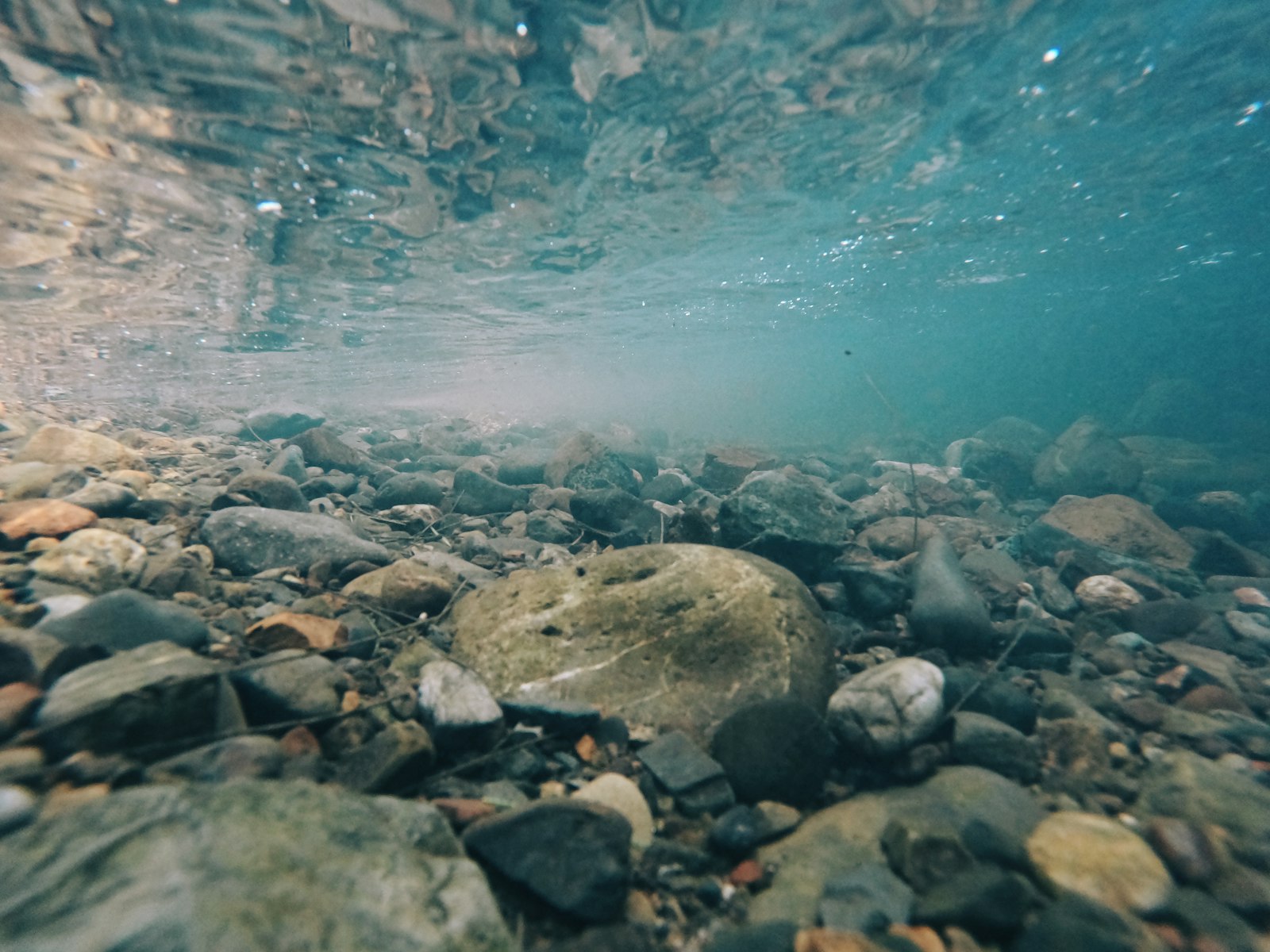
Gili Banta diving GPS Point is an exposed oceanic seamount sitting in the strait between Komodo Island and the western tip of Sumbawa, and it is one of the few sites in the Komodo region where even experienced divers should pause before jumping in. GPS Point tops out at around 15 metres and drops past 35 metres, with the productive action zone between 20 and 30 metres — but depth is the least of your concerns here. The current is the whole conversation. If you are not comfortable with negative entries, washing-machine eddies, and hard down-currents, GPS Point is not your dive. No exceptions.
The second site on this islet, K2, is a ridge-and-slope dive that runs 10 to 30 metres and carries moderate-to-strong drift. It is a demanding dive, but it is manageable for Advanced Open Water divers who are comfortable in current. The two sites share the same small island but deliver very different experiences, and the 6-to-9-day Komodo–Sumbawa liveaboard routes that include Gili Banta typically give you both on consecutive dives or on the same morning.
Where Gili Banta Fits
Look at the chart and you will understand immediately why Gili Banta sees such violent water. The island sits roughly in the middle of the Sape Strait, the passage that funnels tidal exchange between the Flores Sea to the north and the Indian Ocean to the south. This is part of the broader Indonesian Throughflow — a massive Pacific-to-Indian current system driven by a sea-level differential of around 30 centimetres — squeezed through a series of narrow straits across Nusa Tenggara. On spring tides and during the peak southeast monsoon (June to August), speeds in these passages can reach 7 to 8 knots. Nobody dives GPS Point at 7 knots. Timing is everything: the windows are short, typically planned around slack water or the brief deceleration phase before a new tidal push begins.
For the liveaboard context, Gili Banta appears on routes that are 6 days or longer, almost always positioned as a transitional stop between the north Komodo corridor and the Sumbawa extension. After Castle Rock and Crystal Rock in the north, the boat crosses overnight or in the early morning and arrives at Gili Banta before pushing east toward Sangeang volcano. On a 9-day route running Labuan Bajo and back, Gili Banta is typically dived on day 6 or 7 alongside Sangeang as the furthest eastward reach. On a one-way crossing to Bali, the sequence is similar — north Komodo, Gili Banta, Sangeang, then Bima Bay, Satonda, and Moyo.
GPS Point: The Facts, Plainly Stated
Depth and Profile
The seamount plateau sits at approximately 15 metres. From there the rock drops sharply, and by 30 to 35 metres you are in the action zone where current-driven pelagic life concentrates. Some lines push deeper than 35 metres, but there is nothing gained by going to 40 metres here that you will not see at 25 metres, and depth compounds every other problem at this site. Plan your bottom time at 20 to 30 metres and you will use it more efficiently.
Current Conditions
GPS Point earns the washing-machine label honestly. When the tidal cycle is running, the seamount creates chaotic eddies and hydraulic features on its downstream side — predictable only in the sense that they will be there, not in the sense that you can trace their exact path. Down-currents are documented and real. A down-current at GPS Point does not feel gradual; it grabs, and divers who panic and fight it in open water have a bad time. The correct response is to move laterally toward the reef structure and use the bottom as a reference, but that response requires a trained reflex, not a thought-through plan. That reflex is what the logged-dive requirement is actually about.
Most operators running GPS Point require Advanced Open Water certification as a minimum, and the better operations add a logged-dive floor of 50 dives — in line with Komodo Resort guidance that recommends 50 to 60 logged dives for the region’s high-current north sites. Operators also typically confirm fitness on the check dive at the start of the trip before allowing guests on GPS Point. If the check dive raises questions, the decision is made before the crossing, not while anchored off Gili Banta.
Entry Method
Negative entries are standard at GPS Point. You enter before the current reaches the reef, drop fast to your planned depth, and join the structure before the flow carries you away from it. If you have only practised giant-stride entries at a calm resort wall, a negative entry in real current is a different skill. Practice it somewhere easier first.
What You See
Schools of big-eye trevally and dogtooth tuna work the current edges. Grey reef sharks and whitetip reef sharks hold station in the lee of the structure. On a good day, large schools of barracuda spiral overhead. The reef itself carries hard corals on the upper plateau where surge and current prevent sediment settling, and sea fans and soft corals on the more sheltered flanks.
A word on hammerheads: there are occasional unverified reports of hammerheads at GPS Point. They surface from time to time in dive logs and trip reports. I will not tell you they never happen, because that would also be wrong. What I will tell you is that GPS Point is not a reliable or consistent hammerhead site, and it should not be your reason for being here. If you arrive expecting hammerheads and leave without seeing one, that is the normal outcome, not a disappointment. Plan for strong current, fast-moving reef sharks, and big pelagic schools — those are reliable. Hammerheads are a rare, unpredictable possibility, nothing more.
K2: The More Forgiving Sibling
K2 runs along a ridge-and-slope formation on a different aspect of the same island. The profile goes 10 to 30 metres, and the current is moderate to strong but lacks the sudden violent reversals that make GPS Point so demanding. Drift diving technique is still required — K2 is not a relaxed reef tour — but the flow is more linear and the site rewards an AOW diver who has proper buoyancy control and knows how to read a current line.
Fish life at K2 is dense. Big schools of fusiliers and snappers run the ridge, jacks move in and out of view, and reef sharks patrol the drop. Turtles appear on the shallower sections where the coral coverage is richer. The site gives you a genuinely good dive in its own right, and most operators schedule K2 as a companion dive to GPS Point rather than an afterthought, often doing GPS Point first (before current picks up) and K2 on the same or adjacent dive.
Minimum recommendation for K2 is AOW, and you should be comfortable with drift before you take it on. If you completed your AOW in a calm bay and have not dived in real current since, treat K2 with the same caution you would give any strong-current site.
Experience Requirements at a Glance
| Site | Depth Range | Current | Minimum Certification | Logged Dives | Entry Method |
|---|---|---|---|---|---|
| GPS Point | 15–35 m+ (action 20–30 m) | Very strong; down-currents, washing-machine eddies | AOW required | 50+ strongly recommended | Negative entry |
| K2 | 10–30 m | Moderate–strong drift | AOW required | 20–30+ | Standard / surface current-check |
How Gili Banta Slots into Liveaboard Itineraries
Gili Banta appears exclusively on multi-day liveaboard routes — it cannot be reached on a day trip from Labuan Bajo, and even if it could, the crossing would consume most of your usable bottom time. The practical entry point is a 6-day-or-longer liveaboard with a Sumbawa extension.
6-Day Routes
A 6-day Labuan Bajo return with a Sumbawa extension can include Gili Banta and Sangeang if the operator pushes east on days 4 and 5. This is the minimum duration that makes the crossing worthwhile. On this itinerary you typically cover central and north Komodo in the first three days — Siaba Besar, Manta Point, Batu Bolong, Shotgun, Castle Rock, Crystal Rock — then cross to Gili Banta on day 4, Sangeang on day 5, and return to Labuan Bajo on day 6. It is a full schedule and the crossing days are long. Some 6-day routes skip Gili Banta and go straight to Sangeang from north Komodo; confirm the itinerary before booking if Gili Banta is important to you.
7-to-9-Day Routes
The 7-to-9-day format is the natural fit. There is time to include south Komodo — Manta Alley, Cannibal Rock, the sites around Horseshoe Bay — before crossing to Gili Banta and Sangeang. These are the itineraries where you see the full depth of what this region offers: the chaotic macro biodiversity of Cannibal Rock, the atmospheric black-sand night dives at Hot Rocks on Sangeang, and GPS Point. On the longer 8-to-9-day routes there is also room for Bima Bay muck diving, Satonda Island, and Moyo Island’s Angel Reef before turning back toward Labuan Bajo or continuing to Bali or Lombok.
South Komodo access carries its own seasonal qualification. The sites around Horseshoe Bay and Manta Alley face the Indian Ocean, and the southeast monsoon — strongest from roughly June to August — sends swell into the south that makes these sites uncomfortably rough or outright unsafe. A 7-day liveaboard in July may skip south Komodo entirely and run north Komodo and Sumbawa instead; a similar route in November or January will typically include south. This is not a failure of planning — it is the honest reality of sea conditions in this part of Indonesia, and any operator who tells you they can guarantee south Komodo access in July is guessing. The route adapts; guests deserve to know that before they pay a deposit. Our guide to Komodo diving seasons covers north and south access windows month by month.
One-Way Crossings
On the classic 12-day Labuan Bajo to Bali crossing, Gili Banta typically falls around day 7, after the full Komodo circuit. The route then continues east through Sangeang, Bima Bay, Satonda, Saleh Bay, and Moyo before the run to Lombok or Bali. These crossings are the most dive-rich format in the region — around 28 dives over 11 nights — and they attract experienced divers who want the Sumbawa sites without backtracking. Cost runs roughly USD 2,500 to 3,000 per person plus around USD 360 in government and park fees, though figures vary by boat and season; treat those as orientation brackets, not quotes.
Before any of these routes, read our page on Komodo liveaboard diving for duration comparisons and honest tradeoffs. And if you are checking whether your certification level and dive count are right for north Komodo and Gili Banta, see our guide to experience requirements and entry standards.
Seasonal Timing for Gili Banta
The Sumbawa sites including Gili Banta are generally dived from around April or May through October, broadly tracking the Komodo dry season and the period when most liveaboards are operating in the region. In practice the crossing is weather-dependent, and on the southeast monsoon (June to August) the crossing from Komodo to Gili Banta can be uncomfortable in a swell. Sangeang volcano is partially sheltered on its lee side and is typically diveable through more of the year than the full south Komodo circuit.
Water temperature around Gili Banta and Sumbawa sits in the north Komodo range — roughly 27 to 29°C through the dry season, slightly warmer in October and November. Unlike south Komodo, where the Indian Ocean upwelling can push temperatures down to 20 to 24°C and a 5 to 7 mm suit with hood is genuinely advised, Gili Banta does not carry the same cold-water risk. A 3 mm wetsuit works for most divers; a 5 mm is not wrong if you run cold.
Practical Planning Notes
Nitrox is widely available on the boats that run the Sumbawa crossing, and at GPS Point it is worth using. More decompression margin at 25 to 30 metres with a potentially short bottom time in current is a straightforward decision. Many mid-range and premium liveaboards include nitrox in the berth price; budget boats typically charge extra. Ask before you book.
Reef hooks are a split policy across operators. Some allow them strictly on bare rock and rubble — never live coral — others ban them for guests entirely. Follow your operator’s policy. If you dive GPS Point correctly, you should not need a reef hook to maintain position; you will be drifting with the current rather than fighting it.
A DSMB per diver is standard practice on all current sites in this region, and GPS Point should be treated as mandatory. At GPS Point in particular, the separation protocol applies: if you lose your group, search for approximately ten seconds, then ascend safely under your own SMB, drift to the surface, and deploy. Do not stay down searching. Your guide will do the same.
Park and government fees apply throughout Komodo National Park waters, and Gili Banta falls within the administered zone. Current observed fee structures run roughly IDR 300,000 to 400,000 per diver per day (approximately USD 18 to 27), with the exact breakdown varying by operator — the itemization includes marine park entry, diver surcharge, and sometimes an additional conservation contribution. Confirm what is included before your trip; fees are typically excluded from the headline liveaboard price.
Ready to check whether a liveaboard route with Gili Banta is right for you? Plan your trip with our concierge — we can match you to the right duration and operator based on your certification, logged dives, and timing. WhatsApp planning is available for faster back-and-forth if you prefer.
Frequently Asked Questions
Can an Advanced Open Water diver with 30 logged dives dive GPS Point?
AOW is the minimum certification, but 30 logged dives is below the recommended floor for GPS Point. Most serious operators ask for 50 or more logged dives before allowing guests on this site — the figure comes from the operational guidance used by experienced Komodo region dive operators. This is not bureaucracy; GPS Point down-currents require an ingrained calm reaction, and that reflex develops over dives, not classroom time. With 30 logged dives, GPS Point is worth putting on your target list for a future trip; K2 may be feasible depending on how those 30 dives break down and what your guide sees on the check dive.
Are hammerhead sharks common at GPS Point?
No. There are occasional reports from divers who have logged time at GPS Point over the years, but hammerheads are not a reliable or consistent feature of this site. Plan your trip around GPS Point for the current, the pelagic action, and the reef sharks — those are what the site reliably delivers. If a hammerhead appears, it is a bonus.
Which liveaboard duration is the minimum to include Gili Banta?
Six days is the practical minimum, and even then the schedule is tight. Seven days or longer gives you a more complete experience — time to include south Komodo before the Sumbawa crossing, and a less rushed pace at Sangeang after Gili Banta. If seeing GPS Point specifically is a priority for your trip, confirm the itinerary with your operator before booking rather than assuming any liveaboard with a Sumbawa component will include it.
Is Gili Banta accessible year-round?
In principle, yes — Komodo National Park has no scheduled closures and Gili Banta is not restricted seasonally by regulation. In practice, the crossing and sea conditions around Gili Banta are affected by the southeast monsoon. Most liveaboards operating the Sumbawa extension run from around April or May through October. Outside those months, fewer boats are operating the region at all, and your operator will make a weather-based call on the crossing. It is always conditions-permitting.
What is the difference between GPS Point and K2 at Gili Banta?
GPS Point is the more exposed site: an oceanic seamount with very strong currents, documented down-currents and washing-machine eddies, negative-entry standard, and a recommended minimum of 50 logged dives. It is advanced-only with no exceptions. K2 is a ridge-and-slope dive with moderate-to-strong drift — demanding but more linear in character, suited to AOW divers who have real current experience. Both are at the same island; operators typically schedule both on the same visit. They are different enough in character to plan for separately.
Want to talk through a route that includes Gili Banta? Use our enquiry form or reach out on WhatsApp — our planning team can walk through available routes, operators, and timing based on exactly what you have logged and what you want to dive.