
Manta Alley: South Komodo’s Manta Stronghold — Season, Access, Honest Conditions

Sekar Prameswari
April 10, 2026
16 min read
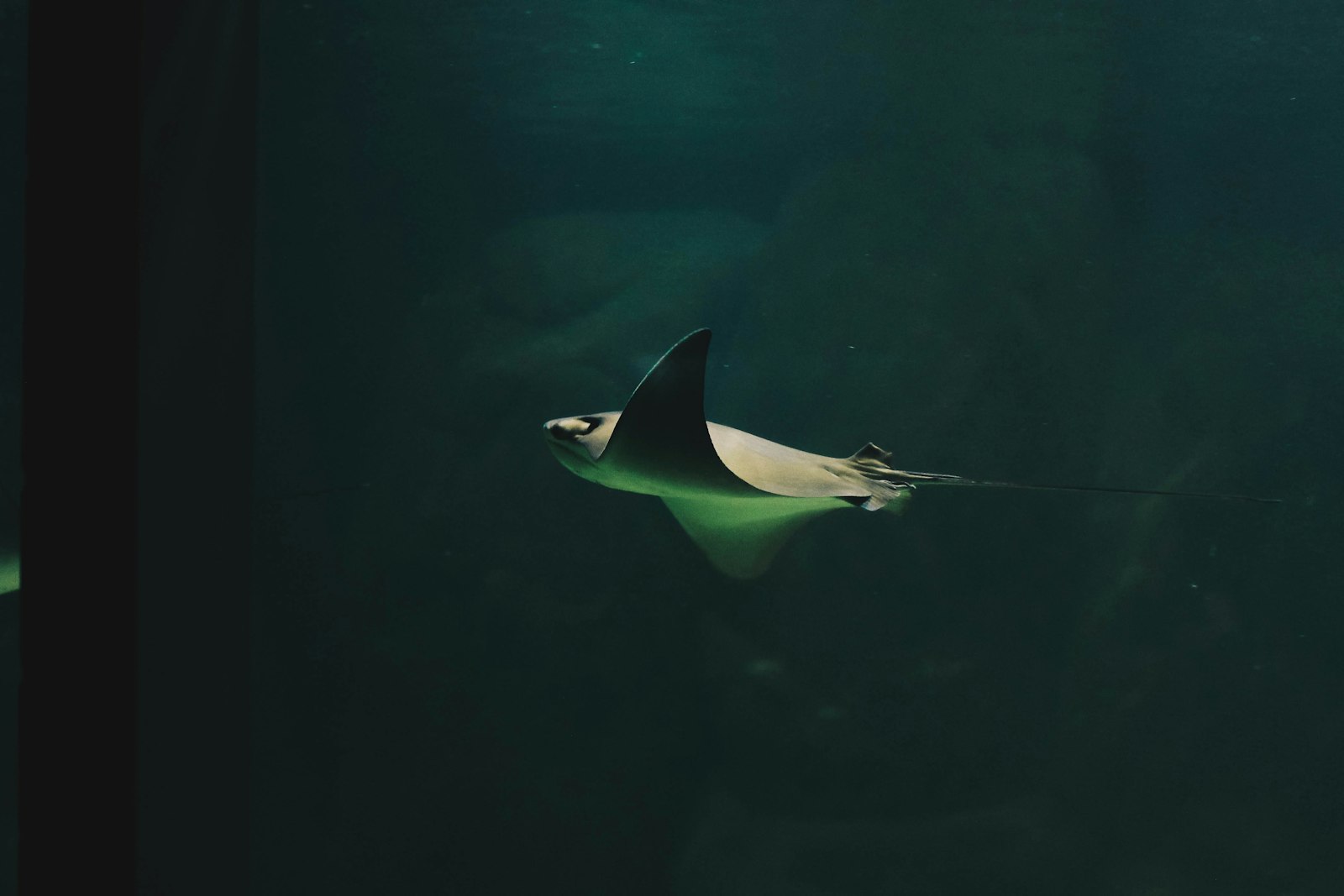
Manta Alley is a dive site at the southern tip of Komodo Island, directly exposed to the Indian Ocean, where a series of submerged coral bommies and sandy channels between 10 and 25 metres act as permanent cleaning and feeding stations for reef mantas. The site earns its name honestly: reef manta rays (Mobula alfredi) are recorded here year-round, and during the plankton-rich upwelling months — roughly October through April — aggregations can reach numbers rarely matched elsewhere in Komodo National Park.
What the name does not tell you is that Manta Alley sits roughly four to five hours by liveaboard from Labuan Bajo harbour, on a coastline exposed to open-ocean swell. Day-trip boats from Labuan Bajo cannot reach it safely in normal operating windows. If Manta Alley is on your list, you are booking a liveaboard — no exceptions.
Where Exactly Is Manta Alley?
The site lies at the southern headland of Komodo Island, facing south into the Indian Ocean. The key landmarks are a shallow bay shelving between five and ten metres, flanked by deeper bommie formations that drop to twenty-five metres. The channel between the bommies funnels current-driven water, which is precisely why mantas congregate: the upwelling delivers cold, nutrient-dense water from depth, feeding the plankton bloom that fuels the food chain all the way up to the rays.
One thing to clarify before you research further: Manta Alley is sometimes confused with Torpedo Point, a different site in Horseshoe Bay on the south coast of Rinca Island. Both are south Komodo sites, both are liveaboard-only, both see significant manta activity at times — but they are separate locations, different dive profiles, and serve different purposes on a liveaboard route. Manta Alley is on Komodo. Torpedo Point is on Rinca. This page covers Manta Alley only.
The Dive Profile: What You Actually Encounter Underwater
Depth and Topography
The site divides into two distinct zones. The shallow bay runs five to ten metres — sandy, open, good for mantas doing feeding passes in the water column. The bommie zone drops the action to fifteen to twenty metres on the bommie tops, with bases and channels reaching twenty-five metres. Most productive manta-watching happens in the mid-range, hovering off a bommie at twelve to eighteen metres while rays circle the cleaning stations above and below you.
The cleaning stations themselves are identifiable by the bommies’ resident populations of bluestreak cleaner wrasse. Mantas arrive, slow, open their cephalic fins, and hang in the current while the wrasse pick parasites. The approach matters here: Manta Trust guidelines, which operators in the park are expected to follow, call for at least three metres of distance, approaching from the side or slightly below, never from above or head-on, and never positioning between a manta and the cleaning station. Fin gently; do not chase. Let the ray decide whether it wants company.
Currents and Surge
Manta Alley is an exposed, Indian-Ocean-facing site. That exposure is why the upwelling reaches it so efficiently — and it is also why conditions can be unforgiving. Currents are rated moderate to strong, with surge added on top when any swell is running. The current direction shifts through a dive as the tidal state changes; entering on the wrong side of the bay relative to the current can put you in a corner with limited options.
Negative entries — rolling or giant-striding directly into a current so the boat does not drift over you — are standard at this site. If you have never done a negative entry, brief your guide honestly before the dive. A negative entry done correctly is straightforward; done incorrectly in current and surge it creates exactly the scenario you came here to avoid.
The water is green. Plankton-rich water scatters light, and visibility at Manta Alley typically runs ten to twenty metres rather than the twenty-five to thirty-five metres you might see at a north Komodo site in the dry season. On a strong upwelling day the visibility can tighten further. This is not a malfunction of the site — the plankton is the reason the mantas are there. Accept it as part of the deal.
Water Temperature
South Komodo sits in the path of cold upwelling from the Indian Ocean. Water temperatures at Manta Alley typically run twenty to twenty-five degrees Celsius, with thermoclines common. On some dives the temperature can drop several degrees below a certain layer. A five to seven millimetre wetsuit with a hood is the practical choice; a three millimetre suit works in warmer periods but you will be cold on a long manta-watching session at depth. Cold water and extended hovering at fifteen metres is when nitrogen loading becomes worth watching on your computer.
Experience Requirements
Most operators put Manta Alley behind an Advanced Open Water certificate, with a preference for divers who have completed drift diving in actual current before arriving. The certification requirement alone is not sufficient preparation. The relevant skills are: comfort with negative entries, managing yourself in a current without excessive fin work that disturbs the site, deploying a DSMB while drifting, and ascending on a line or freely in current without losing the group.
Open Water divers who are curious about this site should use their liveaboard days in central Komodo first — sites like Siaba Besar, Mawan, and Manta Point (Karang Makassar) are all accessible at OW level and offer manta encounters in more controlled conditions. After a few days reading current in those environments, the conversation with your guide about whether Manta Alley is right for you will be a much more grounded one. AOW is the honest floor; 30+ logged dives and documented experience with drift is the practical floor.
Manta Season at Manta Alley: The Honest Calendar
Reef mantas are present in Komodo National Park throughout the year. That is the baseline. But the numbers at Manta Alley specifically, and the condition of the site, shift significantly with the seasons.
- October / November through March / April
- The best access window. The northwest monsoon has pushed the Indian Ocean swell around, south Komodo is diveable, and the cool upwelling is at its most consistent. Manta aggregations reach their peak in December through February, when plankton blooms are strongest. Visibility is not at its maximum — the green water that comes with the upwelling is the trade-off — but manta numbers compensate. Water is cold by Indonesian standards: plan for 21–24°C.
- May through June
- Transitional. The south Komodo access window is narrowing but not closed. Some liveaboards still include Manta Alley on six-day-plus itineraries if weather is cooperating. Conditions are variable enough that operators hold it as a best-effort stop rather than a guarantee.
- July and August
- The southeast monsoon runs hard. South Komodo — Manta Alley, Horseshoe Bay, Cannibal Rock, the whole southern zone — is exposed to the full fetch of the monsoon swell. Conditions at Manta Alley in mid-dry season are routinely rough and murky. Many liveaboards drop it from their routing entirely and concentrate on the north and central sites, where July–August is prime season: warm, clear, twenty-five to thirty-five metres of visibility, strong pelagic action at Castle Rock and Crystal Rock. The manta picture is reversed — central sites see more reliable manta activity in the dry season, Manta Alley does not.
- September / October
- The monsoon is easing. Access to the south begins to return. Early October can be excellent if the SE monsoon exits cleanly; late October into November is typically the earliest reliable window.
The net summary: plan Manta Alley for a November-through-March liveaboard if it is a priority. If you are travelling in June–August and specifically want large manta aggregations, Karang Makassar (Manta Point) in central Komodo is the more reliable bet during that window.
Access: Why This Is Liveaboard-Only
The distance from Labuan Bajo harbour to Manta Alley is the reason day trips cannot serve it. Central Komodo sites — Batu Bolong, Karang Makassar, the north channel at Castle Rock — sit one to two hours from harbour by speedboat. That transit allows a day boat to make two or three dives and return before conditions deteriorate in the afternoon.
Manta Alley requires four to five hours of transit each way, along a coast that is open to ocean swell. A day trip that could reach Manta Alley would spend more time in transit than in the water, and would leave divers exhausted before the first dive. No responsible operator offers it as a day trip product.
On a liveaboard, the boat anchors overnight in a sheltered bay near the south Komodo coast, making Manta Alley accessible for an early morning dive when surface conditions are typically at their calmest. The dive plan accounts for tidal timing — Manta Alley on the right side of the tide is a different dive from Manta Alley when the current is running hard against you.
Which Liveaboard Itinerary Includes Manta Alley?
Manta Alley appears on south Komodo routing, which begins at five or six days and extends through nine-day Komodo–Sumbawa crossings. A four-day central-north loop does not have the time to reach south Komodo and return. The site logic on longer itineraries typically groups Manta Alley with Horseshoe Bay stops — Cannibal Rock, Yellow Wall of Texas, Torpedo Point — as a south Komodo day or day-and-a-half block.
On a six-day-plus Komodo itinerary, a representative south Komodo day might look like this: early dive at Manta Alley timed to first light and the incoming tide, surface interval at anchor, second dive at Cannibal Rock or Yellow Wall, then overnight transit to central or north Komodo for the remaining days. Eight and nine-day Komodo–Sumbawa routes extend south first, then north Komodo, then east to Gili Banta and Sangeang volcano.
Liveaboard pricing for routes that include south Komodo reflects their length. Budget phinisi options for six-day trips typically start around USD 1,000–1,800 per person; mid-range boats run USD 2,000–3,500; premium expedition vessels are higher. Add government park fees — expect IDR 300,000–400,000 per diver per day (approximately USD 18–27), which most liveaboards quote separately. These are observed market ranges; actual pricing varies by boat, season, and cabin type. Plan your trip with our concierge and we can match your dates and budget to the right boat.
| Parameter | Details |
|---|---|
| Location | South tip of Komodo Island, Indian-Ocean-exposed |
| Depth range | Shallow bay 5–10 m; bommie zone 10–25 m |
| Current | Moderate to strong; surge common; tidal direction shifts mid-dive |
| Visibility | Typically 10–20 m (green plankton water; 30 m+ possible Jan–Feb) |
| Water temperature | 20–25°C; thermoclines common; 5–7 mm wetsuit + hood advised |
| Minimum level | AOW; drift experience + negative entry comfort strongly recommended |
| Best season | Oct/Nov–Mar/Apr; peak manta numbers Dec–Feb |
| Jul–Aug | SE monsoon swell; site often rough and murky; most operators skip |
| Access | Liveaboard only (4–5 h from Labuan Bajo harbour) |
| Minimum itinerary | 5–6 day south Komodo liveaboard; 8–9 day for Komodo–Sumbawa |
| Marine life (reliable) | Reef manta rays year-round; largest aggregations Oct–Apr |
| Marine life (possible) | Eagle rays, white-tip reef sharks, schooling fish; green turtles in bay |
What You Are Likely to See — and What Is Never Guaranteed
Reef mantas at Manta Alley are more reliable than at most sites in Komodo. The cleaning station dynamic — resident cleaner wrasse populations at established bommies — means mantas return predictably rather than passing through randomly. That said, “more reliable” is not a promise. Marine life does not hold to a schedule. Strong upwelling produces the best conditions, but upwelling is driven by oceanographic forces that do not adjust to dive itineraries.
Outside manta season, or on a rough day when visibility is under ten metres and surge is pushing you sideways, Manta Alley can be a hard dive with limited rewards. Your guide will tell you honestly whether conditions merit the dive or whether a different site will serve the group better. If they recommend aborting or switching, that is the right call.
Beyond mantas, the site’s mid-water and reef populations are consistent with south Komodo’s Indian Ocean character: eagle rays make passes occasionally; white-tip reef sharks rest on the sand in the shallows; schooling fusiliers and snappers work the current edges. Green turtles appear in the shallow bay. The site is not a macro site — bring your wide angle.
Manta Conservation at Manta Alley
Indonesia declared its entire two-hundred-nautical-mile exclusive economic zone a manta ray sanctuary in 2014 — the largest protection area of its kind in the world at the time. Komodo National Park carries UNESCO World Heritage status with overlay marine protections. Reef mantas are legally protected throughout Indonesian waters. Those protections apply to your behaviour underwater, not only to commercial fishing.
The code of conduct is simple and the reasons for it are real. Mantas at cleaning stations are in a behavioural state they do not easily re-enter if disturbed. Chasing a manta away from a cleaning station does not just end your encounter — it potentially denies the ray the parasite removal it came for. The rule of three metres is a minimum; experienced guides hang further back and let the mantas close the gap. Stay low off the bommies, keep your buoyancy precise, and do not hover directly above a cleaning station. Reef hooks are not an appropriate tool at Manta Alley — the site has living coral structure and no bare rubble mooring points that would justify one.
Mantas at Manta Alley are not habituated to large groups of divers all at once. Better operators limit group size at the site and stage entries. If your liveaboard groups all twelve divers in a single mass entry at a cleaning station, that is worth raising with your dive guide before you hit the water.
Planning Honestly: Is Manta Alley Right for Your Trip?
The question most divers actually need to answer is not “is Manta Alley worth it” — it almost always is, given the right conditions and timing — but rather whether their budget, available days, and travel window make a south Komodo liveaboard the practical choice.
If you have five days or fewer, a central Komodo itinerary covering Manta Point (Karang Makassar), Batu Bolong, Castle Rock, and Crystal Rock will give you a complete Komodo diving experience. Manta Point sees mantas year-round and is reachable on day trips; Castle Rock and Crystal Rock are north Komodo at their technical best in the dry season. That itinerary requires no compromise on other major sites.
If you have six days or more, south Komodo routes start to make sense. Six days allows south Komodo — Manta Alley, Cannibal Rock, Yellow Wall — plus the central classics plus one or two north Komodo dives. Eight or nine days opens the Sumbawa extension: Gili Banta, Sangeang volcano’s hot-sand dive sites, Saleh Bay. Every extra day has a justifiable dive added to it.
If you are travelling in July or August and Manta Alley is your primary goal, manage expectations carefully. The north and central sites are outstanding in those months; south Komodo is not at its best. A November or December trip, or a January booking, will put you at Manta Alley in the conditions the site was designed for.
We match divers to itineraries based on experience, budget, travel window, and what they actually want to see underwater — that sometimes means recommending the shorter or less expensive trip when it genuinely fits better. Use our enquiry form or reach us on WhatsApp to talk through your dates. We can advise on seasonal timing, minimum experience fit, and which boats cover south Komodo well.
Frequently Asked Questions
Can I dive Manta Alley on a day trip from Labuan Bajo?
No. Manta Alley is at the southern tip of Komodo Island, four to five hours by sea from Labuan Bajo harbour. The transit alone makes a day trip impractical — by the time a boat arrived, conditions would typically be deteriorating. Manta Alley is accessible only on liveaboards of five days or longer, which anchor overnight near the south Komodo coast and time the dive to the morning tidal window.
What is the best month to dive Manta Alley?
December through February delivers the strongest combination of reliable site access and large manta aggregations, when cool upwelling and peak plankton bloom coincide. The broader access window runs from October or November through March or April. July and August are the worst months for Manta Alley — the southeast monsoon drives swell and murk into the exposed south coast. If those months are your only travel option, plan for central and north Komodo sites instead.
Is Manta Alley suitable for Open Water divers?
Most operators require Advanced Open Water certification for Manta Alley, and the practical requirements go beyond a card: comfort with negative entries, the ability to hold depth and position in current without disturbing the reef, and experience deploying a DSMB while drifting. OW divers who want to experience manta rays in Komodo can do so at Karang Makassar (Manta Point) in central Komodo, which is open to all experience levels including snorkellers. Discuss your log book with your liveaboard dive guide — they will tell you honestly whether Manta Alley is appropriate for you after your check dive.
Are manta sightings guaranteed at Manta Alley?
No sighting at any dive site can be guaranteed. What can be said is that Manta Alley has established cleaning stations with resident cleaner wrasse populations, which means mantas return regularly rather than visiting randomly — the site is among the more reliable manta locations in Komodo National Park during the October-to-April window. Outside that season, or on days when weather or current conditions push the dive closer to its limits, encounters are less predictable. Your guide will always give you an honest read before the dive.
How does Manta Alley differ from Manta Point (Karang Makassar)?
Manta Point (Karang Makassar) is a shallow plateau in central Komodo — eight to eighteen metres, gentle to moderate current, accessible to all certification levels including snorkellers, reachable on day trips from Labuan Bajo. It is Komodo’s highest-volume manta site and operates reliably through much of the year, with particular activity in the dry season months. Manta Alley is south Komodo, Indian-Ocean-exposed, deeper bommie structure at ten to twenty-five metres, moderate to strong current with surge, AOW minimum, liveaboard-only access, and best in the plankton-rich wet-season months. The two sites draw mantas for similar reasons — cleaning stations and plankton — but serve different divers, require different experience levels, and peak in different seasons.