
Tatawa Besar & Tatawa Kecil: Same Name, Two Very Different Dives

Lukas Wajong
March 28, 2026
15 min read
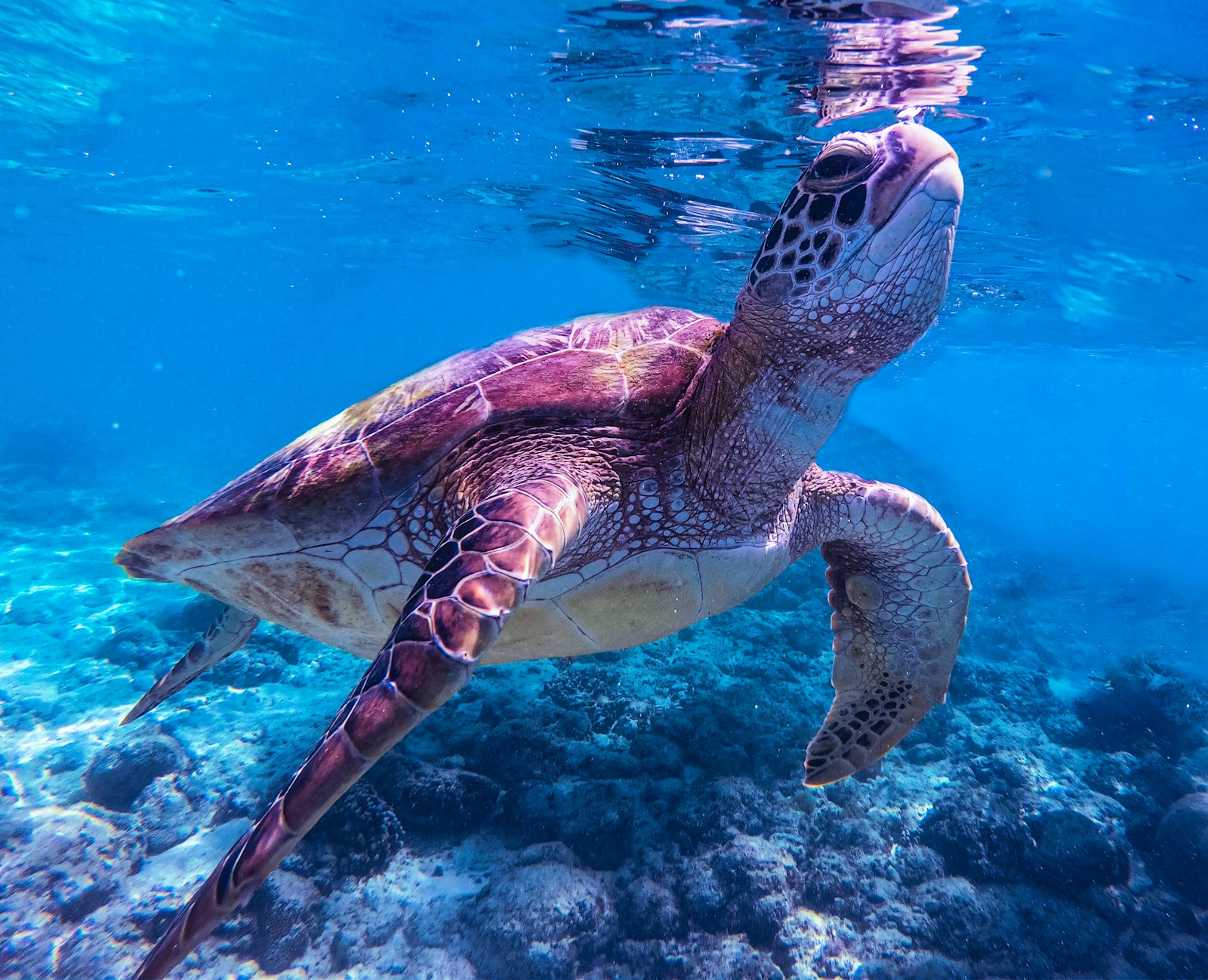
The Tatawa Besar dive site is a sloping coral garden on the south side of Tatawa Besar island, running roughly 5 to 25 metres, with gentle-to-moderate drift and a species list that ticks most of what you hope to see in Komodo National Park. It is one of the few sites in the central park zone that an Open Water diver with around ten to twenty logged dives can enter without a briefing that doubles as a liability waiver. Tatawa Kecil, the smaller islet a short boat ride away, shares the first word of its name and almost nothing else: it generates the kind of split, converging current that even experienced divers approach with respect.
I have guided both sites across several seasons, and the question I hear most often is some version of: “They both say Tatawa — are they roughly the same?” They are not. The gap between them is wider than the gap between Siaba Besar and Batu Bolong. Getting that wrong, as a diver or as someone booking on behalf of a group, has real consequences. This guide lays out exactly what separates the two, who each site is right for, and when to dive them.
Tatawa Besar: What the Site Actually Delivers
Tatawa Besar sits in the central Komodo zone, between Batu Bolong to the north and the Tatawa Kecil passage to the west. The reef slopes steadily from a shallow crest at around 5 metres down through a soft-coral-carpeted gradient to 20 or 25 metres before it flattens into a sandy rubble zone. Most divers work the 10-to-18-metre band where the coral density is highest and the current is manageable.
Drift here is typically a one-to-two knot push along the reef face rather than across it. You move with the water, not against it. On most tides the current is consistent enough to plan for but gentle enough that you can hover over a cleaning station or follow a turtle without burning air. On occasional spring tides or when the tidal exchange is running fast through the central channels, the site can pick up to three knots — still driftable, but worth knowing before you get in.
Depth and dive profile
- Crest: 5–8 m (good backup air management zone)
- Main reef slope: 10–18 m (where most action happens)
- Base/rubble: 20–25 m
- Typical dive time: 50–65 minutes on a standard 12L aluminium cylinder
What you may encounter
The soft corals at Tatawa Besar are in good shape — sea fans, whip corals, and thick carpets of leather corals dominate the mid-slope. Hard coral cover is solid on the shallower sections, with table corals and large Porites heads. Turtles are a near-certainty; green turtles cruise the slope and rest on the rubble at the base. The fish biomass is lighter than Batu Bolong or Castle Rock — this is not a shark-frenzy site — but reef fish diversity is high: schools of fusiliers, batfish hanging motionless mid-water, sweetlips under overhangs, and occasional Napoleon wrasse moving through the column.
Reef sharks pass through on most dives, usually one or two whitetips working the current edge at depth. Manta rays are possible when the plankton is thick, particularly in the broader September-to-May window; that said, I have seen mantas here and I have not, and I would never book a diver onto this site with a manta guarantee. The site rewards divers who are happy watching coral and fish and occasional large animals, not the ones who need a packed pelagic show every time.
Tatawa Besar eligibility
| Criterion | Minimum | Notes |
|---|---|---|
| Certification | Open Water (any agency) | PADI, SSI, NAUI, CMAS OW equivalent accepted |
| Logged dives | 10–20 | Operators vary; 15 dives is a practical midpoint |
| Buoyancy | Comfortable neutral hover | Reef contact will be picked up by the guide — sites have live coral |
| Drift experience | One guided drift recommended | If first-ever drift: discuss with guide pre-dive, shallower entry |
| AOW required? | No | OW is the stated floor at reputable operators |
Day-trip operators run Tatawa Besar on a rotating schedule. It is a reliable second or third dive of the day once the tide window aligns, and it is one of the first sites I recommend when a group has mixed experience — beginners ready to step up from Siaba Besar, intermediates who have already done Manta Point, and more advanced divers killing time between north-park runs. It serves all three without breaking the group apart.
If you are planning a day trip and want to know whether Tatawa Besar is on the day’s rotation, or whether your logged-dive count puts you in range for the full central-park circuit, reach out via our enquiry form or message our WhatsApp desk — we can run through the day’s tidal window and give you a straight answer.
Tatawa Kecil: What Changes When the Islet Gets Smaller
Tatawa Kecil is roughly two kilometres from its larger neighbour and physically much smaller. That geometry matters underwater. The same tidal flow that runs gently along the broad flank of Tatawa Besar has nowhere to go when it hits the narrow Tatawa Kecil passage — it accelerates, pinches, and in many tidal states it splits: one stream peeling left, one peeling right, with a convergence zone in between that can push divers up, down, or sideways depending on exactly where they are in the water column.
The site has been described by one regional dive resource as "for those who love and know currents." That is accurate, and it is not a marketing line — it is a screening criterion. The plateau at the top of the structure sits at roughly 5 to 10 metres, with the main dive terrain running 10 to 30 metres down the flanks. When the current is cooperative, the hard and soft coral coverage is excellent: big table corals, staghorn stands, and the kind of fish congregation that builds around a well-lit structure in open water. When the current shifts — and at Tatawa Kecil it can shift within a single dive — the site turns into a navigation problem that a diver without drift experience and strong buoyancy control should not be managing.
Current mechanics at Tatawa Kecil
The Indonesian Throughflow — the sustained Pacific-to-Indian Ocean current squeezed through the straits of the Komodo region — runs at its strongest during the SE monsoon, roughly June through August, on spring tides around new and full moon. At those moments, Tatawa Kecil can see surface currents of five knots or more in the passage. Diveable windows exist even in those conditions, but they are short, and reading the water before entry is not optional.
Down-current risk is real at the exposed tips of the islet. Divers who drift past the corner at depth without the spatial awareness or fin power to abort and ascend safely have ended up downstream of the boat. The local safety protocol — search roughly ten seconds for a separated buddy, then ascend independently with a surface marker buoy deployed at depth — exists precisely because Tatawa Kecil separations happen. Not frequently, but they happen.
Tatawa Kecil eligibility
| Criterion | Minimum | Notes |
|---|---|---|
| Certification | Advanced Open Water (or equivalent) | AOW drift/deep specialties directly applicable |
| Logged dives | 30–50 minimum; 50+ preferred | Higher end strongly recommended on spring-tide days |
| Drift experience | Multiple guided drifts in variable current | Single-direction gentle drift (like Tatawa Besar) is insufficient preparation |
| Buoyancy | Precise — must hold depth ±1 m in moving water | Depth excursions in split current have consequences |
| DSMB | One per diver | Non-negotiable for this site; carry and know how to deploy |
| Tidal timing | Guide-determined — not diver-selected | Entry window may be 15–20 minutes; guide reads the surface first |
What Tatawa Kecil offers the right diver
When you tick those boxes, the site is genuinely rewarding. The pelagic pass-throughs here are more consistent than at Tatawa Besar — trevally in packs, dogtooth tuna moving through, reef sharks working the current line. Table coral formations on the protected side have grown undisturbed to sizes you rarely see on heavier-traffic sites. The split-current convergence zone, navigated correctly, puts divers in a column of water where the fish stack up in unusual density. It is a skilled-diver payoff, not a beginner prize.
Tatawa Kecil is a standard inclusion on liveaboard itineraries — typically on a day that also includes Batu Bolong or a north-park run — and occasionally on advanced day trips when the tidal window lines up in the afternoon. It almost never appears on introductory or mixed-level day trips for obvious reasons.
The Honesty Gap: Why Calling Them "Similar" Does Divers a Disservice
Both sites share the Tatawa name. Both are in the central Komodo zone. Both dive roughly 10 to 30 metres on similar reef structures with broadly similar marine life categories. In aggregate website descriptions — the kind written from a desk — they can look like adjacent difficulty tiers rather than fundamentally different dives.
The practical consequence: an Open Water diver with fifteen logged dives reads a day-trip itinerary listing "Tatawa" and pictures the gentle drift they briefed for. If it is Tatawa Kecil on a spring tide afternoon, that is a mismatch with real risk attached. The reverse also happens: a diver with fifty logged dives and strong drift experience books a central-park day trip expecting Tatawa Kecil and gets a pleasant but less challenging Tatawa Besar run, with no complaint — but also with no acknowledgement that they are two very different sites.
On this site, we flag this distinction because it is the kind of information that does not fit in a three-line activity listing. The dive briefing has to happen before entry, not after you are already in the water.
Side-by-Side Comparison
| Factor | Tatawa Besar | Tatawa Kecil |
|---|---|---|
| Depth range | 5–25 m | 5–30 m (plateau 5–10 m) |
| Main action depth | 10–18 m | 10–25 m |
| Current character | Gentle to moderate unidirectional drift | Strong, split/converging around islet |
| Down-current risk | Low (on typical tides) | Real — at exposed tips on spring tides |
| Minimum cert | Open Water | Advanced Open Water |
| Logged dives floor | 10–20 | 30–50 (50+ preferred) |
| DSMB required? | 1 per buddy pair (good practice) | 1 per diver (mandatory) |
| Reef type | Sloping soft+hard coral garden | Islet flanks — table/staghorn hard coral, sea fans |
| Pelagic frequency | Moderate — reef sharks, occasional manta | Higher — trevally schools, tuna, reef sharks common |
| Turtle frequency | High — green turtles on slope | Present, not the headline |
| Typical day trip? | Yes — regular rotation | Occasionally, advanced only; more common on liveaboard |
| Night dive? | No (not standard) | No |
| Snorkelers allowed? | In calm conditions (site-dependent) | No — current too variable |
Season and Conditions
Both sites sit in the central park zone, which is the most reliably diveable part of the Komodo calendar. The broad prime window runs from roughly March or April through to October or November — the dry season, when the SE monsoon delivers the northerly swell that makes the south park rough and the north park calm. During those months, visibility on the central sites typically runs 15 to 25 metres or more, water temperatures sit in the 27 to 29°C range, and current timing is predictable enough that a guide can plan the day around the tidal table.
In the wet season, roughly December through February, north Komodo can get rough and some sites become inaccessible on bad weather days. The central sites including both Tatawa islands are more sheltered and remain diveable through most of the wet season, though conditions vary week to week. For Tatawa Kecil specifically, current behaviour through the wet season does not become gentler — if anything the throughflow runs strong — so the eligibility criteria do not relax.
Peak tourist months are July and August. The park issues a maximum of 1,000 visitor entries per day (allocated via the SiORA app), and peak-season day trips book weeks to months out. Both Tatawa sites see heavier boat traffic in peak season. For liveaboard itineraries, the standard advice applies: book six to twelve months ahead for July-August departures.
How These Two Sites Fit Into a Komodo Trip
A useful way to think about the central Komodo sites is as a progression. Siaba Besar — sheltered, calm, turtles everywhere — is the check-dive site and the entry point for newer divers. Tatawa Besar is the next step: your first real drift in the park, an introduction to the reef character, and a site where you accumulate confidence in moving water. Manta Point (Karang Makassar) and Tatawa Besar are often paired on day trips as the more accessible central sites. From there, Batu Bolong and Tatawa Kecil represent a step up in current demand and site complexity; Castle Rock, Crystal Rock, and Shotgun (The Cauldron) sit at the top end of what the park offers.
For a diver on their first Komodo trip with Open Water certification and twenty-odd dives, a well-planned day trip can include Siaba Besar, Tatawa Besar, and Manta Point. That is an excellent day in the park — varied, scenic, appropriately challenging. Tatawa Kecil is a reason to come back with more dives under your belt or to book a liveaboard that mixes beginner-accessible sites for acclimatisation with the harder sites once the guide has assessed the group.
For a diver with AOW and fifty-plus dives looking to build a serious Komodo list, Tatawa Kecil pairs naturally with Batu Bolong on the same day (one morning, one afternoon tide window), and both belong on the same itinerary as Castle Rock for the full north-central circuit.
If you want to work through which combination makes sense for your certification level and available days — day trip, short liveaboard, or private charter — plan your trip with our concierge team. We answer dive-level questions on WhatsApp too, and we are direct about which sites match your current experience.
Equipment Notes
Both sites are done on standard recreational gear. A 5mm wetsuit is adequate for the central park through the main dive season; some divers run a 3mm on the warmest months and find it sufficient. For Tatawa Kecil, fins with a reasonable blade area — the kind that give you braking power in cross-current — matter more than at Tatawa Besar. A computer is expected at both sites; rental equipment is available through any reputable operator in Labuan Bajo. Nitrox is widely available, particularly on liveaboards and some day boats, and extends bottom time on the 18-to-22-metre sections of Tatawa Besar usefully.
Reef hooks are a split-topic across Komodo operators: some allow them on bare rock and rubble specifically, others ban them for guests entirely. Follow your operator’s stated policy. At Tatawa Kecil in particular, deploying a reef hook on live coral while managing split current achieves nothing except reef damage — a stationary position in that site requires proper weighting and fin technique, not an anchor point.
Frequently Asked Questions
Is Tatawa Besar suitable for Open Water divers on their first Komodo dive trip?
Yes, with appropriate caveats. An OW diver with ten to twenty logged dives who is comfortable with neutral buoyancy can dive Tatawa Besar on a guided day trip. The key qualifier is drift experience: if this will be your first drift dive, brief honestly with your guide before the water entry. The current is manageable at Tatawa Besar, but a completely current-naive diver will benefit from working Siaba Besar first, then stepping up. Most Komodo day trips run a sheltered check dive or first dive before the current sites anyway — that sequence exists for exactly this reason.
Can I dive Tatawa Kecil with Open Water certification if I have a lot of experience?
Reputable operators use Advanced Open Water as the hard floor for Tatawa Kecil, and the logged-dive requirement sits at thirty to fifty minimum. If your OW certification is backed by significant drift experience in similar current environments and a local operator’s guide assesses you as competent on the check dive, there may be operator-by-operator flexibility. The certification floor is not arbitrary bureaucracy — split currents at Tatawa Kecil involve situational awareness and water-reading that AOW training is specifically designed to develop. If you are one or two dives short of the threshold, the practical recommendation is to complete your AOW before the trip, not to negotiate exceptions on the day.
Which site is better for seeing manta rays?
Neither Tatawa site is the primary manta destination in Komodo — that is Manta Point (Karang Makassar), a site specifically structured around manta cleaning stations with a broad shallow plateau at eight to fifteen metres. Mantas are present year-round across the park with the peak aggregation window roughly September through May, strongest December to February. Tatawa Besar sees occasional manta passes, particularly when plankton is dense in the water column. Tatawa Kecil sees mantas less frequently as a headline encounter. If manta diving is the primary objective of your trip, plan your day around Manta Point tidal timing first, then add Tatawa Besar as a complementary dive.
How do I get to the Tatawa sites from Labuan Bajo?
Both sites are reached by speedboat from Labuan Bajo harbor, typically departing 07:30 to 08:00. Travel time varies by vessel — fast speedboats reach the central park zone in roughly one to one and a half hours; slower day boats take longer. The Tatawa islands sit close to each other in the central zone, so a day trip can visit both sites (conditions and eligibility permitting) or pair either site with Batu Bolong or Manta Point depending on the tidal schedule. Park entry fees for foreign divers run approximately IDR 300,000 to 400,000 per diver per day, typically invoiced separately from the trip cost — confirm the exact breakdown with your operator at booking.
Is Tatawa Kecil diveable year-round?
It sits in the central zone, which dives most of the year. The weather window is broader here than at the south-park sites, which shut down reliably in the SE monsoon. That said, Tatawa Kecil’s current behaviour is closely tied to the tidal cycle rather than the season, and on big spring tides during the June-to-August SE monsoon period, the throughflow is at its annual strongest. Experienced divers with proper preparation can dive it year-round; the question is whether the specific tidal window on a given day makes a safe entry possible. Your guide makes that call at the site, not in advance from the office.