Castle Rock Komodo: Honest Dive Site Guide (Depth, Current, Who Can Dive It)

Lukas Wajong
March 16, 2026
17 min read
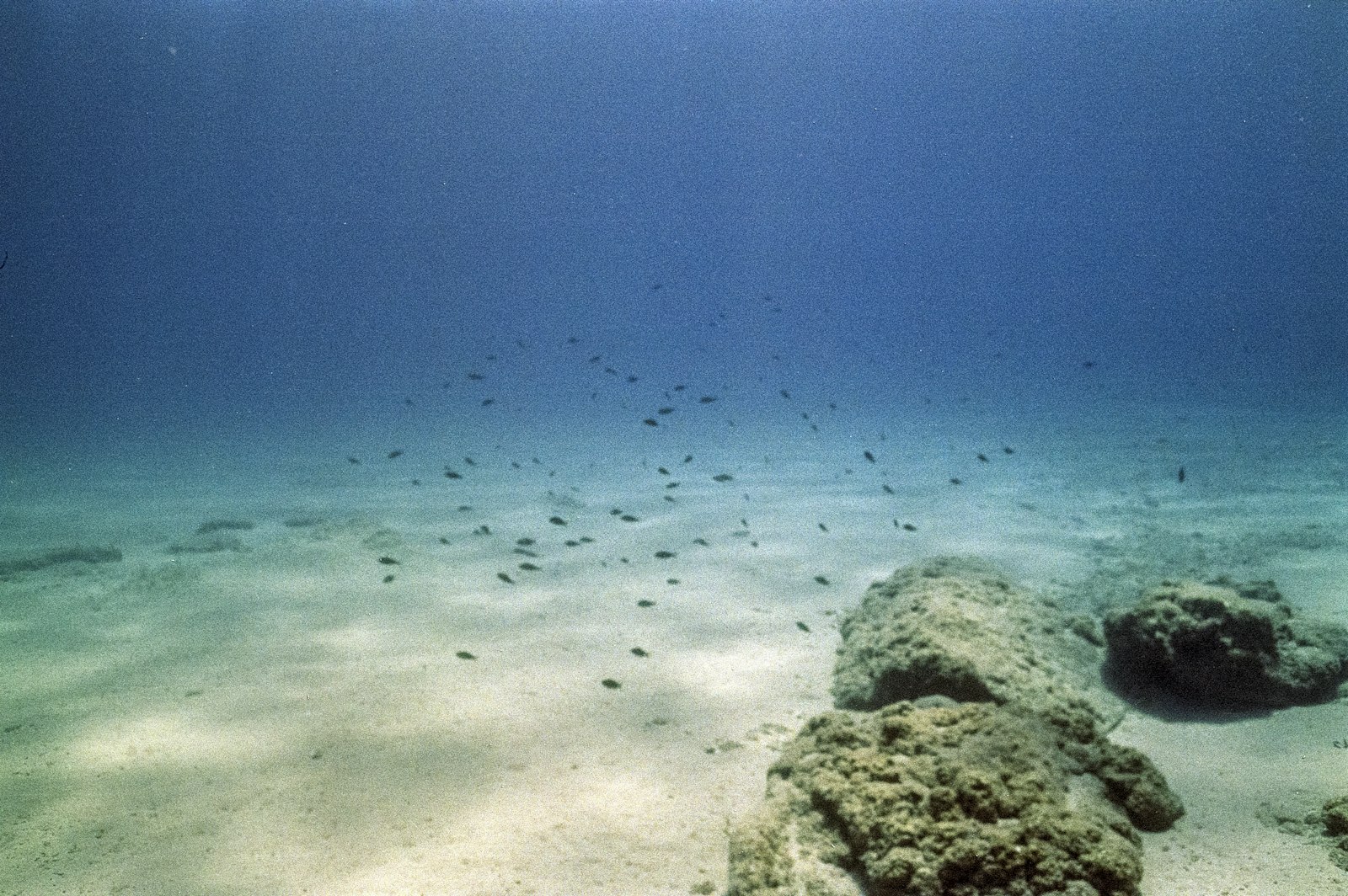
Castle Rock is an open-water seamount sitting north of Komodo Island, and it is the one site in the park that separates divers who are genuinely ready for strong-current diving from those who think they might be. The plateau runs roughly 15–20 m deep; follow the flanks and you are looking at 30–40 m. Currents here are rated 4–5 out of 5, and the dive is scheduled at or near tidal slack—not because slack makes it easy, but because the windows either side of slack are the only ones where recreational diving is feasible at all.
I have guided Castle Rock from day boats and from liveaboards. The experience differs less than you would expect: both require a negative entry, both demand that you monitor the edge constantly for accelerating flow, and on both you keep a tight group because a separated diver at this site drifts fast and far. This guide covers everything honestly—depth, current, who meets the experience bar, what you might see, and how to plan the trip from Labuan Bajo.
Site Overview: Depth, Structure, and What the Current Actually Does
Castle Rock is a submerged seamount, not a wall, not a slope. It punches up from deeper water and flattens into that plateau at 15–20 m. The top is broad enough to assemble a group, but the edges drop sharply onto the flanks, which extend to 30–40 m and beyond. That abrupt shelf edge is where the current problem concentrates.
Komodo’s currents are driven by the Indonesian Throughflow—Pacific water pushing through toward the Indian Ocean via a series of narrow straits. Around the north of Komodo Island, tidal exchange compounds this; on spring tides or during the height of the southeast monsoon (June–August), the regional flow is capable of exceeding 7–8 knots through some passes. Castle Rock sits in the path of this system. On the seamount plateau, at slack, conditions can feel deceptively manageable. Step off the edge by a metre or two and the acceleration into the column can be sudden and non-negotiable.
Down-current risk at the edges is real and documented here. This is not the same as a gentle drift where you let the current carry you along the reef. At Castle Rock’s flanks, an eddy or a current shift can push a diver downward. That is why the dive is timed carefully, why negative entries are standard, and why every competent operator briefs the lost-diver protocol—ascend individually, deploy DSMB, drift—rather than asking you to fight back to the group.
Current Rating and Tide Timing
- Current rating
- 4–5 out of 5 (strong to very strong)
- Dive timing
- At or near tidal slack; typically a 20–40 minute window depending on tidal range and season
- Moon influence
- Strongest currents on new and full moon; some operators adjust Castle Rock schedules to neap tides for guests with fewer dives
- Season
- North Komodo dives from roughly March/April through October/November; January–February can be rough and sometimes undiveable
- Visibility
- Dry-season north: 20–30 m, often 25–35 m in July–August; wet season drops to approximately 10–20 m
- Water temperature (north)
- 27–29°C in the dry season; warmest July–August
The practical consequence of a current rating of 4–5 is that your dive plan cannot be improvised at the site. On a day trip from Labuan Bajo, north Komodo is a 2-hour-plus steam by day boat. If the weather changes or the tidal window closes, your skipper may hold the boat off the site, attempt a different site entirely, or scrub the north leg and substitute a central site. That is not a failure of the operator. It is the north Komodo reality, and any operator who does not plan for it is one you should look at twice.
Experience Requirements: AOW, Logged Dives, and Why Operators Mean It
Castle Rock is advanced-only at most Komodo operators. The standard gate is Advanced Open Water certification plus a logged-dive minimum. That minimum varies, but the honest range is 20–50 logged dives, and several experienced guides here recommend 50–60 before a diver attempts the site with confidence.
The certification requirement is not bureaucratic caution. AOW trains specifically for deeper profiles and introduces drift diving—two skills that are directly relevant at Castle Rock. But the logged-dive count matters more than the card, in my view. A diver with AOW and 22 dives is technically within the gate, but if those 22 dives were all on protected house reefs in Bali, their buoyancy in moving water, their reaction to current acceleration, and their situational awareness under stress have not been tested. That is not a hypothetical gap. It is the gap that creates incidents.
The honest answer to “how many dives do I need?” is: more than the minimum on paper. Forty dives that include open-water drift diving, current sites in Bali or similar, and at least some blue-water exposure will prepare you far better than 50 dives in sheltered lagoons. Tell your operator the truth about where you have dived, not just how many dives you have logged.
Can I dive Castle Rock with Open Water certification?
No—not at most operators, and not safely. Open Water certification does not cover drift diving or the deeper profiles you hit on Castle Rock’s flanks. The answer from virtually every Komodo operator running the north route is a clear no. If an operator offers you Castle Rock on an OW cert, ask what their guide ratio is and what their lost-diver protocol looks like. A conservatively run operation will not put an OW diver on this site regardless of how confident you feel. I would rather move you to Siaba Besar and send you back next year with the right experience than brief you through a site where I am already worried about you before the entry.
Experience Requirements at a Glance
| Requirement | Castle Rock | Comparable North Sites | Beginner Alternative |
|---|---|---|---|
| Minimum certification | Advanced Open Water (AOW) | AOW (Crystal Rock, Shotgun/The Cauldron, Tatawa Kecil) | Open Water (Siaba Besar, Tatawa Besar, Manta Point) |
| Logged dives | 20–50 minimum; 50–60 recommended by experienced north-Komodo guides | 20–50+ (GPS Point: experienced advanced only) | 10–20 dives for Tatawa Besar; 10+ for Manta Point |
| Drift experience required | Yes—open-water drift, not just gentle reef drift | Yes (Shotgun: drift experience essential) | Not required at sheltered sites |
| Check dive required | Standard on liveaboards; most day-trip operators conduct one | Same | Check dive still advisable |
| DSMB | Minimum one per buddy pair; one per diver increasingly standard | Same | Recommended |
Entry Technique: Negative Entry and What It Involves
A negative entry means you descend as fast as possible the moment you hit the water—no surface swim, no pause to adjust your mask. You deflate your BCD before you enter, drop feet first or giant stride off the boat, and kick down immediately. The reason is current: even at slack, the surface layer at an exposed seamount can run faster than the water column below, and a diver floating on the surface burns time and position before the group is together and the descent begins.
If you have not done a negative entry before, Castle Rock is not the place to learn it. Practice at a site with mild current first—Batu Bolong is often used as an introduction to Komodo’s style of entry. The technique itself is simple; the stress of doing it for the first time on a fast-moving site is not.
Your dive guide will brief the entry sequence, the assembly point on the plateau, and the ascent protocol if separation occurs. Pay attention to the ascent protocol in particular. The standing approach here: if you lose the group, search for approximately ten seconds, then ascend independently, deploy your DSMB, and drift. Do not fight the current trying to reunite. Surface visible with your marker and wait for the boat. That protocol exists because it works.
Reef Hook Policy
Reef hook practice is split across Komodo operators, and Castle Rock is one of the sites where the split matters most. Some operators permit hooks on bare substrate—exposed rock, rubble, dead coral—to hold position in current and watch the marine life pass. Others ban hooks for guests entirely, either because of conservation concerns or because a guest who deploys a hook improperly can end up dragged into live coral or destabilised when the hook pulls.
The only correct approach: follow your operator’s policy. If they allow hooks, use them on bare rock and rubble only—never on live coral, never on soft coral, never on anything with structure. If your operator bans them, there is no argument to be had at the site. Both policies come from legitimate reasoning. Komodo has a mooring-buoy system at popular sites specifically to prevent anchor damage; the same ethic applies to hooks.
What You Might See: Marine Life Without the Guarantees
Castle Rock has a well-earned reputation for pelagic encounters. White-tip reef sharks, black-tip reef sharks, and grey reef sharks are the animals most consistently associated with the site—they hunt actively in the current at the seamount edges, and on a good slack-tide dive you can watch them work the water column in ways you rarely see at sheltered sites. Grey reef sharks in particular seem to use the current here deliberately, positioning themselves at the edges where disoriented fish get swept past.
Giant trevally—GTs—appear regularly. So do schools of dogtooth tuna and barracuda. On certain dives the barracuda are present in tight spiralling formations of a hundred or more fish; on others you see a handful. Schools of jacks and batfish move through the plateau. Eagle rays pass occasionally.
None of this is guaranteed. Castle Rock is a wild ocean site, not an aquarium. What you see depends on the season, the tide, the visibility, and straightforward luck. The site’s structure and current concentration make encounters more likely than at calmer sites, but any operator who promises specific species sightings is overselling. What I can tell you is that the site consistently produces pelagic life in a way that makes the current management worthwhile if you are ready for it.
The coral on the plateau and upper flanks is respectable—hard corals, some soft coral colonies—but Castle Rock is not a macro dive. You are here for the blue-water action at the edges. If you want nudibranchs and frogfish, plan a dive at Wainilu or a night dive on the south Komodo circuit.
Planning Your Castle Rock Dive: Day Trip vs Liveaboard
You can reach Castle Rock from Labuan Bajo on a day trip, but the north Komodo route is the most demanding day-trip run in the park. The boat ride from Labuan Bajo waterfront to the north sites is 2 hours or more by standard day boat. That means an early departure—typically out of the harbor by 07:30–08:00—and a full day on the water before you return around 16:00–17:30. Day trips to the north generally combine Castle Rock with Crystal Rock and sometimes Shotgun/The Cauldron. Budgets for day trips run from around IDR 2,500,000 to IDR 3,600,000 per person before park fees; government and marine park fees add IDR 300,000–400,000 per diver per day on top of that (exact itemization varies by operator, so confirm before you book).
Liveaboards reach Castle Rock on the second or third day of a 4-day-plus itinerary, usually after a check dive on day one at a sheltered site like Siaba Besar. This is the better context for the site: you have slept on the boat, your guide knows how you dive, and the check dive has confirmed your buoyancy and current handling before the north run. A 4-day/3-night central and north loop from Labuan Bajo typically runs 10–12 dives and covers Batu Bolong, Manta Point, Tatawa Besar, and the north trio. Budget liveaboards start from roughly USD 600 for a 4-day trip at current observed rates; mid-range and premium options go higher. See our Komodo liveaboard guide for a full breakdown of what each duration covers.
If you are choosing between a day trip and a liveaboard specifically for Castle Rock, the liveaboard is the better platform for a diver who is close to the experience minimum. You get the check dive, a guide who knows your style by the time the north sites come around, and you are not burned out from a 2-hour boat ride before you even hit the water. That said, strong AOW divers with 50-plus current dives regularly do Castle Rock as a day-trip highlight without issue.
Ready to plan the trip? Use our enquiry form or reach us on WhatsApp at +62 811-388-23875—we can match you to the right boat and format based on your certification and logged dives, not just what’s easiest to sell.
Safety Equipment and Dive Insurance
A personal dive computer is expected at Castle Rock, not optional. Your computer tracks your actual profile—depth and time—as the current moves you around the seamount, and it gives you the data you need for a safe ascent independent of whatever the group is doing.
DSMB (surface marker buoy) is standard; operators increasingly expect one per diver rather than one per buddy pair at current sites. Carry a whistle and, on liveaboard night entries, a light. These are not expensive items, and at an exposed north seamount they are the tools that get you found quickly if the boat loses sight of you on the surface.
Dive insurance is strongly recommended for any Komodo diving, and essential if you are diving the north sites. Operators report a hyperbaric chamber at Siloam Hospital in Labuan Bajo as the primary DCS facility in the area. Evacuation from north Komodo sites to Labuan Bajo typically takes 1–3 hours. Confirm current chamber availability and your insurance coverage before you dive—this is one of those logistics items that matters and is easy to sort in advance.
Alternatives If Castle Rock Is Out of Reach
If your certification or experience count puts Castle Rock outside the gate, you are not out of options in north Komodo. Crystal Rock is in the same area and carries the same advanced-only designation, so it is not a fallback. But the central park has excellent sites that do not require the same experience threshold.
Tatawa Besar is a gentle-to-moderate drift along a sloping reef, 5–25 m, and is genuinely suitable for Open Water divers with 10–20 dives. Manta Point (Karang Makassar) is a shallow plateau dive—8–18 m, gentle to moderate current, open to all levels including snorkelers—and is one of the best manta-encounter dives in the park. Siaba Besar is the classic sheltered check-dive and training site, calm enough for beginners, famous for its density of green and hawksbill turtles.
These are not consolation prizes. Manta Point on a good day with a dozen mantas on the cleaning stations is a dive that most divers rank higher than Castle Rock. The difference is that Manta Point will happen; Castle Rock requires conditions, timing, and your experience to align. Build the dives at the accessible sites, return to Castle Rock when you are genuinely ready, and the site will be better for the wait.
You can also use a Komodo trip to close the experience gap. AOW courses are available in Labuan Bajo and can sometimes be arranged as part of a liveaboard itinerary—completing your AOW dives at Tatawa Besar and Manta Point while aboard, then stepping up to the north sites with your new certification in hand. See our PADI courses page for how that works in practice.
Where Castle Rock Fits in the North Komodo Cluster
Castle Rock, Crystal Rock, and Shotgun/The Cauldron form the advanced triumvirate of north Komodo diving. All three require AOW plus real current experience. All three are typically dived on the same north-route day.
Crystal Rock is a submerged pinnacle whose top breaks 3–5 m at low tide. It carries challenging and split currents, and it rewards divers who can hold position at the current edges to watch white-tip and grey reef sharks work the pinnacle. Shotgun—the channel between Gili Lawa Laut and Gili Lawa Darat—is a high-speed drift that pushes you through a narrow funnel at depth and spits you into blue water; the channel also reliably produces manta encounters. All three are spectacular for different reasons, but none of them is a site to attempt conservatively certificated.
If your itinerary includes all three in a single day, plan rest time between dives. The current stress on your body at these sites is real even if you do not feel particularly tired. Surface intervals matter.
Frequently Asked Questions
Can I dive Castle Rock with Open Water certification?
No, not at most reputable Komodo operators. Castle Rock is classified advanced-only because the current rating (4–5/5), the negative-entry requirement, and the down-current risk at the seamount edges go beyond Open Water training. Operators who enforce this standard are doing so to protect you. The correct path is to complete your Advanced Open Water course, build drift experience at accessible sites, then return for Castle Rock with 40–60 logged dives that include genuine open-water current diving.
How many logged dives do you need for Castle Rock Komodo?
The operator minimum is commonly stated as 20–50 logged dives alongside AOW certification. Experienced north-Komodo guides, including the team here, typically recommend 50–60 dives before a diver attempts Castle Rock with confidence. The count matters less than the type of dives: 40 dives that include open-water drift and current sites will prepare you better than 60 dives on protected house reefs. Tell your operator where you have dived, not just how many dives you have on your card.
What is the best time of year to dive Castle Rock?
North Komodo diving runs roughly March/April through October/November. The dry-season months of July and August offer the best visibility—often 25–35 m—and the calmest crossing from Labuan Bajo. Peak season (July–August) is also when the park is busiest and when boats fill months ahead; book early. January and February can bring rough conditions in the north that make the site undiveable or unsafe to approach. Check current conditions with your operator; wind and swell in the Flores Sea make the final call.
Do I need a reef hook at Castle Rock?
It depends on your operator’s policy, which is split. Some allow reef hooks on bare substrate—exposed rock and rubble only, never on live coral—to hold position while marine life passes in the current. Others ban them for guests entirely. Follow your operator’s briefing without exception. If hooks are permitted, treat the rule as absolute: bare substrate only, and if you cannot find a clean placement, do not hook. Using a hook on live coral at a UNESCO World Heritage site is an embarrassment and a conservation failure.
Is Castle Rock diveable on a day trip from Labuan Bajo?
Yes, but it is the most demanding day-trip run in the park. The north sites are 2 hours or more from Labuan Bajo by standard day boat, requiring an early 07:30–08:00 departure. Conditions, tidal windows, and weather all affect whether the boat reaches the site. Strong AOW divers with solid current experience regularly do Castle Rock as a day-trip highlight; divers closer to the experience minimum are better served doing the site on a liveaboard after a confirmed check dive. Contact us on WhatsApp (+62 811-388-23875) and we can help you pick the right format for your level and available days.