Komodo Yacht Charter with Diving: Luxury Private Dive Itineraries

Ingrid Mathiesen
December 15, 2025
18 min read
How our trips work: Labuan Bajo Diving is the dive-specialist team of our operating partner Komodo Luxury. Prices shown are typical ranges and are confirmed with a fixed quote before you book; conditions, levels and routes are always weather- and season-dependent.
A Komodo yacht charter with diving is a private, whole-vessel booking on a dedicated dive vessel — typically a luxury phinisi or purpose-built expedition motor yacht — where your group controls the itinerary, the wake-up call, and the dive schedule rather than fitting into a shared operator’s programme. It is the highest tier of access to the dive sites inside Komodo National Park — a luxury yacht charter komodo national park guests book when they want full control of the programme, and it is meaningfully different from chartering a seat on a group liveaboard in ways that matter underwater as well as above deck.
This page explains what you actually get at the luxury end of the market, what the honest cost brackets look like, what certification and experience requirements apply regardless of how much you spend, and how to plan a private itinerary around tides and season rather than a brochure. We work with Komodo Luxury on private charters; the WhatsApp concierge at +62 811 3882 3875 handles enquiries from first contact to final logistics.
What a Luxury Komodo Yacht Charter Actually Delivers
The gap between a mid-range group liveaboard and a proper luxury phinisi charter is not mainly about thread counts. It is operational. Here is the concrete difference.
Vessel positioning and tender access
On a shared liveaboard, the boat anchors where the captain judges is safe and reasonably close. On a private charter with a tender — a rigid inflatable or fast dinghy used to shuttle divers — you can position the entry point precisely at a site’s sweet spot without moving the mothership. At Castle Rock in the north, where the top of the seamount sits at 15–20 m and the current runs hard and unpredictable, being dropped on the upstream side at the right moment is the difference between a satisfying drift and a washing-machine entry. A good tender operator, briefed by your dive guide, does that positioning quietly while the group gears up on deck.
Not every vessel marketed as luxury actually carries a tender. Confirm this before you book.
Nitrox as a standard fixture
On upscale phinisi charters, enriched air nitrox — typically EANx32 or EANx36 — is included in the charter fee or available at the onboard fill station at no meaningful surcharge. On day trips and budget group liveaboards it is either absent or charged per tank (observed around USD 15 per fill at some operators). For a Komodo itinerary doing three or four dives a day at 18–30 m across five to eight days, nitrox extends bottom time noticeably at the working depths and reduces fatigue. You need a nitrox certification; if you do not have one, an afternoon’s study and pool session can be folded into the first full day aboard.
Camera and media infrastructure
Serious underwater photographers need a rinse station for housing and strobes, a charging bench with the right voltage and adequate outlets, and a dry area to review footage without salt spray. Luxury charters build this in. Group liveaboards treat it as an afterthought. If you are travelling with a full housing rig, this is not a small detail — salt damage to a strobes connection or a flooded port from a rushed rinse costs more than the charter premium.
Chef-led galley and dietary flexibility
The galley on a proper luxury phinisi is a serious kitchen operating on the same principle as a private villa chef: pre-departure dietary briefing, market sourcing in Labuan Bajo before departure, and meals timed around dive schedules rather than the other way around. That means a full protein breakfast before the first dive, a proper hot lunch at anchor, and a sunset meal calibrated to how long the afternoon dive ran long. On group boats, meals are served when the cook is ready.
Private itinerary scheduling
This is the core argument for a komodo yacht charter, and it is not just about exclusivity. Komodo’s best dive sites — Castle Rock, Manta Alley, the Shotgun channel at Gili Lawa, Cannibal Rock off Horseshoe Bay — are strongly time-dependent. The difference between slack tide and a 3-knot rip at Castle Rock is the difference between a safe, rewarding dive and an abort. A private charter lets the captain and dive guide build the daily schedule around tide tables and moon phase rather than around check-in slots or the preferences of 16 strangers.
On a seven or eight-night itinerary, this flexibility compounds. If the south is rough on day three, you shift to the north. If conditions at Sangeang volcano are perfect two days earlier than planned, you go. Group boats cannot do this.
Seasonal Windows: What the Itinerary Can and Cannot Include
I will be direct about this because a lot of charter marketing glosses over it. The Komodo charter market runs its primary season roughly April/May through October/November, aligned with Indonesia’s dry season. In this window, the north and central sites — Castle Rock, Crystal Rock, Batu Bolong, Manta Point, Tatawa Besar — are in their best condition. Visibility in the north runs 20–30 m on good days, pushing 35 m in July and August. Water is 27–29 °C. No wetsuit drama.
The south — Manta Alley, Horseshoe Bay, Cannibal Rock, the Yellow Wall of Texas — operates on the opposite rhythm. The Indian Ocean swell from the southeast monsoon (June through August) makes the south rough, the visibility murky, and surface conditions unpleasant. The south’s prime window is roughly October/November through March/April, when upwelling brings cold, nutrient-rich water that drives the big manta aggregations at Manta Alley and keeps Cannibal Rock’s extraordinary macro life thriving. Water temperatures at Horseshoe Bay sit around 20–25 °C; a 5–7 mm wetsuit with a hood is not optional, it is what you wear.
A luxury phinisi charter does not override the monsoon. What it does is let you read conditions daily and adjust the route. An eight-night itinerary running from late October can realistically hit both the north and the south. A July charter will be north-and-central-focused; an honest guide will not take you to a rough Manta Alley just because the brochure says it is included.
Manta season across the park
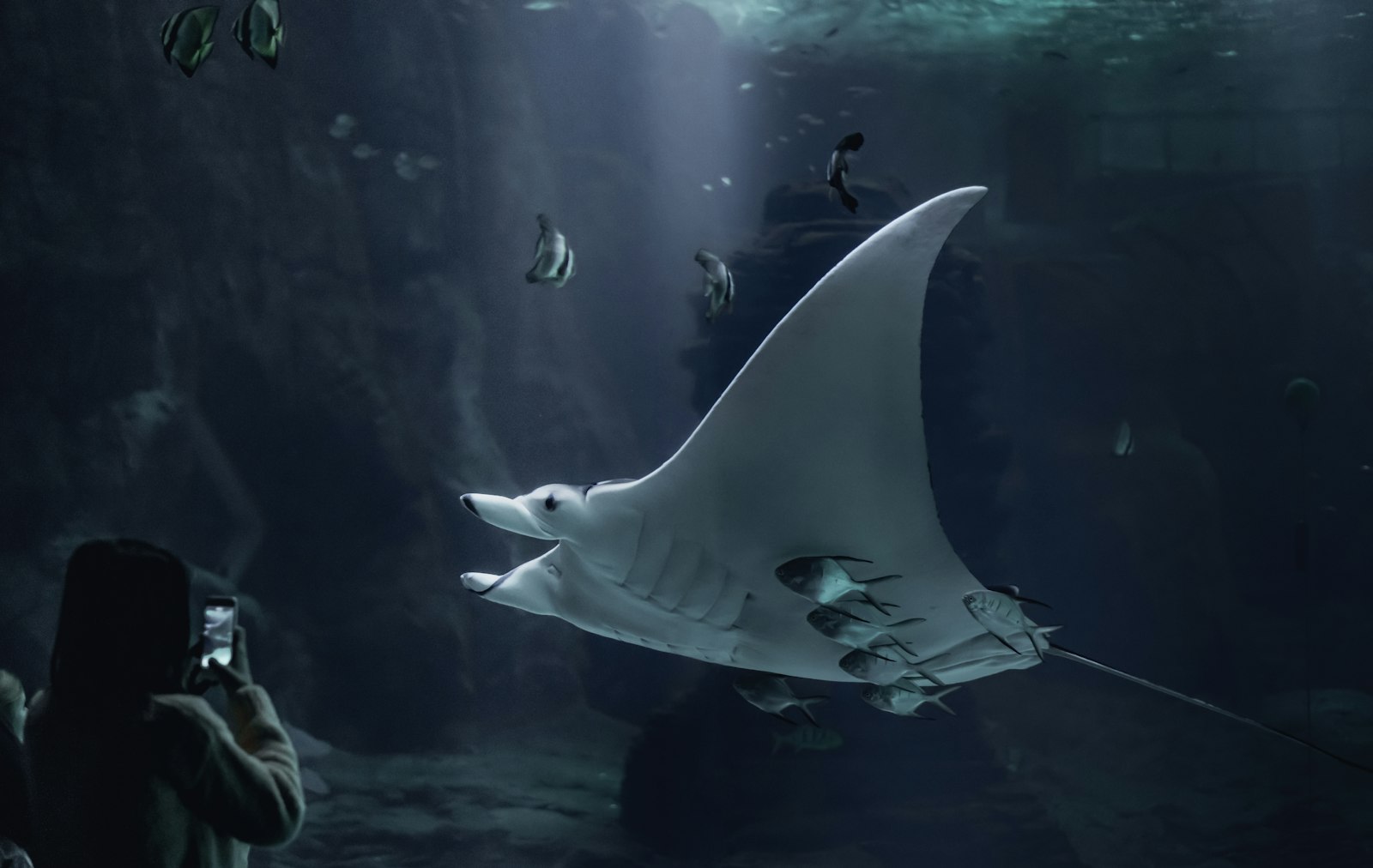
Reef mantas are present in Komodo National Park year-round. The biggest aggregations at the central cleaning stations — particularly Manta Point (Karang Makassar) and the channel near Shotgun — are reported most reliably from September through May, with the peak density typically in December through February when plankton blooms are strongest. We do not promise manta sightings on any trip; the park is not a zoo. What we can say is that a seven-day liveaboard covering both Manta Point and the north channels in the right season gives you multiple opportunities at multiple sites, and the private charter format means you can revisit a site the same afternoon if the first pass was current-disrupted.
Sample Private Itineraries: 5, 7 and 8 Nights
These are route frameworks, not fixed programmes. Every itinerary is confirmed against tide tables and current conditions during the booking process.
5-night north and central focus (dry season, approximately 14–17 dives)
Day 1: Embark Labuan Bajo afternoon, check dive at Siaba Besar (sheltered, turtle-rich, depth 5–18 m — the check dive is where the guide assesses buoyancy and current comfort before the big sites). Dinner at anchor, Gili Lawa area.
Day 2: Shotgun/The Cauldron (narrow tidal funnel, advanced, drift experience required), Crystal Rock, afternoon Gili Lawa Darat beach. Night dive option at Wainilu.
Day 3: Castle Rock (seamount top 15–20 m, flanks 30–40 m, white-tips, grey reefs, GT schools; timed for slack), Crystal Rock second pass if first was current-challenged, afternoon Padar viewpoint hike.
Day 4: Batu Bolong (pinnacle 5–35 m, swirling current, extraordinary fish biomass), Manta Point (Karang Makassar, 8–18 m, all levels including snorkelers, multiple cleaning stations), Tatawa Besar (gentle drift, open water friendly).
Day 5: Komodo dragon trek at Loh Liang, Pink Beach snorkel/easy reef dive, Siaba Kecil macro. Return towards Labuan Bajo evening.
Day 6: Early morning dive Mawan (manta cleaning station, mild current, 5–25 m), disembark Labuan Bajo by late morning.
7-night full park north and south (transition season Oct/Nov or Mar/Apr, approximately 18–22 dives)
Days 1–3: Central and north sites as above (Siaba Besar check, Shotgun, Castle Rock, Crystal Rock, Batu Bolong, Manta Point). Route south toward Rinca second afternoon.
Day 4: Horseshoe Bay/Loh Dasami. Two dives at Cannibal Rock (pinnacle 5–30 m, macro concentration among the world’s best: sea apples, rhinopias, pygmy seahorses, leaf scorpionfish, frogfish, neon tunicates). Night dive at Torpedo Point (electric rays in sand, wunderpus octopus). Water 20–25 °C; 5–7 mm wetsuits and hoods on board.
Day 5: Yellow Wall of Texas (wall 5–30 m, dense yellow soft corals, ghost pipefish, orangutan crabs), Three Sisters (three submerged pinnacles, tops at 10–15 m, experienced AOW required — strong currents and down-current risk near saddles). Afternoon Manta Alley if swell permits (AOW plus negative-entry skills required, plankton-rich green water, variable vis).
Days 6–7: Flexibility day. If south conditions held, repeat best sites. If north wind picks up, reposition to central Komodo: Tatawa Kecil (very strong currents, advanced only), German Flag ridge.
Day 8: Disembark Labuan Bajo via Siaba Besar or Mawan morning dives.
8-night Komodo and Sangeang extension (best April–September for Sumbawa stability, approximately 22–28 dives)
Days 1–5: North and central Komodo as in the 7-night framework, compressing slightly to free up two days for the Sumbawa crossing.
Day 6: Cross to Gili Banta (between Komodo and Sumbawa). GPS Point seamount — very strong current, negative entries, down-currents; experienced advanced divers only; trevally, tuna, reef sharks. K2 ridge is more forgiving (moderate–strong drift, AOW). Gili Banta anchorage.
Day 7: Sangeang volcano. Hot Rocks (black sand slope 5–25 m, volcanic bubble vents, sand visibly moving with geothermal activity, flamboyant cuttlefish, seahorses, frogfish, ghost pipefish). Bubble Reef (gas streams through coral, wide angle and macro both work here). Night dive at Bontoh/Black Magic muck — wunderpus, mimic octopus, harlequin shrimp, rare nudibranchs. Intermediate-friendly sites; the geology is extraordinary and unlike anything in central Komodo.
Day 8: Passage back toward Labuan Bajo with dives at Moyo Island (Angel Reef sloping reef/mini-wall, 5–30 m, mild current, a pleasant decompression from the Sangeang intensity) or Satonda Island (sheltered volcanic fringing reef, all levels, calm anchorage).
Day 9: Disembark Labuan Bajo.
If your group is large enough and the schedule permits, an AOW-during-charter option is available: a qualified instructor aboard can run the Advanced Open Water course across the trip’s non-peak sites, meaning guests who arrive as Open Water divers can be AOW-certified before Castle Rock. This is standard practice on quality private charters and resolves the most common certification gap. Costs for this are separate from the charter fee and confirmed during the planning stage.
Certification and Experience: The Floor Applies to Every Charter
Paying for a luxury charter does not move the certification minimum at Castle Rock. I want to be clear about this because it is sometimes implied otherwise in marketing materials.
| Site category | Example sites | Minimum certification | Typical logged-dive floor |
|---|---|---|---|
| Sheltered / check dives | Siaba Besar, Pink Beach, Satonda | Open Water | 10+ dives |
| Moderate drift | Manta Point, Tatawa Besar, Mawan, Moyo Angel Reef | Open Water | 10–20 dives with briefing |
| Strong and/or unpredictable current | Batu Bolong, Cannibal Rock, Three Sisters, Manta Alley | AOW recommended | 20–30 dives |
| Advanced North Komodo | Castle Rock, Crystal Rock, Shotgun/Cauldron, Tatawa Kecil | AOW | 30–50+ logged dives; 50–60 recommended at some operations |
| Advanced offshore | Gili Banta GPS Point | AOW + drift experience | 50+ logged dives, negative-entry comfort |
| Macro / muck (Sumbawa) | Hot Rocks, Bontoh, Bima Bay | Open Water | 10–20 dives; intermediate suits the pace better |
A private charter with an experienced guide aboard can adapt the day’s dive plan if a site turns out to exceed a guest’s comfort on the water. The check dive on day one exists precisely for this. What it cannot do is override physics: the Shotgun channel at Gili Lawa runs a genuine tidal funnel and it does not know you paid a lot for your cabin.
Non-diving guests are entirely welcome aboard a luxury phinisi charter. Komodo works well for mixed groups — snorkelers can join Manta Point (shallow 8–18 m, gentle current, one of the park’s most accessible sites), Pink Beach, Siaba Besar, Angel Reef at Moyo, and most of the Sumbawa shallow sites. The vessel anchors; divers go underwater; snorkelers explore from the tender or from deck. The park charges snorkelers a base daily fee of approximately IDR 250,000–300,000 (around USD 15–18) without the diver surcharge.
Charter Pricing: What the Market Looks Like
Private whole-vessel charter rates for Komodo National Park span a very wide range. For a yacht-class or luxury phinisi with en-suite cabins, a tender, nitrox capability, and a professional dive guide included, observed market brackets run from approximately USD 2,000 per night at the entry end of the private-charter tier up to USD 25,000+ per night for expedition-grade superyachts. Most purpose-built luxury phinisi charters — four to six en-suite cabins, experienced crew of six to eight, full dive equipment and fill station — fall in the USD 4,000–12,000 per night range for the complete vessel. Per-person cost depends entirely on group size.
These figures are directional. Charter rates depend on vessel specification, season, departure port, itinerary length, number of dives, whether a dedicated dive guide (versus the boat’s master diver) is included, and current fuel costs. We do not publish per-vessel rates here because they change and because quoting a specific boat without a live confirmation does the enquirer a disservice. Rates are quoted on request after we understand your group size, dates, preferred itinerary, and certification levels.
Additional costs to factor in: park fees (typically IDR 300,000–400,000 per diver per day, approximately USD 18–27, itemization varies), ranger/trekking fees if the itinerary includes Komodo or Rinca island walks (IDR 200,000 per group of up to five), and nitrox if not included in the charter fee. These are normally separate from the charter rate and itemized in the final quote.
If your group is weighing a private charter against multiple cabins on a shared luxury liveaboard, the break-even point for per-person cost is usually around six to eight passengers. Below that number, shared liveaboard cabins are generally better value. Above it, private charter often works out comparably priced while giving you substantially more scheduling control.
Ready to get numbers for your specific dates and group? Use our enquiry form or message the WhatsApp concierge at +62 811 3882 3875 — include your target dates, group size, and any certification details and we will come back with options.
Yacht Charter Komodo: Logistics and Practical Details
Getting to Labuan Bajo
Almost all international travellers connect through Bali (DPS) or Jakarta (CGK). The flight to Komodo Airport (LBJ) in Labuan Bajo takes about one hour from Bali. Carriers on the route have historically included Garuda, Citilink, Batik Air, and Lion Air. Charter embarkation is from Labuan Bajo’s waterfront marina. If you plan to dive the afternoon of arrival, the standard practice is to fly in the morning, transfer to the boat, and do a check dive by late afternoon — this gives the guide a genuine read on every diver before the itinerary’s challenging sites begin the following day.
Park access and the 1,000-visitor cap
Komodo National Park operates a daily cap of 1,000 visitors, managed through the SiORA app allocation system. Private charters work within this cap; your charter operator handles the park permit coordination as part of the booking process. In peak season — July and August especially — top berths book six to twelve months ahead. This is not marketing pressure; it reflects real permit availability. If you have specific July or August dates in mind, the earlier you contact us the better.
Recompression facility
Operators in Labuan Bajo report that Siloam Hospital Labuan Bajo operates the nearest hyperbaric chamber as the primary DCS facility for the park; evacuation time from dive sites to the facility is typically one to three hours by fast boat. Dive insurance that covers hyperbaric treatment and evacuation is standard practice for any Komodo diving, charter or otherwise. If you do not already have a dive-specific policy, sort this before you leave home.
Add-ons: helicopter, spa, and land excursions
For yacht diving komodo guests who want to combine the dive charter with broader Labuan Bajo and Flores experiences, helicopter transfers and overflights of the Komodo coastline can be arranged through our partners. Komodo dragon treks at Loh Liang (Komodo Island) and Loh Buaya (Rinca) fit naturally into most itineraries — typically a morning or afternoon while the boat repositions, with the ranger fee shared across the group. Some luxury phinisi vessels offer onboard massage; for guests who want more formal spa services, land-based options in Labuan Bajo can be incorporated into the departure or arrival day. All of these are organized as add-ons; the dive itinerary is always the primary structure and we build the rest around it, not the other way around.
Kids and families
Children who meet the PADI Junior Open Water age requirement (10 years minimum, depth restricted) can participate in dives at appropriate sites — Siaba Besar, Manta Point, Tatawa Besar, and the Sumbawa macro sites fit well. Younger children who are not diving can snorkel at the majority of sites from the tender or enjoy the vessel’s deck-level access to beaches and viewpoints. A private charter is genuinely the most family-friendly format for a Komodo trip because the pace and programme adapt to the group; nobody is rushing to fit a shared boat’s schedule.
Why We Work with Komodo Luxury
We are an independent booking authority for Labuan Bajo and Komodo National Park diving. We cover day trips, courses, group liveaboards across all budget tiers, and private charters — and we recommend the option that fits the guest, which sometimes means the cheaper one. For the private charter tier, we work with Komodo Luxury because their fleet and operations meet the standards described on this page: genuine en-suite cabins (not curtained berths), tenders with positioning capability, trained dive guides with Komodo site experience, and operational flexibility to adjust routes to conditions rather than brochures.
No one can pay to change what we publish. If you use our free help and proceed with a partner operator, they may pay us a referral fee at no extra cost to you.
To plan your exclusive Komodo phinisi charter or discuss whether the private format fits your group and dates, complete our enquiry form or message us on WhatsApp at +62 811 3882 3875. Include your dates, group size, certification levels, and whether non-divers are travelling — we will come back with a specific proposal rather than a generic brochure.
Frequently Asked Questions
What does a Komodo yacht charter with diving typically cost per person?
It depends entirely on group size and vessel tier. Whole-vessel charter rates for a luxury phinisi run roughly USD 4,000–12,000 per night for the complete boat. Divide by the number of guests: six divers on a USD 6,000-per-night vessel pay USD 1,000 per person per night, all-inclusive of diving and meals, before park fees. Smaller groups pay more per head; larger groups get the per-person rate down significantly. The high end of the market — expedition-grade superyachts — can reach USD 25,000+ per night. All rates are quoted on request with live confirmation; we do not publish per-vessel prices without current operator confirmation.
Do I need Advanced Open Water certification for a private Komodo charter?
Not for every site on the itinerary, but for the most rewarding ones — Castle Rock, Crystal Rock, the Shotgun channel, Cannibal Rock, Three Sisters, Gili Banta GPS Point — AOW certification and typically 30–50+ logged dives is the practical floor. Open Water divers can dive comfortably at Siaba Besar, Manta Point, Tatawa Besar, Pink Beach, and most Sumbawa sites. A qualified instructor can run an AOW course during the charter itself, using the trip’s moderate sites as the course dives; guests arrive as OW and are certified before the advanced sites. Confirm this option during the enquiry stage.
Can non-divers join a Komodo yacht charter?
Yes, and it works well. Non-diving guests snorkel from the tender at Manta Point, Siaba Besar, Pink Beach, Moyo Island, and Satonda — all of which have comfortable, low-current surface access. They join the boat for Padar viewpoint hikes, Komodo dragon treks, beach stops, and sunset anchorages. The private charter format is ideal for mixed groups because the programme is built around the specific people aboard, not a fixed roster.
Is south Komodo (Manta Alley, Cannibal Rock) accessible on a private charter?
Seasonally. The south Komodo and Horseshoe Bay area — Manta Alley, Cannibal Rock, Yellow Wall of Texas, Three Sisters, Torpedo Point — is accessible roughly October/November through March/April. During the southeast monsoon (June–August), Indian Ocean swell makes the south rough and the visibility poor; responsible operators route north and central during this period. Transition months (September–October, April–May) are variable and assessed day by day. A private charter’s scheduling flexibility means you can shift the itinerary based on real conditions rather than being locked to a published route.
How far in advance do I need to book a luxury Komodo yacht charter?
For July and August — the peak of the dry season and the busiest period in the park — serious enquiries six to twelve months ahead are the norm for quality vessels. The park’s daily 1,000-visitor cap, managed through the SiORA permit system, means that top-tier boats in peak season are genuinely constrained. For shoulder season (April–June, September–October) and the southern season (November–March), three to six months is typically sufficient. Contact us with your dates and group details as soon as they are confirmed; we will tell you honestly whether your preferred dates and vessel type are available.