
Komodo vs Raja Ampat: Which to Dive — and When Each One Wins

Lukas Wajong
January 21, 2026
16 min read
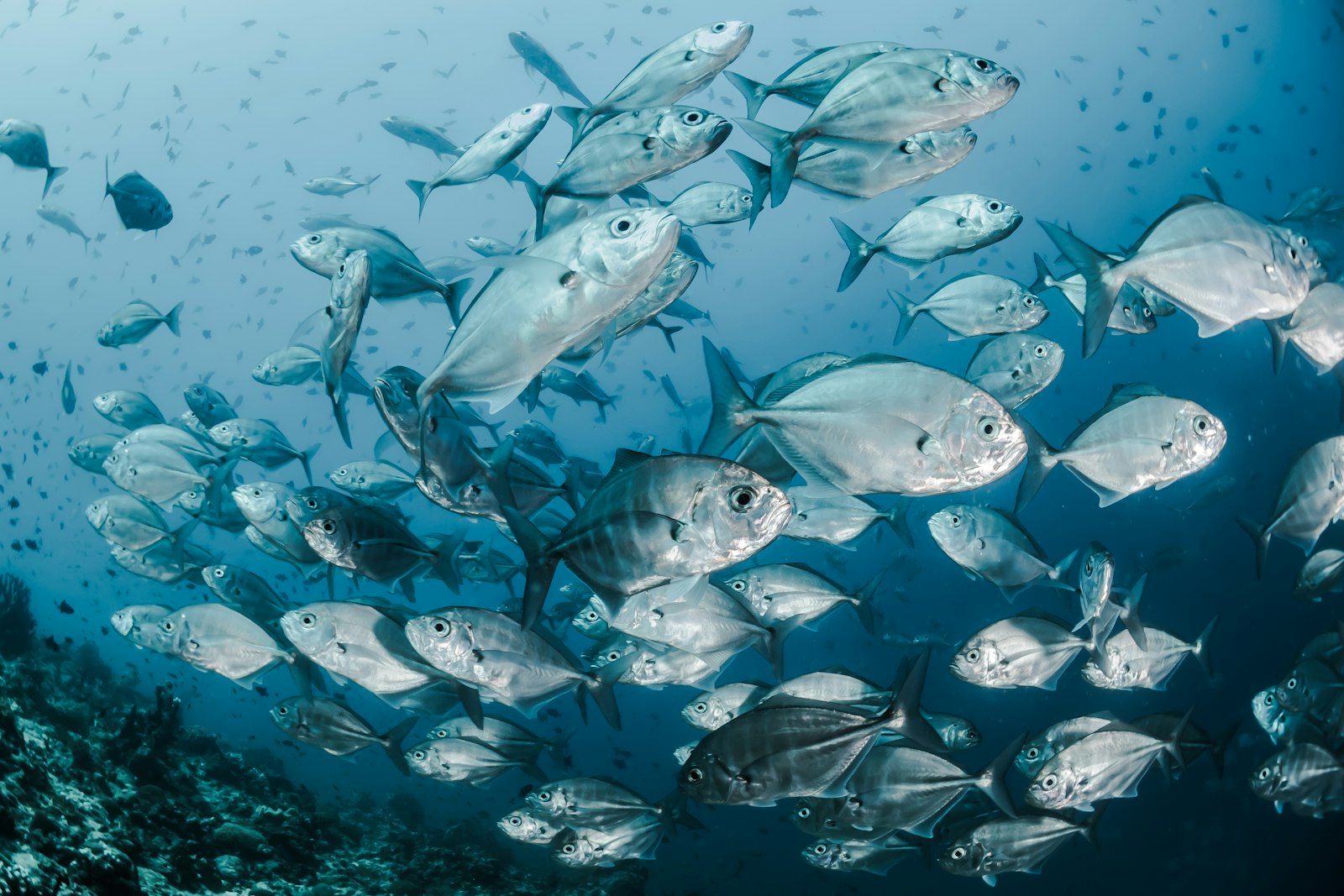
Komodo vs Raja Ampat diving is not a question of which destination is better — it is a question of when each one is at its best and whether your certification level matches what the currents actually require. Both sit inside the Coral Triangle, both claim serious biodiversity records, and both reward divers who understand their rhythms. What separates them is timing, current character, and what you want most from a dive trip: pelagic drama in a tidal engine room, or coral biomass so dense it barely needs a current at all.
I have been guiding the north Komodo sites from Labuan Bajo day boats and liveaboards for years. Raja Ampat I know the way any Flores-based dive professional should: from liveaboards that reposition there in the northern winter, from the briefings I read before every crossing season, and from honest conversations with colleagues who run boats out of Sorong. What follows is a direct comparison of both destinations — their windows, their level floors, their costs from Bali, and how to fit them into the same year without the seasons fighting each other.
A note on how we work: we book Komodo day trips and liveaboards through our partner operator based in Labuan Bajo, so we have hands-on experience of every site and boat we recommend there. We do not operate Raja Ampat trips ourselves, but we can point you toward the right liveaboard categories and timing. If a Komodo booking comes through our free planning service, the operator may pay us a referral fee at no extra cost to you. That arrangement does not change what we write here.
The Seasonal Windows: Why These Two Places Work Back-to-Back
This is the single most important fact in the comparison. Komodo and Raja Ampat are complementary in time, not rivals for the same travel window.
Komodo’s north and central dive sites — Castle Rock, Crystal Rock, Shotgun, Batu Bolong, Manta Point — are prime roughly from April through October/November. That is the dry season over Flores. Visibility in the north runs 20–30 metres in a normal dry-season month, sometimes peaking 25–35 metres in July and August. Water temperature in the north sits around 27–29°C in those months. January and February can be rough; the northwest monsoon pushes swell into the northern channels and some sites become undiveable or at best uncomfortable.
Raja Ampat operates on the opposite cycle. Its prime window is broadly October through April, tracking the wet season over Flores. October to December is the ramp-up; December through February is peak season for the famous manta aggregations at sites like Manta Sandy and Cape Kri, with the highest plankton concentration driving the biggest numbers. March and April remain strong. By May and June, southeast swell begins to affect the exposed outer walls, and July–August is the acknowledged off-season for much of Raja Ampat, though some sheltered bays remain diveable year-round.
What this means practically: a liveaboard that runs Komodo routes from May to October routinely repositions its vessel to Raja Ampat from October to April. The two seasons slot together. This is not a marketing observation — it is why many serious liveaboard divers visit both in the same twelve months without any scheduling conflict.
Current Demands and Minimum Level Requirements
Here is where the two destinations diverge most sharply, and where I spend the most time in pre-trip briefings.
Komodo: A Tidal Engine
Komodo sits in the path of the Indonesian Throughflow — Pacific water pushing through narrow straits toward the Indian Ocean, sometimes reaching 7–8 knots on spring tides during the southeast monsoon. You feel it on the boat before you even enter the water. The recreational dive window at high-current sites is the 30–90 minutes around slack tide. Outside that window, some sites are simply not safe to enter.
The experience gates at north Komodo are real and they are not negotiable:
- Castle Rock and Crystal Rock: AOW certification, typically 20–50 logged dives as an operator minimum. Castle Rock has documented down-current risk at the seamount edges. Crystal Rock has split currents and a top that sits just 3–5 metres below the surface at low tide. One Komodo operator’s guides suggest 50–60 dives before Castle Rock — I think that is closer to right than wrong.
- Shotgun / The Cauldron: AOW plus drift experience required. This is a narrow tidal channel between two islands that ejects divers into blue water at speed. Experienced divers find it thrilling. Inexperienced divers find it disorienting. The two are not the same dive.
- Batu Bolong: AOW or solid intermediate. The swirling current on the exposed sides has surprised divers who assumed it would behave like a normal pinnacle.
- Tatawa Besar and Manta Point / Karang Makassar: Open Water friendly with a briefing and some dives in the log. These are where I send divers who arrive overconfident about their ability to handle the north. A good dive at Tatawa Besar is genuinely excellent. A bad dive at Castle Rock with 15 logged dives is a dangerous drift rescue waiting to happen.
- Siaba Besar: OW, 10–20 dives, calm water, reliable turtles. The check-dive site for a reason.
Drift diving in Komodo means: personal dive computer mandatory, DSMB per diver or at minimum per buddy pair, whistle and light, negative-entry skills for current sites, and a lost-group protocol you have rehearsed mentally before you roll in. If any of that sounds unfamiliar, you need the Advanced Open Water course before you try Castle Rock. We offer AOW arrangements from Labuan Bajo and there is a real argument for doing it here: the drift dives in the course use actual Komodo current, which is a better classroom than a flat-calm bay.
Raja Ampat: Gentler by Default, but Not Uniform
Raja Ampat has a different current character. Most of the famous sites — the reef flats of Cape Kri, the manta stations at Manta Sandy and Blue Magic, the walls of Misool — are diveable in moderate to gentle current. An Open Water diver with 20–30 dives can access the majority of what Raja Ampat is famous for. That is a genuine difference from Komodo.
That said, Raja Ampat does have its own current-demanding sites. Passage diving through some of the narrow channels in the northern islands can produce strong directional flow. The exposed outer walls of Misool can carry surge in certain conditions. And the fact that the overall environment is gentler means that complacent diving habits that Raja Ampat tolerates will still get you in trouble the moment Komodo’s spring tide activates.
The practical takeaway: if you are an Open Water diver with limited experience, Raja Ampat is the correct first choice. You will see extraordinary marine life without the current demands. Then you do your AOW, build your logged dives, and come back to Komodo when you are ready for the tidal sites. That is not a compromise — Raja Ampat is not the consolation destination. It is simply a different kind of diving.
Biodiversity Profiles: What You Actually See
Both destinations sit inside the Coral Triangle. Both claim the highest coral diversity in the world in various surveys. The character of what you encounter is different.
Komodo: Pelagic and Mega-Fauna Density
Komodo’s biodiversity is driven by nutrient upwelling. The strong currents that make some sites challenging also pump cold, plankton-rich water to the surface, which feeds a food chain that culminates in dense pelagic aggregations. At Castle Rock on a good day: white-tip, black-tip and grey reef sharks hunting in the current, giant trevally running through fusilier schools, dogtooth tuna, barracuda, batfish. At Manta Point: reef mantas at multiple cleaning stations, sometimes a dozen in a single drift. In the south at Horseshoe Bay: Cannibal Rock, which genuinely competes with Lembeh as one of the world’s best macro sites — sea apples, rhinopias, leaf scorpionfish, pygmy seahorses on gorgonians, Coleman shrimp on fire urchins.
The north is colder than the south. North water: 27–29°C in peak season, a 3mm shortsuit is workable. South Komodo (Manta Alley, Horseshoe Bay): 20–25°C with genuine thermoclines, 5–7mm plus a hood is not overcautious.
Manta sightings in Komodo: year-round, but the biggest aggregations track the plankton, so peak numbers fall roughly December through February within a broader September-to-May window. July and August, which are Komodo’s busiest months for tourism, are actually the lower end of manta numbers. I tell guests this before they book, because nobody should choose July based on a manta expectation and then blame the site. The sharks and pelagics are present year-round in the north. The macro in the south is winter business.
Raja Ampat: Coral Mass and Small-Scale Diversity
Raja Ampat’s biodiversity record is primarily a coral story. The reef flat at Cape Kri holds one of the highest recorded fish counts in the world — over 280 species identified on a single dive in survey conditions. This is not a cherry-picked number; it reflects the density of both hard and soft coral that covers the substrate, creating habitat for an extraordinary range of reef fish. Pygmy seahorses on sea fans. Wobbegong sharks resting on ledges. Banded sea kraits moving through rubble. Epaulette sharks walking on the reef at night.
Raja Ampat’s manta sites — particularly Manta Sandy in the Dampier Strait — are top-tier. Oceanic mantas (not just reef mantas) have been recorded here. The peak season aligns with the main dive window, October to April, and particularly December to February.
What Raja Ampat does not deliver in the same way as Komodo: the pelagic rush of a Castle Rock drift, the sheer volume of sharks in a current line, the tidal theatre of Shotgun. The two experiences are genuinely different. Divers who want both should plan for both.
Costs and Logistics from Bali
Both destinations require a domestic flight from Bali. Neither is a direct flight from most international hubs — you connect through Bali (DPS), Jakarta (CGK), or occasionally Makassar.
| Factor | Komodo (Labuan Bajo) | Raja Ampat (Sorong) |
|---|---|---|
| Flight from Bali | ~1–1.25 hours to LBJ (Komodo Airport) | ~3–3.5 hours to SOQ (Sorong) via Makassar or Jakarta |
| Day trip option | Yes — 3-dive day trips IDR 2.5–3.6M pp (~USD 155–225) before park fees | No — liveaboard only for the main sites; day-dive operations from Sorong are limited |
| Park/government fees | IDR 300,000–400,000/diver/day (~USD 18–27; itemization varies by operator) | Raja Ampat Marine Park fee approx. USD 100–120 for a 12-month pass (one-off entry for most liveaboard trips) |
| Liveaboard budget range (pp) | From ~USD 150–250/night budget phinisi; mid-range USD 300–500/day; luxury USD 800–2,000+/night | From ~USD 200–300/night budget; mid-range USD 400–700/day; luxury USD 1,000–2,000+/night |
| Typical liveaboard duration | 4–9 days (4-day north loop to 9-day Komodo–Sumbawa crossing) | 7–14 days (7 days minimum to cover the main zones; 10–11 days for north and south) |
| Peak booking pressure | July–October books 6–12 months out; park capped at 1,000 visitors/day (SiORA app) | December–February is the busiest; fewer capacity restrictions than Komodo |
| Minimum cert for best sites | AOW required for north sites; OW workable at central/south beginner sites | OW with 20–30 dives accesses most of the destination; AOW opens everything |
A note on Komodo’s 1,000-visitor-per-day park cap: this is real and it affects availability at the most popular sites, particularly in July and August. The SiORA app allocates time slots for land visits (Komodo dragon treks, Padar viewpoint hikes). For the diving, your operator manages the permits, but the practical result is that peak-season Komodo liveaboards need to be booked early — six months out is not excessive. If you are reading this in May for a July trip, check availability immediately.
Ready to plan? Use our enquiry form or reach us on WhatsApp and we will map out which itinerary — or which combination — fits your timing, certification level and budget.
The Do-Both-in-One-Year Calendar
For divers who want to experience both destinations, the seasons align nearly perfectly. Here is a practical planning calendar:
- January–March
- Raja Ampat peak season. This is the best window for manta aggregations at Manta Sandy and Blue Magic. Conditions are generally calm, visibility is high, water temperature in the 28–30°C range. Book your Raja Ampat liveaboard for January or February if possible — it is the best month for the manta stations and the main dive zones are at their clearest.
- April–May
- Transition month — both workable. Raja Ampat is finishing its peak season; late April is still excellent. Komodo’s north sites are opening up as the dry season establishes. This is also a reasonable window for an Advanced Open Water course in Labuan Bajo before the high season begins. Liveaboard prices are often slightly lower than peak in both destinations.
- June–August
- Komodo prime season, north sites at their best. July and August are the most popular months — visibility in the north can exceed 30 metres, the sites are running at full capacity and the pelagics are reliable. Book early. South Komodo (Manta Alley, Horseshoe Bay) is off-season in these months — the SE monsoon swell affects access and visibility in the southern channels.
- September–October
- Komodo winding down, Raja Ampat opening up. September is still excellent in Komodo, with some of the best visibility of the year and manta numbers starting to build again. October is transition — liveaboards repositioning north. If you time a September Komodo liveaboard followed by a January Raja Ampat liveaboard, you have two back-to-back peak seasons.
- November–December
- Raja Ampat build-up. November can be variable — inter-monsoon conditions mean some days are glassy and some are squally. By December conditions have stabilised and the manta season is beginning. This is when to book if you missed the January peak and want a December–January window instead.
The cleanest two-trip year: Komodo in July (north circuit, AOW minimum) + Raja Ampat in January (7+ day liveaboard, OW workable). Twelve months apart, both at peak. Neither season conflicts with the other.
Which One Should You Book First?
This depends on one thing more than anything else: your certification and logged dive count.
If you hold Open Water and have 30 or fewer logged dives, start with Raja Ampat. You will access the vast majority of what makes it extraordinary, you will build your dive log in a forgiving environment, and you will return from the trip with the experience base that makes Komodo’s current sites a genuine pleasure rather than a survival exercise. Then do your AOW — whether in Labuan Bajo on a course, or during a liveaboard that integrates the qualification — and come to Komodo when you can dive Castle Rock the way it is supposed to be dived.
If you hold AOW and have 25+ logged dives, either destination works. Choose based purely on when you want to travel. Dry-season gap coming up in June? Komodo. Northern winter trip in January? Raja Ampat. If you have flexibility and genuinely cannot choose, Komodo’s 4-day north loop is the shorter minimum commitment (four days versus seven for a meaningful Raja Ampat liveaboard), which makes it the easier first test of whether liveaboard diving suits you.
If you hold AOW and have 50+ logged dives, including drift experience: go to Komodo and do the full north circuit including Castle Rock, Crystal Rock and Shotgun. These are among the best dives in Indonesia by any objective measure. Then Raja Ampat in January for the coral mass and the manta stations, which are a completely different kind of excellence.
Planning Both Trips
We arrange Komodo day trips and liveaboards from Labuan Bajo — get in touch via our enquiry form or WhatsApp and we will quote the right boat for your certification level, group size and preferred dates. For Raja Ampat, we can point you toward the right liveaboard categories and booking windows even though it is outside our direct operational area. Either way, the planning conversation is free and we would rather give you honest seasonal advice upfront than have you arrive at a site in the wrong month with the wrong certification.
Frequently Asked Questions
Can I dive both Komodo and Raja Ampat on the same liveaboard trip?
Not typically on a single trip — they are roughly 2,000 kilometres apart. Some rare, very long expeditions (14–21 days) cover both, but these are specialist voyages rather than standard liveaboard products. Most divers visit them on separate trips, which is also how you get each destination at its seasonal peak rather than splitting the calendar.
Which destination has more sharks?
Komodo, consistently, for sheer encounter frequency and aggregation size. The strong currents concentrate reef sharks and pelagics at sites like Castle Rock and Crystal Rock in a way that few destinations match. Raja Ampat has sharks — wobbegongs, whitetips, the occasional hammerhead on outer walls — but the concentration of large schooling sharks at current-driven seamounts is a Komodo speciality.
Is Raja Ampat better for beginners than Komodo?
For most beginners, yes. Raja Ampat’s most famous sites are diveable at Open Water certification level with moderate logged dives, and the current demands are gentler across the board. Komodo has beginner-suitable sites (Siaba Besar, Tatawa Besar, Manta Point) but its signature dives — Castle Rock, Shotgun, Crystal Rock — require AOW and real drift experience. This is not a judgment on either destination; it is a practical statement about what each requires of your dive skills.
How far in advance do I need to book a Komodo liveaboard in peak season?
For July and August — the absolute peak — six months minimum is a reasonable rule of thumb, and twelve months is not unusual for popular mid-range boats. The national park’s 1,000-visitor-per-day cap creates genuine scarcity at the busiest sites. If you are planning a July trip and reading this in April, check availability now rather than assuming spots exist. September and October are easier to book on shorter lead times and are excellent months to dive.
Does it matter which I do first for career progression as a diver?
If you want to develop your skills, Komodo first is arguably the more demanding classroom. The currents require precision: buoyancy, situational awareness, equipment discipline. Divers who have done their AOW training in Komodo drift conditions tend to handle complex current anywhere. That said, “career progression” is not the most important reason most people dive — enjoyment and safety are. Do Raja Ampat first if it fits your timing and certification level; the skills you build there will serve you well when you arrive in Komodo.