
Manta Point (Karang Makassar): Komodo’s Main Manta Drift for All Levels

Sekar Prameswari
March 4, 2026
17 min read
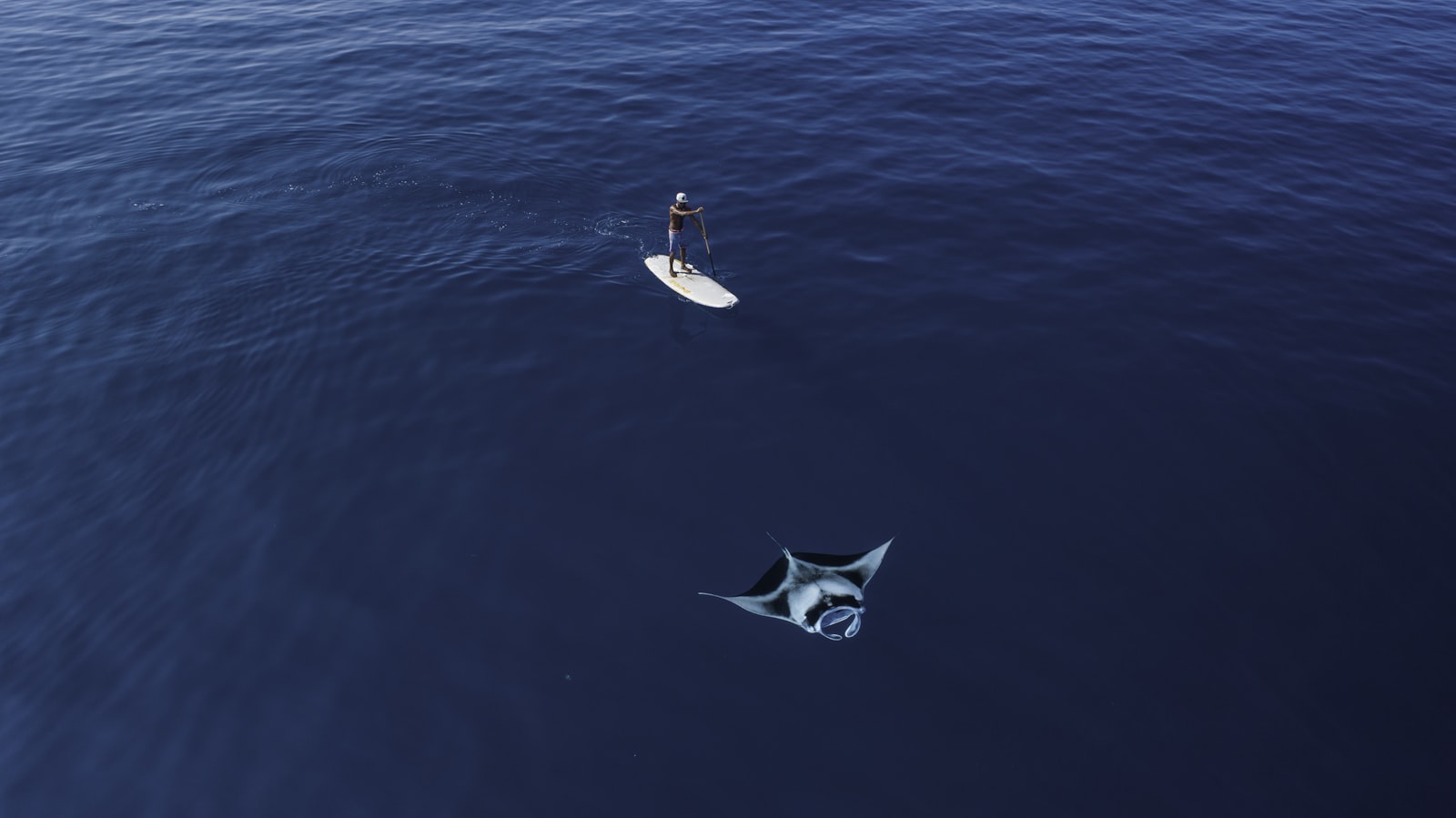
Manta Point — officially Karang Makassar — is the primary manta ray site in Komodo National Park: a roughly 3-kilometre shallow drift plateau sitting at 8–18 metres (core depth 10–15m), with gentle to moderate current that shifts with the tide. It is the one site in the park where certified divers of all levels and snorkelers can realistically share the same water and have a genuine encounter with reef mantas at the cleaning stations.
That accessibility is the point. Castle Rock and Crystal Rock in the north demand AOW and solid drift experience. Batu Bolong carries unpredictable swirling current that pins it to intermediate and above. Karang Makassar sits at the other end of the spectrum — shallower, slower, wide open. Whether you have 10 logged dives or 1,000, this is where you come for mantas.
Site Profile: Depth, Current, Layout
The plateau is broad rather than deep. Most of the action happens between 10 and 15 metres, which means conservative no-decompression limits, good natural light even in plankton-heavy water, and easy communication between dive guide and guests. The edges slope a little further — down to around 18m — but there is no compelling reason to descend below 15m unless your guide signals something specific.
- Depth range
- 8–18m (productive 10–15m)
- Current
- Gentle to moderate; tide-dependent; picks up on incoming/outgoing tides and drops to near-still at slack
- Typical bottom time
- 50–60 minutes at recreational depths
- Minimum certification
- Open Water; 10–20 logged dives recommended — not for students on their first open-water dives, but no AOW requirement
- Snorkeler access
- Yes — the site is shallow enough that snorkelers on the surface can see mantas at the cleaning stations below
- Dive type
- Drift over plateau, stopping over cleaning bommies
- Best tide
- Incoming or outgoing at moderate strength; slack works for observation but reduces manta activity
- Visibility
- Honest range: 8–20m depending on season; plankton bloom (Dec–Feb) reduces vis but increases manta numbers — an explicit trade-off
- Water temperature
- 27–29°C in dry season (Mar–Nov); can dip slightly in wet season; a 3mm wetsuit is comfortable year-round
The current here is manageable, not absent. On a moderate tidal exchange you will drift steadily over the plateau without fighting it. On a strong spring tide the current is faster and kicks up surge near the bommies — your guide will adjust the plan. First-timers should brief their guide honestly about their drift experience before entering the water; there is no shame in that, and it lets the guide position you well rather than having to chase you down.
What You Will Likely See
Reef mantas (Mobula alfredi) use the cleaning stations at Karang Makassar consistently. On a good day in peak season you may count dozens in a single dive — the so-called manta “train,” where multiple animals queue on a coral bommie to be cleaned by wrasse and other cleaner fish. On a quiet day in the off-season you may see two or three, or none. That variability is real, and any operator who frames it otherwise is not being straight with you.
Reef mantas at Karang Makassar are present year-round. Numbers are at their largest roughly between September and May, with the strongest aggregations in December through February — the plankton bloom period. The plankton is exactly why visibility drops to 8–12m during those months: the same organisms that cloud the water are what mantas are filter-feeding on. You get lower vis and more mantas. That is the honest trade-off.
Alongside mantas: eagle rays cruise the plateau regularly. Green and hawksbill turtles use the site — not in the density of nearby Siaba Besar, but a turtle on the bottom while a manta passes overhead is a common enough combination here. White-tip reef sharks patrol the edges. The reef itself is a mixed-condition coral slope; do not come expecting pristine hard coral gardens, but do expect the fish life that goes with a functioning nutrient current.
Manta Season and Honest Expectations
Indonesia declared its full EEZ a manta ray sanctuary in 2014 — the largest such sanctuary in the world at the time. Reef mantas in Komodo National Park are fully protected. They are also, by temperament, unpredictable. No operator, no guide, and no site can guarantee a sighting. What we can say with confidence is this:
- Year-round presence: reef mantas do not leave the park. They move between sites — Karang Makassar, Mawan, the Shotgun channel, occasionally south to Manta Alley — but the population is resident.
- Seasonal peak: the broader manta window is roughly September through May. Peak numbers coincide with the plankton bloom, concentrated in December through February.
- Site timing: early morning dives at Karang Makassar tend to see more cleaning activity before boat traffic peaks. Afternoon dives are still productive but the site gets more visitors from day boats departing Labuan Bajo.
One dissenting view in the industry places the peak window at April through November — a minority position that does not align with the majority of operator data or with the ecology of the plankton bloom. We use the September–May framing with the December–February apex because that is where the weight of field observation sits.
If you arrive in July or August — dry season peak for tourists — Karang Makassar is still worth diving. Mantas are present, current conditions are often favorable, and visibility in the dry season runs 15–25m, sometimes better. The tradeoff is fewer animals than peak winter months. If manta density is your primary goal, plan your trip for December through February and accept the reduced visibility as the price of admission.
The Manta Code of Conduct
This matters. Stressed mantas leave cleaning stations. The code below appears on every page of this site where an encounter is possible because it is not optional etiquette — it is why the animals are still here.
- Minimum 3 metres distance at all times. This is the minimum, not the target. When mantas are on a cleaning station, hang well back and let the animal come to you if it chooses.
- Approach from the side or slightly below, never from above or head-on. Approaching from above interrupts the manta’s sight line and mirrors predator behavior. Approaching from the front causes the animal to break from the cleaning station.
- Stay off the cleaning bommies. Kneeling on or touching the coral structure that hosts the cleaner wrasse destroys the station itself. No fin kick near the bommie. No hovering directly above it.
- No chasing. If a manta moves away from you, let it go. Following a departing manta teaches the animal that divers are a nuisance, not a neutral presence. This is how sites lose their cleaning aggregations over time.
- Maintain neutral buoyancy. Erratic vertical movement — sinking suddenly, finning hard upward — is disruptive. Trim yourself before you enter the cleaning station zone.
- No flash photography directly at the cleaning station. A strobe firing into a manta’s face at close range is an interruption. Ambient-light or rear-facing angles work fine; plan your shot position before you settle.
- Snorkelers on the surface: the same principles apply above water. Do not splash, hyperventilate loudly, or dive down toward an animal on a bommie. Floating calmly on the surface lets mantas pass underneath without feeling the surface as a threat.
Your guide will run a pre-dive briefing covering these points. Listen to it even if you have dived Karang Makassar before — conditions and animal behavior vary, and your guide will tell you where the active stations are that day.
Karang Makassar vs Other Komodo Manta Sites
| Site | Depth | Current | Minimum level | Manta type | Access |
|---|---|---|---|---|---|
| Karang Makassar (Manta Point) | 8–18m | Gentle–moderate | OW + 10–20 dives | Reef manta | Day trip + liveaboard |
| Mawan | 5–25m | Mild–moderate | OW/intermediate | Reef manta (cleaning stn) | Day trip + liveaboard |
| Shotgun / The Cauldron | 10–30m | High-speed funnel drift | AOW + drift exp. | Reef manta (channel) | Day trip + liveaboard |
| Manta Alley (South Komodo) | 5–25m | Moderate–strong + surge | AOW + negative entry | Reef manta (feeding) | Liveaboard only |
Manta Alley in south Komodo is a separate beast entirely. It sits on the Indian Ocean exposure of the southern tip of Komodo Island, accessible only by liveaboard, and requires AOW certification plus comfort with a negative entry. The upwelling there brings cold, nutrient-dense water and sometimes the largest feeding aggregations in the park — but south Komodo is strongly seasonal, best from roughly October through March, and the site is unreachable on a day trip from Labuan Bajo. Karang Makassar is the entry point for manta encounters. Manta Alley is the advanced chapter, available once you have the experience and the itinerary for it.
If you are planning a day trip specifically to see mantas, Karang Makassar is included on most Komodo day trip itineraries. Typical day-trip pricing runs from around IDR 2,500,000 to IDR 3,600,000 per person for three dives including lunch — park fees (IDR 300,000–400,000 per diver per day) are usually quoted separately. If you want three dives and the option to stay overnight to dive the site at first light before other boats arrive, a liveaboard itinerary serves that goal better. We can help you figure out which structure makes sense for your dates and experience level — use our enquiry form or reach us directly on WhatsApp and we will lay out the options honestly.
Getting to Karang Makassar
The site lies roughly central-to-north in the park, between Komodo Island and Tatawa Island. From Labuan Bajo waterfront, a speedboat covers the distance in around one to one and a half hours. Slower traditional phinisi take longer. Most day trips that include Karang Makassar combine it with one or two other central sites — Batu Bolong and Tatawa Besar are common companions. The three together, at the same current-driven latitude, make a logical single-day sequence.
Day trips depart Labuan Bajo harbor between 07:30 and 08:00 after a 06:30–07:00 meet. The standard return is 16:00–17:30. On a three-dive day trip you will typically spend the middle of the day on the water between dives — either anchored off Pink Beach or at a sheltered bay.
Park fees for divers in Komodo National Park currently sit at IDR 250,000 per day (marine park entry) plus IDR 25,000 dive surcharge plus a harbour fee of IDR 25,000, with some operators itemizing an additional IDR 100,000 conservation fee — expect IDR 300,000–400,000 (approximately USD 18–27) per diver per day. Snorkelers pay the base entry fee only, without the diver surcharge. These fees are not built into most day-trip prices and are paid separately, either collected by your operator or paid directly to park rangers at the site. Confirm the structure with your operator before booking.
Diving Karang Makassar on a Liveaboard
Most Komodo liveaboard itineraries, regardless of length, include at least one dive at Karang Makassar. On a four-day central loop, Karang Makassar typically appears on day two alongside Batu Bolong and Tatawa Besar. On longer six to nine day itineraries that combine north and south Komodo, you may dive the site on an early central day — before the itinerary pushes south to Manta Alley and Horseshoe Bay, or north to Castle Rock and Crystal Rock.
The liveaboard advantage at this site is timing. Arriving before 08:00, before the day-trip fleet, gives you the cleaning stations to yourselves for the first dive. A second dive at the same site in different tidal conditions, or immediately after a current shift, often produces a completely different manta response. That flexibility does not exist on a day trip.
On liveaboards with nitrox on board — mid-range and above boats commonly offer this, sometimes included, sometimes as an add-on — the shallow depth profile of Karang Makassar means your no-decompression margins are very generous on air anyway. Nitrox makes more difference at deeper sites. Still, if it is available and included in your package, there is no reason not to use it.
Snorkeling Karang Makassar
This is one of the few sites in Komodo National Park where snorkeling from the surface is genuinely effective for manta encounters. The cleaning bommies sit at 10–12m below the surface, which means a snorkeler floating face-down can see mantas hovering on station in good visibility conditions. You will not see every detail — and on a plankton-heavy day in January the vis from the surface looking down may be patchy — but the scale of reef mantas makes them visible even at depth.
Mixed groups of divers and snorkelers work at Karang Makassar in a way they do not at Batu Bolong (where snorkelers are typically excluded due to current risk) or at Castle Rock (where the depth and current make surface swimmers a safety liability). If your group includes non-divers, partners, or family members who want to participate rather than wait on the boat, this site accommodates them in a way that most Komodo dive sites do not.
Snorkelers should note: the cleaning station etiquette applies on the surface too. Do not free-dive toward an animal on a bommie. Stay on the surface, move slowly, and let the manta pass underneath. A fin splash at the wrong moment sends an animal that was hovering beautifully into the blue.
Conditions, Safety, and What to Bring
Current at Karang Makassar is manageable but real. It varies with the tidal cycle — your guide will time the entry accordingly. On a spring tide or at peak tidal exchange, the current picks up and the drift across the plateau is faster; your guide will choose a shallower line or adjust the drift to give you stable time over the bommies without sweeping you past. On neap tides and around slack water, the site is about as benign as drift diving gets in Komodo.
The site sits in open water between islands. There is no shelter from wind chop on the surface, and surface conditions can be choppy even when the dive below is calm. This is relevant for the surface interval — stay close to the boat line and get back aboard promptly after each dive. New divers who are prone to seasickness sometimes find the surface interval at exposed sites more uncomfortable than the dive itself.
Standard kit for this site: 3mm wetsuit (5mm if you run cold), computer mandatory, DSMB one per buddy pair minimum. Your guide carries a surface signalling kit. Reef hooks are a split issue in Komodo — some operators allow them strictly on bare rock and rubble only, others ban them for guests; follow your operator’s policy. There is no live coral at Karang Makassar to hook into anyway, and the current is gentle enough that most divers manage without.
The nearest hyperbaric facility is at Siloam Hospital in Labuan Bajo, which operators report as the primary DCS treatment facility for the park. Evacuation from Karang Makassar to Labuan Bajo takes roughly one to one and a half hours by speedboat. Dive insurance covering hyperbaric treatment is strongly recommended for any diving in Indonesia. This is not bureaucratic box-ticking — medical evacuation from a remote site is expensive, and a recompression chamber stay more so.
Planning Your Dive at Karang Makassar
If your only goal is to see reef mantas, the simplest entry point is a three-dive day trip from Labuan Bajo that includes Karang Makassar as one of the three sites. Most operators running central Komodo routes include it. Day trips typically cost IDR 2,500,000–3,600,000 per person for three dives plus lunch, with park fees (IDR 300,000–400,000 per day) paid separately. Confirm the fee structure before you book.
If manta encounters are important to you and you want the best statistical probability of seeing multiple animals, plan your trip between December and February and manage your expectations about visibility — you will likely have 8–15m vis rather than the 20–25m you would see in July, but you will be in the water during the season when the cleaning stations are most consistently occupied.
If you want to combine Karang Makassar with the advanced north sites (Castle Rock, Crystal Rock, Shotgun) and the south Komodo sites (Manta Alley, Cannibal Rock, Horseshoe Bay), you need a liveaboard of at least four days, and AOW certification with logged drift dives to access the full site list. The north sites in particular carry strong current and require clear drift experience — the same trip-planning that gets you to Karang Makassar on a day trip will not get you onto Castle Rock without that foundation.
We can help you match your certification level, your timing, and your budget to the right trip structure — whether that is a day trip, a shared liveaboard cabin, or a private charter where you set the itinerary and the pace. Reach us through our enquiry form or on WhatsApp, and we will give you a straight answer about what works for your situation. No one can pay to change what we publish here; if you proceed with a partner operator through our recommendation, they may pay us a referral fee at no extra cost to you.
Frequently Asked Questions
Do you guarantee manta ray sightings at Karang Makassar?
No, and any operator who does is misrepresenting the site. Reef mantas are present at Karang Makassar year-round, and the site has multiple active cleaning stations that mantas use consistently — especially in the December–February plankton peak. But marine life does not show up on schedule. On any given dive, mantas may be present in numbers, present in ones or twos, or absent entirely. Your guide times the dive for the best tidal window and the most active stations, but the animals are wild. The honest statistic is that Karang Makassar is the most reliable manta site in central Komodo — not that sightings are guaranteed.
Can a beginner diver dive Karang Makassar?
Yes, with some caveats. Open Water certification is sufficient. The recommended floor is 10–20 logged dives, enough that you have reasonable buoyancy control and are not spending the dive fighting your position. The current is gentle to moderate and the depth stays in the 10–15m range where you have plenty of no-decompression margin and good visibility. This is not a technical site, but it is not a training pool either — a diver with five dives total will struggle to manage their buoyancy and observe manta etiquette simultaneously. If you are newly certified, tell your operator honestly, get a proper briefing, and stay close to your guide.
Is manta season the same as the best diving season in Komodo overall?
Not quite. The manta peak (December–February, plankton bloom) coincides with the wet season in north and central Komodo, when visibility drops to 8–20m and surface conditions are rougher than the dry-season norm. The overall best diving weather for north Komodo — clearest water, calmest seas, best visibility at Castle Rock and Crystal Rock — is the dry season, roughly April through October. If mantas are your primary goal, lean toward the wet season, especially December–February. If you want the full range of conditions — pelagics, macro, clear water, north and central sites — April to June and September to October give you favorable conditions on both counts, with reasonable manta presence.
Can snorkelers join a dive trip to Manta Point?
Yes. Karang Makassar is one of a small number of Komodo sites where snorkelers and divers can enter the water together. The cleaning stations sit shallow enough that surface snorkelers can observe mantas below in reasonable visibility. Some day-trip operators specifically market the site as accessible for mixed groups. Confirm with your operator before booking that snorkelers are included in the boat plan — a few operators run dive-only trips and will not accommodate surface swimmers. On a private charter, you set the group composition entirely.
What is the difference between Manta Point and Manta Alley?
Two different sites, different locations, different conditions, different access requirements. Manta Point (Karang Makassar) is in central Komodo, between Komodo and Tatawa islands, accessible by day trip and liveaboard, OW-friendly at 8–18m with gentle to moderate current. Manta Alley is at the southern tip of Komodo Island, Indian Ocean-exposed, reachable only by liveaboard, and requires AOW plus negative-entry comfort — currents and surge are stronger, depths run to 25m, and the water is cooler (upwelling from the Indian Ocean). Both sites have reef manta cleaning stations, but Manta Alley operates in a completely different tidal and thermal regime. Manta Point is where you start. Manta Alley is where you go once you have the experience and a liveaboard itinerary that reaches the south.