Siaba Besar ‘Turtle City’ & Siaba Kecil: Komodo’s Gentlest Dives

Lukas Wajong
February 5, 2026
13 min read
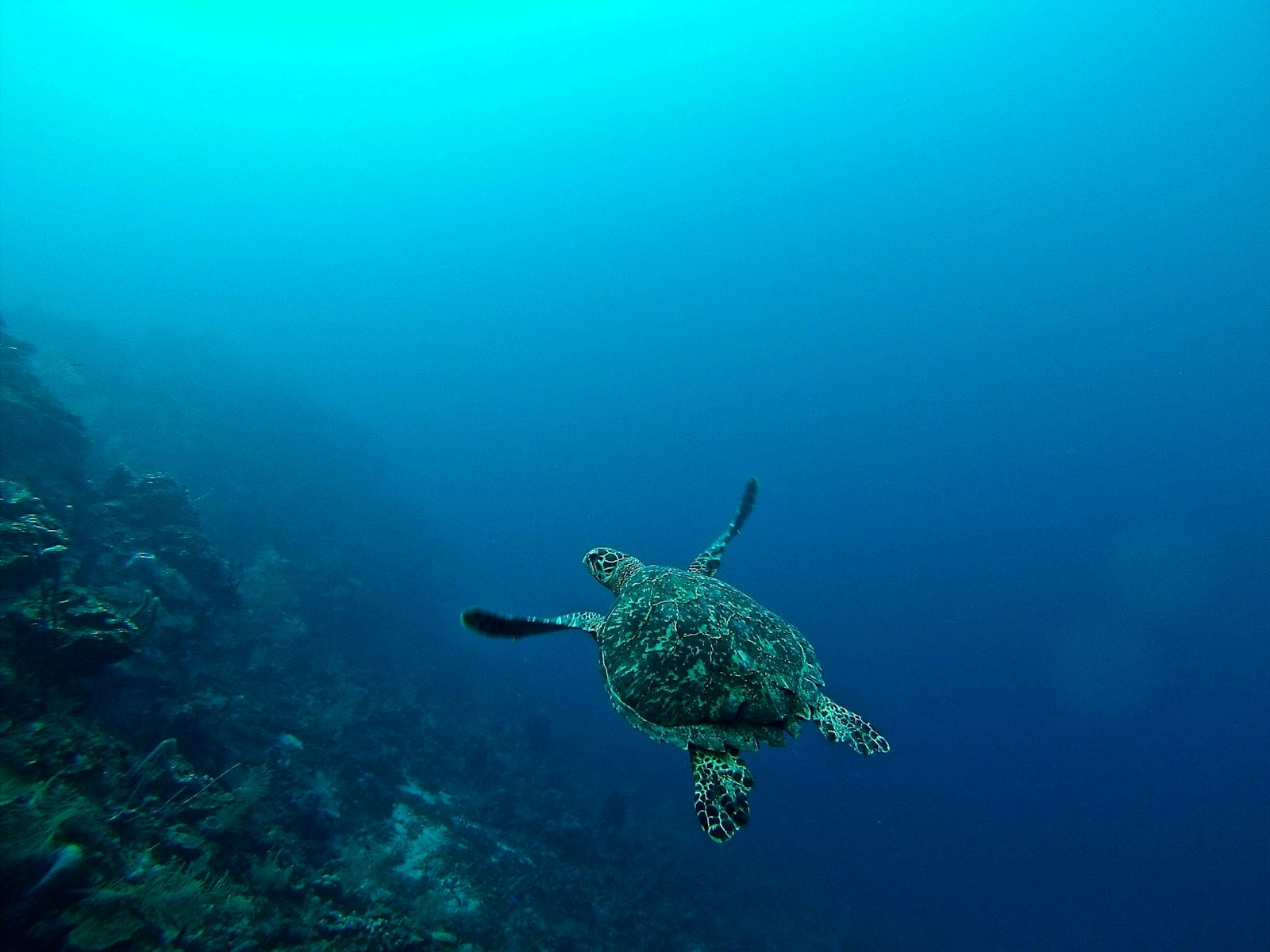
A Siaba Besar turtle dive in Komodo National Park means dropping into one of the most sheltered, predictable reefs in the archipelago — a circular bay where green and hawksbill turtles rest, graze and cruise in numbers that genuinely surprise first-time visitors. Depths run 5–18 m, current is minimal, and the site sits squarely within Open Water certification territory. That combination makes it the park’s classroom, its check-dive station, and the place we send divers who want marine life without earning it through upwelling and surge. It is not a consolation prize. It is a genuinely good dive that serves a different purpose from Castle Rock.
What to Expect at Siaba Besar
The bay is roughly circular, sheltered by Siaba Besar Island itself. You descend onto a sandy-rubble floor that grades into seagrass meadows and patchy hard coral. Depths are honest: most of the action sits between 8 m and 15 m, and the seagrass runs right up to 5 m in places. Maximum recreational depth at this site is around 18–20 m, and there is no reason to push it — everything worth seeing is in the middle column.
Turtles are the headline. Green turtles (Chelonia mydas) feed on the seagrass, rest on the bottom, and surface to breathe in unhurried 15-minute cycles. Hawksbills (Eretmochelys imbricata) pick through coral heads for sponges. On a normal day you see between four and a dozen individuals without having to search. I have briefed hundreds of divers on this site and the only times the turtle count disappointed were days with strong surface swell pushing sediment — rare here, but possible in the transition months.
Rays are the second story. Cowtail stingrays park in the sandy patches, often partially buried. Blue-spotted rays pass through the coral edges at mid-depth. Neither species is uncommon here; both reward slow, horizontal finning rather than kicking straight at them.
The macro layer is where photographers settle in. Nudibranchs are varied and present year-round — the seagrass and soft coral give them plenty of substrate. Robust ghost pipefish have been recorded on this site, as have juvenile sweetlips sheltering under table corals, hawkfish perched on sea fans, and a reliable population of blue ribbon eels in the rubble zones. Some operators have reported pygmy seahorses at nearby coral heads — that claim is plausible but worth treating as a bonus rather than a guaranteed find, since pygmy sightings depend heavily on individual guide knowledge of specific gorgonians.
Site Conditions: Depth, Current, Visibility
- Depth range
- 5–18 m (typical dive profile 8–15 m; max ~20 m on sand at depth)
- Current
- Minimal to nil inside the bay; light surface drift possible on the outer edge during tidal exchange
- Visibility
- 10–20 m typical; higher in dry season (Jun–Oct), lower during wet-season silt runoff
- Water temperature
- 27–29°C (north-central Komodo; dry season peaks Jul–Aug)
- Bottom type
- Sand, seagrass, patchy hard coral, rubble
- Best time
- Year-round; prime dry season Apr–Oct for best visibility
Current is the defining characteristic that separates Siaba Besar from most of the North Komodo circuit. There is essentially none inside the bay during normal tidal windows. You will not need a reef hook here, and you will not be fighting to stay in position over a cleaning station. That is precisely why this site handles Open Water divers, check dives, students on confined-water continuations, and underwater photographers who need time to work a subject.
Who Should Dive Siaba Besar
Siaba Besar is appropriate for Open Water certified divers from their very first Komodo dive. There is no logged-dive floor I apply to this site specifically, though any diver arriving without recent experience should complete a check dive here before we even discuss the northern sites. That is standard practice across responsible operators in Labuan Bajo, and Siaba Besar is where those check dives normally happen.
Three groups find specific value here:
- Beginners and newly certified OW divers — the calm conditions let them work on buoyancy and trim rather than current management. Turtles at close range are excellent motivation for getting neutral buoyancy right.
- PADI Open Water students — adventure dives and later confined-water dives for the course regularly take place at Siaba Besar. The site has the depth range and the bottom type that the Open Water and Advanced Open Water curriculum requires, and the calm water means an instructor is managing a skill, not a rescue.
- Experienced divers on check dives — if you have not been in the water for six months, this is where we verify your kit, your weighting, and your buoyancy before committing to Batu Bolong or anything north. It takes about 45 minutes and it protects everyone on the boat.
Underwater photographers with macro interests should not dismiss this site regardless of experience level. The diversity of small subjects — nudibranchs, eels, pipefish, juvenile reef fish — is comparable to dedicated muck sites, and the gentle conditions mean you have time to compose a shot.
If you are trying to decide whether a Komodo trip makes sense for your certification level, the post Can Beginners Dive Komodo? covers the full site spectrum and honest level requirements across the park.
How Siaba Besar Fits Into a Komodo Dive Trip
On a standard Komodo day trip out of Labuan Bajo, Siaba Besar typically appears as the first or last dive of the day — either a morning check dive before heading to higher-current sites, or an afternoon wind-down that lets newer divers in the group log a quality dive without the commitment of a tidal-window site. On 3-dive day trips, the routing is commonly something like: Siaba Besar (check) → Batu Bolong or Manta Point (main event) → Tatawa Besar or Pink Beach (afternoon). The exact sequence depends on tidal timing and the guide’s read of conditions that day.
On liveaboards, Siaba Besar serves a similar function on embarkation day. Neptune Liveaboards and similar operators use it as a same-afternoon check dive after guests board — “land at 1 pm, check dive by 4 pm” is a real operational pattern, and Siaba Besar’s calm makes that timing forgiving.
Not every itinerary includes it. If you are booking a premium 6- or 9-day liveaboard with a genuinely varied route, Siaba Besar may not appear at all — the guide will prioritise current-dependent sites during their optimal tidal windows. It is not a site you push for on a high-experience trip. It is a site that earns its place on beginner-friendly and mixed-level itineraries.
Ready to work out which itinerary fits your certification level and the people you are travelling with? Plan your trip with our concierge — we can match you to the right day trip or liveaboard and flag which sites will suit your experience floor. You can also reach us directly on WhatsApp and we will reply the same day.
Siaba Kecil: The Sister Site One Step Up
Siaba Kecil lies close to Siaba Besar and is often included on the same trip leg. It is a different dive in character. The site runs deeper — to 25 m — and features a light-to-moderate drift along a sloping reef rather than the still-water environment next door. Current is manageable but present, and it varies with tide. Open Water divers can handle it comfortably after demonstrating basic buoyancy control; intermediate divers will feel at home straight away.
| Feature | Siaba Besar | Siaba Kecil |
|---|---|---|
| Depth range | 5–18 m | 5–25 m |
| Current | Minimal / nil | Light–moderate drift |
| Minimum level | Open Water (all experience levels) | Open Water, comfortable drift |
| Profile type | Sheltered bay, seagrass, sand, coral heads | Sloping reef, light drift |
| Key species | Green & hawksbill turtles, stingrays, nudibranchs | Turtles, stingrays, macro, pipefish, shrimp |
| Primary use | Check dives, courses, first Komodo dive | Second dive for OW groups; intermediate warm-up |
Marine life at Siaba Kecil overlaps significantly with its neighbour. Turtles cross between both sites. The sloping reef structure at Kecil adds a different coral community — more diversity along the slope, more fish life in the water column when the drift runs. Nudibranchs, cleaner shrimp, pipefish and the occasional robust ghost pipefish have been recorded here. Operator documentation of this site is sparser than for Besar, so treat specific macro claims from any source — including this one — as “likely but not guaranteed on any given dive.”
The drift at Kecil is genuinely light, not the engineered downwelling you get at Shotgun or the unpredictable swirl at Batu Bolong. A competent Open Water diver who has completed a check dive at Besar in the morning should manage Kecil comfortably in the afternoon. The briefing is still a proper briefing — lost-diver protocol, SMB deployment, surface signal procedure — because this is still Komodo and the general area has current. We just do not apologise for being thorough.
The Turtle Conservation Context
Both sites sit within Komodo National Park, which holds UNESCO World Heritage designation. Green and hawksbill turtles are protected species under Indonesian law and internationally under CITES. The practical rules at Siaba Besar are the standard park rules everywhere: no contact with any marine animal, no sitting on the reef, gloves are not permitted (operators typically confiscate them before the dive). Approach turtles horizontally, stay below rather than above them, do not position yourself between a turtle and the surface — they need to breathe, and a blocked ascent path causes genuine distress.
The turtle density at Siaba Besar is a function of habitat quality. The seagrass meadow provides the food the greens need, and the shallow coral gives the hawksbills sponge access. Maintaining that habitat requires every diver who enters the water to control their buoyancy well enough to avoid contact with the bottom. This is not a ceremonial rule — the seagrass patches at this site show visible damage tracks in areas where unskilled divers have dragged fins across them. An instructor who sees persistent bottom contact here will end the dive and sort it out at the surface. That is the standard I expect from every guide we work with.
Park Fees and Practical Logistics
Siaba Besar sits inside Komodo National Park, so the standard park-fee structure applies. For foreign divers, expect to pay in the range of IDR 300,000–400,000 per day (approximately USD 18–27), covering park entry, diver surcharge, and harbour fee — exact itemisation varies by operator, so confirm before you travel. These fees are typically charged separately from your day trip or liveaboard price. The full breakdown is covered in our park fees and logistics guide.
Day trips from Labuan Bajo harbour reach the Siaba area in roughly 1–1.5 hours by speedboat. The sites sit in the central-park zone, which makes them accessible on a standard day-trip radius without the 2-hour-each-way transit that the north Komodo sites require. That matters if you are weighing options: a day trip that includes Siaba Besar, Manta Point, and Tatawa Besar is a realistic and efficient central-zone day. A day trip pushing to Castle Rock is a longer journey, and those slots fill first.
The park operates a visitor-allocation system through the SiORA app, with a cap of 1,000 visitors per day. Peak-season trips (July–October, particularly) book out months in advance. Dive site access is weather and tide dependent — no operator can guarantee a specific site combination on a specific date.
Should You Dive Siaba Besar?
If you are newly certified and Komodo is your first open-water trip beyond your home dive site, yes — unambiguously. This is the site that will tell you whether your buoyancy is where it needs to be and whether you are ready to move on to the current-driven sites the park is famous for.
If you are an experienced diver with 50 or 100 logged dives, Siaba Besar alone probably does not justify a Komodo trip. But as part of a 3-dive day or a liveaboard, the morning check dive here followed by Batu Bolong and Manta Point is not a compromise — it is a sensible safety-first itinerary that also delivers real marine life.
If you are travelling with someone who is not diving — a snorkelling partner, a child, a non-diver on a charter — note that Siaba Besar is one of the park’s more snorkeller-friendly environments given its shallow seagrass and calm surface. Not every Komodo site permits snorkellers alongside divers; Siaba Besar generally does. Confirm with your operator.
Questions about how Siaba Besar fits your specific itinerary, or whether your certification and logged dives clear the bar for the north-current sites? Use our enquiry form or drop us a message on WhatsApp — we will give you a straight answer, not a sales pitch. If Siaba Besar and Tatawa Besar are the right dive for your group, that is what we will tell you.
Is Siaba Besar suitable for Open Water divers with no previous experience in currents?
Yes. Siaba Besar is one of the few Komodo National Park sites that genuinely requires no drift experience — the bay is sheltered and current is minimal to nil during normal tidal windows. It is the standard location for check dives and the first dive of Open Water courses run from Labuan Bajo. A newly certified diver with zero current experience can complete this dive comfortably provided their basic buoyancy skills are in order.
How many turtles will I see at Siaba Besar?
Realistically, between four and a dozen per dive on a typical day — but we will not promise a number. The site has a well-documented high density of green and hawksbill turtles associated with the seagrass beds and coral structure, and multiple individuals per dive is the norm rather than the exception. Sightings depend on conditions and luck. If a dive boat has recently worked the same animals hard, the turtles may be less settled. No operator can guarantee marine life encounters.
Can I complete my PADI Open Water course at Siaba Besar?
Parts of it, yes. Siaba Besar is a practical location for Open Water adventure dives and some of the later confined-water skill practice because it offers the right depth range, calm conditions, and reasonable visibility. The full course requires confined-water skill sessions that typically take place at the dive centre before any boat trip. Operators running PADI Open Water courses in Labuan Bajo will outline the full structure, but Siaba Besar is a common and appropriate site for the open-water training dives.
What is the difference between Siaba Besar and Siaba Kecil?
Siaba Besar is a sheltered bay, essentially current-free, with depths to 18 m — the park’s beginner and check-dive site. Siaba Kecil is a sloping reef adjacent to it, running to 25 m, with a light-to-moderate drift. Kecil is accessible to comfortable Open Water divers but requires basic drift awareness; Besar does not. Both sites share overlapping marine life including turtles, stingrays and macro subjects. They are frequently dived on the same trip leg.
Do I need a reef hook at Siaba Besar?
No. Reef hooks have no application at Siaba Besar because there is no current to hold against. If you are joining a trip that also visits higher-current sites on the same day, your operator may brief you on reef-hook protocol for those sites — but the hook stays clipped to your BCD at Siaba Besar. Hook policy across Komodo varies by operator: some allow use on bare rock and rubble only, others ban them for guests entirely. Follow your operator’s specific guidance.