
Mawan: Komodo’s ‘Mini Manta Point’ Between Central Sites

Lukas Wajong
January 26, 2026
12 min read
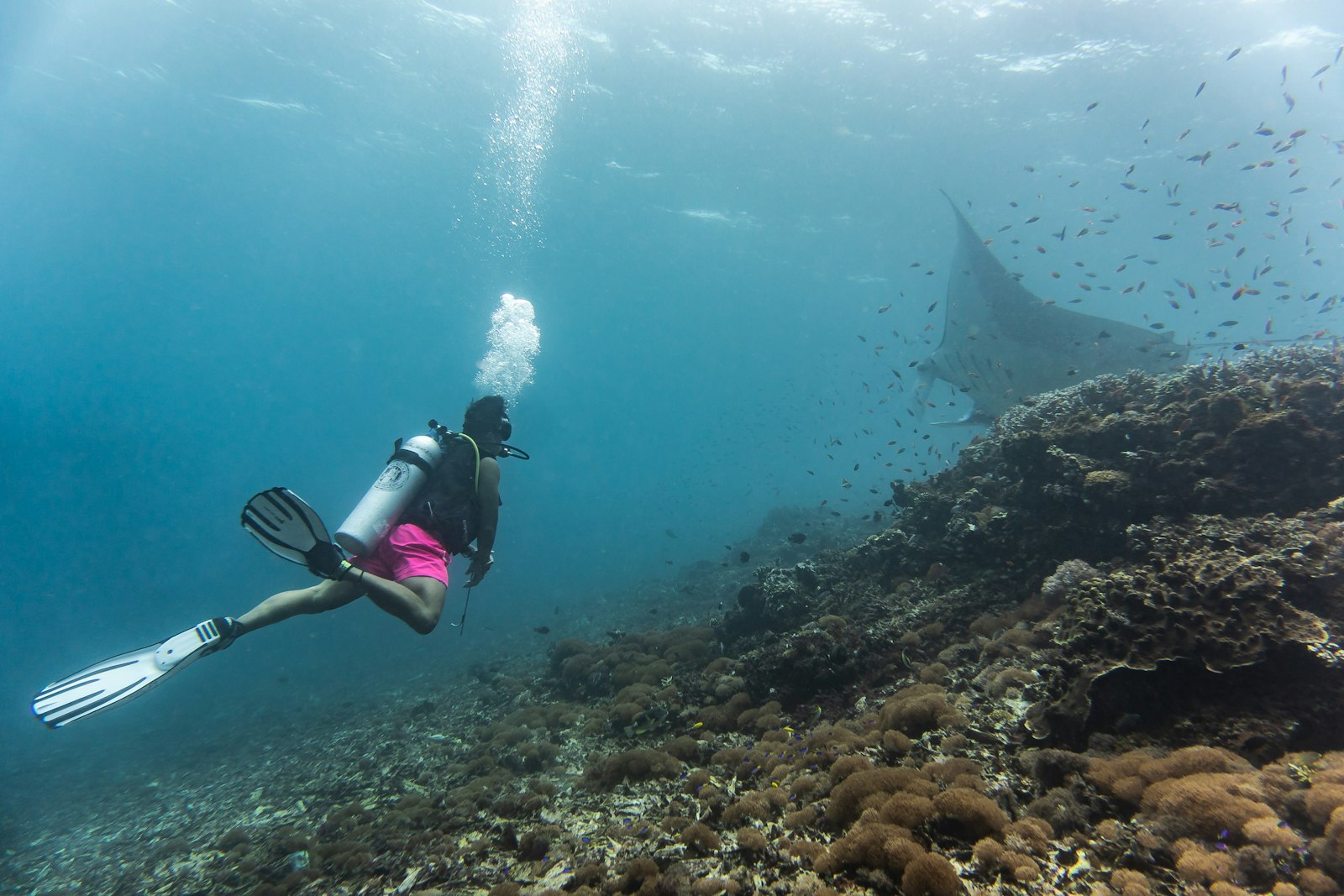
Mawan is a sheltered reef and cleaning-station dive site in the central Komodo zone, typically reached within an hour of Labuan Bajo harbor by day boat. The mawan dive site komodo earns its local nickname — mini Manta Point — because it hosts at least one documented manta cleaning station on its sloping reef, though at nowhere near the frequency or scale of Karang Makassar. Depths run 5–25m, with the most productive diving between 10 and 18m. Current is mild to moderate and tide-dependent; on a calm slack window, open-water certified divers can handle it without difficulty. On a stronger ebb, the drift picks up and asks for a little more buoyancy control. That range is exactly why Mawan is useful: it can absorb OW divers on their first Komodo day and still hold the attention of more experienced guests who are slotting it between bigger sites.
Site Profile: Depth, Current and Terrain
The reef at Mawan slopes from the shallows down through a coral-gardened slope to a sandy floor around 20–25m. The productive band — where most of the fish life concentrates and where cleaning stations are positioned — sits between 10 and 18m. This is intentional on a day-trip rotation. Guides keep groups in that window partly because the vis is best mid-column and partly because it leaves a comfortable safety margin when the current decides to accelerate in the final third of the dive.
Current here runs predominantly as a drift along the reef face rather than a crossing current or a down-current. That is a meaningful distinction in Komodo. Down-current risk — the kind that pulls you off a wall at Crystal Rock or off the back edge of Batu Bolong — is not a feature of normal Mawan conditions. What you get instead is a gentle push that keeps you moving along the reef, makes air consumption efficient, and gives wide-angle photographers reasonable time over each subject. On spring tides or during the SE monsoon months, that push gets faster. Guides will shorten the dive profile and stay higher on the slope. Nothing unusual for this part of the park — just worth knowing before you go in.
Bottom composition is a mix of hard and soft coral gardens with sandy corridors between bommies. The cleaning-station bommies that attract mantas are the structural focus of the dive. These are coral heads rising off the slope where cleaner wrasse establish territories and where larger pelagic animals, including mantas, come to have parasites removed. Staying low and horizontal near these bommies, rather than hovering above them, is both good manta etiquette and the positioning that gives you the best chance of a close pass if a manta does arrive.
Marine Life: What Is Documented Here
Mawan appears consistently in Komodo itineraries as a manta cleaning station site, alongside Karang Makassar and — to a lesser extent — the channel near Shotgun. Mantas are not promised at any Komodo site. Anyone who tells you otherwise is selling you something. What the site does offer reliably is the right habitat: cleaning bommies at productive depths, nutrient-rich water in the central zone, and proximity to the manta range that covers the Rinca–Padar corridor.
Beyond the manta question, the reef holds a solid cross-section of what central Komodo delivers on a moderate-current site:
- White-tip reef sharks — resting on the sandy patches between bommies or cruising the mid-water column. Mawan is not a shark aggregation site in the way Castle Rock is, but resident white-tips are part of the normal dive here.
- Green and hawksbill turtles — common throughout the central zone; Mawan’s sloping coral gives them plenty of feeding and resting ground. Multiple turtles on a single dive is the norm rather than the exception during the dry season months.
- Reef fish biomass — fusiliers, surgeonfish, anthias on the coral, snappers and sweet lips in the mid-water, the usual Komodo mix that makes the park feel alive even on quieter days.
- Occasional eagle rays — reported by guides working the site regularly, though not a guaranteed feature. Same caveat as mantas: habitat is right, sightings are not contractual.
What Mawan is not: a macro or muck site. If you are after nudibranchs, frogfish and pygmy seahorses, Wainilu is the site you want on that same day-trip rotation. Mawan is a medium-distance drift with coral, turtles, white-tips and a realistic shot at a cleaning-station encounter. Different tool, different purpose.
Experience Level: Who Should Dive Mawan
Open-water certified divers with around 10–20 logged dives can handle Mawan comfortably under normal conditions, provided they receive a thorough current briefing and are diving with a guide who knows the site’s tidal windows. This is consistent with how operators here categorize the broader central-zone moderate sites — Tatawa Besar is a reasonable comparison in terms of profile and ask.
That said, I would not send an OW diver with 10 dives here on a spring-tide ebb without first checking their buoyancy on a check dive. Siaba Besar is always the right first stop on day one — calm, sheltered, no current surprises, turtles everywhere. After a guide has seen how a diver moves in the water, the decision on whether Mawan is the right next stop is much easier to make. We move divers who are not ready to Siaba Besar, not through Mawan. That is not a slight; it is just correct site matching.
Intermediate divers — comfortable in drift, holding depth without thinking about it — will enjoy Mawan as a relaxed site between the higher-demand options. If you are AOW certified and have thirty to fifty dives, Mawan will feel easy. That is fine. Easy is not the same as empty. The site earns its place in a rotation that also includes Batu Bolong or Shotgun; it is the dive where you settle in, drop your heart rate and pay attention to the reef.
Where Mawan Fits: Day-Trip Rotations and Liveaboard Scheduling
In a standard three-dive day trip out of Labuan Bajo, Mawan appears most often as dive one or dive two in central-zone rotations. The typical sequencing puts Siaba Besar first as the check dive and warm-up, Mawan second for the cleaning-station visit, and then Manta Point (Karang Makassar) third, capitalizing on whatever tidal window makes the shallow plateau at Karang Makassar most productive that afternoon.
On liveaboards running a four-day or longer central-plus-north itinerary, Mawan tends to appear on day one or day two — before the boat moves north toward the higher-current sites. The 12-day crossing itinerary documented in operator scheduling lists Pengah, Bonsai and Mawan together on day two, which fits: those are all central-zone sites that can be dived back-to-back as a gentler day before the full-energy commitment of Castle Rock and Crystal Rock in the north.
On a 4-day liveaboard, a representative placement looks like this:
| Day | Sites | Notes |
|---|---|---|
| Day 1 | Sebayur Kecil / Siaba Besar, Mawan | Check dive + first cleaning-station visit; OW-safe conditions |
| Day 2 | Batu Bolong, Manta Point (Karang Makassar), Tatawa Besar | Central-zone full day; AOW or experienced OW for Batu Bolong |
| Day 3 | Shotgun / The Cauldron, Castle Rock, Crystal Rock | North Komodo; advanced current diving, AOW + drift experience required |
| Day 4 | Wainilu / Siaba Kecil, Komodo dragon trek | Macro and muck morning, land visit afternoon |
Mawan slotting into day one makes sense operationally. The boat is still within easy reach of Labuan Bajo. The site is forgiving enough that a guide who picks up anything concerning in a diver’s profile still has time to adjust the rest of the trip. And guests who do see mantas on day one — which happens often enough to matter — set the tone for the rest of the voyage with the right kind of calm excitement.
Ready to work Mawan into your Komodo itinerary? Plan your trip with our desk and we will fit the site into a day-trip or liveaboard schedule that matches your certification and the current conditions forecast. We also take questions via WhatsApp — same number, no queue.
Timing and Season
Mawan lies in the central zone, which means it follows the north Komodo seasonal pattern rather than the south. Prime conditions run roughly from March or April through October or November, the dry-season window when the SE trade winds are building but have not yet pushed the northern sites into rough water. Visibility in the dry season peaks at 20–30m or more. Water temperature sits around 27–29°C — a 3mm suit is comfortable, though some divers prefer a 5mm on deeper sections.
For mantas specifically, the central-zone sites including Mawan see the best aggregation numbers roughly from September through May, with peak density in the December–February period when cooler, plankton-rich water pushes through the park. This is the majority view among operators and researchers working in the park. There is a dissenting minority position — one operator publishes April–November as the peak — but the broader consensus points to the austral-summer plankton bloom as the driver. Mantas are present year-round across the park; the question is density, not presence.
July and August bring the most boat traffic, the longest advance booking lead times, and — at the popular central sites — the most congestion on the water. Mawan, being less documented than Karang Makassar or Batu Bolong, tends to be quieter even at peak season. That is one of its practical advantages in a July-week rotation: you are unlikely to be competing with three other day boats for space on the cleaning bommies.
Practical Notes Before You Go
Park fees apply for every diving day inside Komodo National Park. The current structure runs to IDR 300,000–400,000 per diver per day (roughly USD 18–27), depending on how operators itemize the marine entry, diver surcharge, and conservation components. This is normally not included in the day-trip price. Confirm the exact itemization with whichever operator you book through, and carry some cash — fee structures at the park gate have been known to shift without much advance notice online.
Day trips depart Labuan Bajo waterfront from around 07:30–08:00. Mawan is within the central-zone range, so travel time is manageable — typically under 90 minutes by speedboat. That leaves full morning dive windows at productive tidal times.
Nitrox is available on many day boats out of Labuan Bajo, sometimes included and sometimes as an add-on. If you plan to do three dives in a day that includes Mawan and Karang Makassar, nitrox is worth asking about — the profile at both sites keeps you well within air limits, but the extended bottom time at 14–18m benefits from higher-percentage O2 when you are trying to watch a cleaning station without burning through your NDL.
Finally: a DSMB. Carry one. The central zone has boat traffic and the current at Mawan, while manageable, will occasionally push you away from the planned exit point. Deploying your own marker at the surface is the standard expectation on Komodo dive trips. If you do not own one, confirm your operator carries them per diver before you board.
If you are weighing Mawan against other central sites for a limited-day trip or want help reading the current forecast before booking, reach out via our enquiry form or WhatsApp. We will give you a straight answer based on what the tides are doing that week — not just what makes the schedule look prettiest.
Frequently Asked Questions
Is Mawan suitable for beginner divers on their first Komodo trip?
Generally yes, under normal current conditions, with 10–20 logged dives and OW certification. The site runs 5–25m with mild to moderate drift, and operators typically schedule it on day one after a check dive at a sheltered site like Siaba Besar. If a guide’s assessment during the check dive suggests otherwise, Siaba Besar remains the right call — there is no shame in matching a diver to conditions rather than a wish list.
Will I definitely see mantas at Mawan?
No, and anyone who promises otherwise is not being honest with you. Mawan hosts documented manta cleaning stations, and manta encounters here are reported regularly enough to earn the site its local nickname. But mantas move freely through the park, and on any given dive the bommies may be empty. September through May is the higher-probability window, with December through February producing the densest aggregations park-wide. Plan your trip around that window if manta encounters are a priority — and consider combining Mawan with Karang Makassar (Manta Point) on the same day for the best overall odds.
How does Mawan compare to Manta Point (Karang Makassar)?
Karang Makassar is Komodo’s primary manta site — a broad, shallow plateau roughly 3km across, dived at 8–18m, accessible to all levels including snorkelers, with multiple cleaning stations and the highest documented manta density in the park. Mawan is smaller, deeper in its productive band (10–18m), and less trafficked. If seeing mantas is the primary goal, Karang Makassar is the first choice. Mawan earns its place in a multi-dive day by adding reef structure, turtles, white-tips and a different habitat character to what would otherwise be back-to-back flat-water manta drifts.
What day of a liveaboard itinerary does Mawan usually appear on?
On a 4-day central-plus-north itinerary, Mawan typically falls on day one or day two — before the liveaboard moves north to the demanding current sites. On longer 6–12 day itineraries it appears in the early central-zone block, often alongside Pengah Kecil, Siaba Besar, or Tatawa Besar. The logic is consistent: Mawan is a warm-up and orientation dive that gives guides a read on the group before the stakes go up at Castle Rock or Shotgun.
Do I need a reef hook at Mawan?
No. Mawan’s current is a drift, not the kind of upwelling that pins divers to a current-swept wall at sites like Crystal Rock or Tatawa Kecil. Reef hooks are a split-policy item across Komodo operators in any case — some allow them strictly on bare rock or rubble substrate, others ban them for guests entirely. Follow your operator’s policy on the day. At Mawan specifically, solid buoyancy control and a guide who times the entry window are the relevant skills, not a hook.