
Dry Season vs Rainy Season Diving in Komodo: What Actually Changes

Sekar Prameswari
December 5, 2025
17 min read
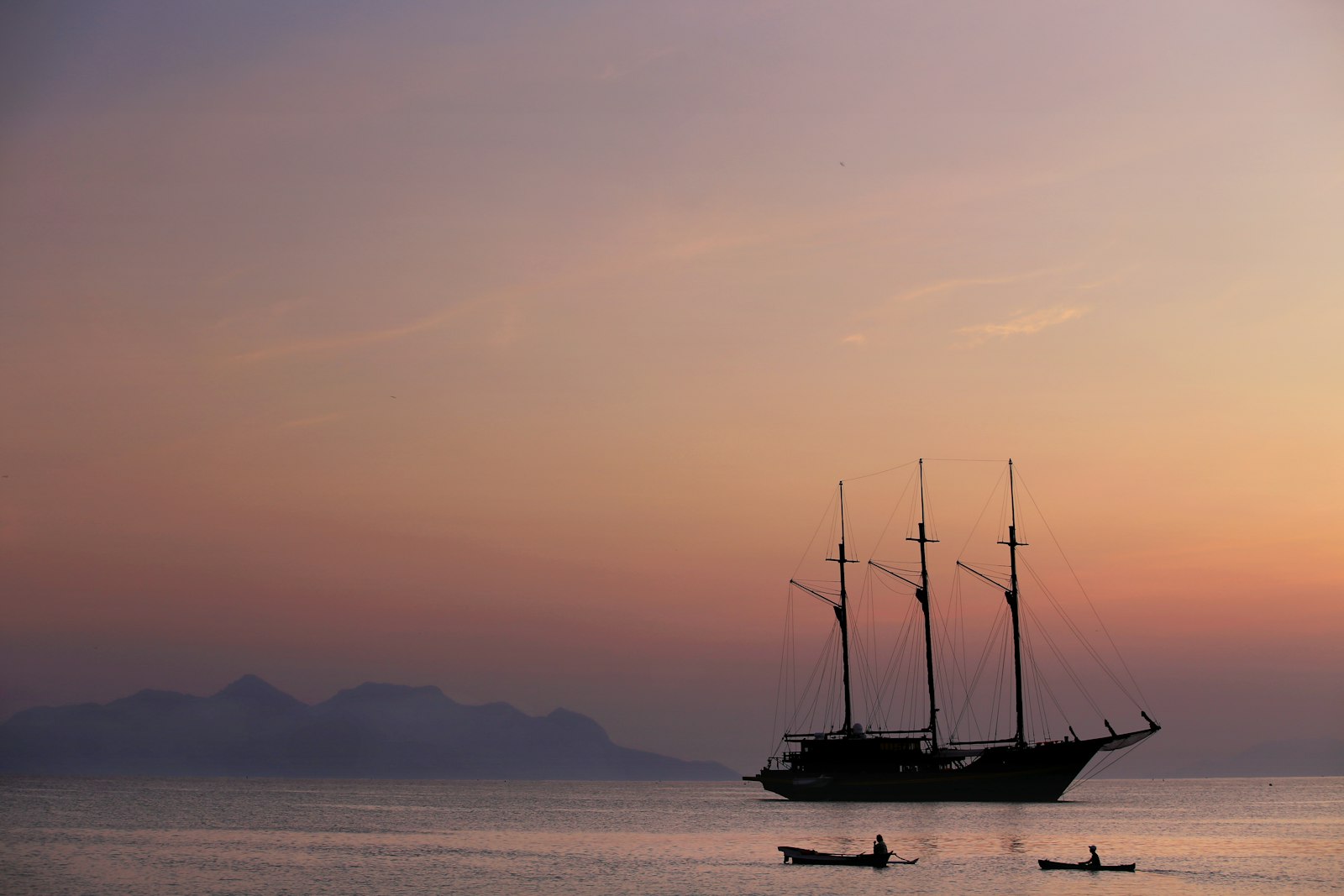
In Komodo National Park, dry season versus rainy season diving is not a question of whether conditions are good or bad — it is a question of which zone you are diving. The north and central park (Castle Rock, Batu Bolong, Manta Point) peaks during the dry season, roughly April through October. The south — Manta Alley, Cannibal Rock, Horseshoe Bay — flips opposite, with its clearest and calmest windows running from roughly October through April, when the rest of the country is calling it “wet season.” Rain rarely cancels a dive. Zone choice is what changes.
Why Two Zones Run on Different Clocks
The short answer is the monsoon. Indonesia’s southeast monsoon (May–September) pushes strong, consistent winds from the southeast, which means swell hits the south coast of Komodo Island and Rinca directly. Sites like Manta Alley sit right in that swell path. Diving there in July or August means contending with surge, poor anchoring conditions, and visibility that drops to 5–10 m or less as sediment gets stirred. The north coast, sitting in the lee, is shielded. Visibility opens up to 20–30 m and peaks at 25–35 m in July and August — the best it gets all year.
When the northwest monsoon arrives (roughly November–March), the pattern inverts. The south coast is now protected, swell lays flat, and the upwelling of cold, plankton-rich Indian Ocean water creates exactly the feeding conditions that aggregate reef mantas at Manta Alley in large numbers. Meanwhile, the north sees more wind swell from a different angle. January and February in particular can bring rough seas to the north and central park; some days up to certain sites are undiveable or require long, uncomfortable crossings.
This is not a seasonal binary — there is real overlap at either end. March, April, October and November are transition months that often give you access to both zones in the same week, depending on short-term weather. They are, for many divers, the most interesting time to come.
North and Central Komodo: Dry Season Is King (April – October)
The central and northern sites — Castle Rock, Crystal Rock, Shotgun/The Cauldron, Batu Bolong, the Tatawa pair, Manta Point/Karang Makassar, Siaba Besar — are the backbone of almost every day trip and liveaboard itinerary. These are the sites that appear in dive magazines, the sites people fly from Europe to see.
Dry season (April–October) is when they are at their most reliable. Water temperature in the north runs 27–29°C, warmest in July and August. Visibility averages 20–30 m and peaks in that July–August window at 25–35 m. Current intensity is actually strongest during the dry season because the SE monsoon drives maximum tidal exchange through the Sape and Linta Straits — which sounds counterintuitive, but strong current is what brings the pelagics. Castle Rock in July, with a 20-knot current, 30 m vis and a hundred dogtooth tuna circling overhead, is exactly what the site is supposed to be.
January and February: The Honest North Assessment
January and February deserve a separate note, not because they are impossible months but because they are often oversimplified. The northwest monsoon is at its height, swell can make the two-hour crossing to the north exposed sites uncomfortable and, on bad days, genuinely dangerous. Experienced operators monitor forecasts closely and will pull north runs if conditions are marginal. The central sites — Batu Bolong, Manta Point, Siaba Besar — are more sheltered and usually remain accessible. But if your main targets are Castle Rock and Crystal Rock, January and February carry more day-trip cancellation risk than any other months. You should know that before you book a one-week window.
That said, these two months offer something the dry season cannot: the south park is at its best simultaneously (see below), and manta sightings at Manta Point and Mawan can be exceptional because the plankton bloom that drives south-park aggregations also spills into the central zone. If you are on a liveaboard, January–February is not a bad choice — you get south park access and strong central manta activity. If you are day-tripping from Labuan Bajo and want the north pinnacles, it is higher-risk.
South Komodo: Rainy Season Is the Window (October – April)
Manta Alley, Cannibal Rock, Horseshoe Bay (Loh Dasami), Yellow Wall of Texas, Three Sisters — this cluster sits on the exposed southern coast and southeast tip of Komodo Island, facing the Indian Ocean. Access is liveaboard-only; no day trip from Labuan Bajo can reach these sites and return the same day.
The seasonal reality here is straightforward. From roughly October through April, when the southeast monsoon has retreated, these sites are diveable with reasonable regularity. Water temperatures drop — the south runs 20–25°C with thermoclines common (a 5–7 mm wetsuit and hood are standard equipment here, not optional extras). Visibility varies from 10–20 m on most dives; PADI notes that January and February can see 30 m at certain southern sites when conditions align perfectly with the upwelling window.
From May through September, the south park is not simply “off season” — it is genuinely rough for much of the period. SE swell makes anchoring near exposed bommies hazardous, and the murky, plankton-heavy water that brings mantas here in peak months turns into limited-vis surge conditions. Some liveaboards with experienced crews will make opportunistic south dives during transition months (May, September) when a weather window opens. That is skipper judgment, not a regular itinerary promise.
Why Cannibal Rock Draws Photographers Year After Year
Cannibal Rock at Horseshoe Bay is one of those sites that gets described as a world top-ten macro dive — not casually, but because the biodiversity concentration on that pinnacle is genuinely unusual. Sea apples, rhinopias, leaf scorpionfish, pygmy seahorses on gorgonians, Coleman shrimp on fire urchins, frogfish in assorted colours, ribbon eels, nudibranchs in quantities that take a full dive to begin cataloguing. It dives 5–30 m, with the richest life at 15–25 m. Currents run mild to strong depending on tide; AOW and some drift experience is recommended. It is available only on the October–April south park window, and it is worth planning your entire trip around.
Manta Season: Year-Round, With a Peak Window
Mantas are year-round in Komodo. That is not marketing language — it is biology. Komodo National Park hosts both reef mantas and oceanic mantas, and the cleaning stations at Manta Point/Karang Makassar, Mawan, and Manta Alley operate across all months. What changes is probability and aggregation size.
The strongest aggregations occur roughly from December through February, peaking in that January–February plankton-bloom period when cool, nutrient-rich water from the Indian Ocean brings feeding conditions that concentrate mantas in numbers — sometimes dozens at a single cleaning station. The broader window of elevated manta activity extends from approximately September through May. Outside that window — roughly June, July, August — sightings at Manta Point are still possible and regular, but the aggregation sizes that define peak-season dives are less consistent.
Manta sightings are never guaranteed anywhere in the world. This site follows the Manta Trust code of conduct on every page where an encounter is possible: maintain at least 3 m distance, approach from the side or slightly below (never from above or head-on), do not chase or block a manta’s path, stay clear of cleaning stations, deploy SMBs below the cleaning bommie depth, and let any encounter end on the manta’s terms. Indonesia declared its full EEZ a manta ray sanctuary in 2014 — they are legally protected nationwide. The interactions worth having are the ones that leave the animal undisturbed.
Month-by-Month Conditions Table
| Month | North / Central Park | South Park (liveaboard only) | Manta Activity | Crowds |
|---|---|---|---|---|
| January | Central OK; north can be rough/some cancellations; vis 15–25 m | Best season; calm, 20–25°C, vis 10–20 m (30 m possible) | High — plankton bloom peak | Low |
| February | Same as Jan; north remains weather-dependent | Best season; Manta Alley / Cannibal Rock excellent | Highest aggregations of year | Low |
| March | Improving; north accessible with fewer interruptions | Good; transition beginning late month | High; tapering toward mid-month | Low–Moderate |
| April | Good; dry season arriving; vis 20–25 m | Still OK early; south gets patchier late April | Moderate–High | Moderate |
| May | Excellent; SE current building, pelagics active | Marginal; weather windows only; skip south on most itineraries | Moderate | Moderate |
| June | Excellent; vis 20–30 m; strong current at north sites | Not recommended; SE swell building | Lower; consistent but not aggregating | Moderate–Busy |
| July | Peak: vis 25–35 m; warmest water 27–29°C; Castle Rock, Crystal Rock at best | Rough; murky; not accessible reliably | Lower; sightings at Manta Point still occur | Busiest of year |
| August | Peak: same as July; strongest currents = best pelagic shows | Rough; SE monsoon peak | Lower frequency but Manta Point regulars present | Busiest of year |
| September | Excellent; SE easing; vis still 20–30 m | Beginning to open; late-month weather windows possible | Improving; manta numbers climbing | Busy–Easing |
| October | Good; transition; occasional north swell | Opening; south park accessible again | Good; aggregations building | Moderate |
| November | Good; most sites accessible; vis 15–25 m | Good; Manta Alley building; Cannibal Rock reliable | Good; Sep–May window solidly active | Low–Moderate |
| December | OK; NW monsoon arriving; central sites stable; north more variable | Excellent; full south park season underway | High; Dec–Feb aggregation peak beginning | Low (pre-holiday spike late Dec) |
Conditions are typical observed ranges, not guarantees. Short-term weather always overrides seasonal averages. Confirm current forecasts with your operator before finalising itineraries.
Liveaboard Repositioning: What It Means for Your Booking
Most Indonesian liveaboard fleets reposition seasonally. The broad pattern: boats work the Komodo–Sumbawa corridor roughly from April or May through September or October, then reposition to Raja Ampat, Banda Sea, or Alor for the October–April period. This is not a hard rule — some operators run Komodo year-round with adjusted itineraries — but it is the dominant industry rhythm.
The practical implications are two. First, liveaboard availability for peak Komodo months (July, August, early September) gets absorbed fast. The park operates under a 1,000-visitor-per-day cap, and boat permits for peak season are allocated through the SiORA app well in advance. If you want a July or August liveaboard, booking six to twelve months out is realistic, not paranoid. Second, the flip side is that October, November and early December offer some of the best-value windows: south park access is opening, manta aggregations are building, boat availability is higher, and you are not sharing Castle Rock with a dozen other boats at slack tide.
For divers who want Raja Ampat and Komodo in the same trip, the repositioning calendar creates a natural sequence: Komodo on the April–May northbound leg or the September–October southbound leg, Raja Ampat in the January–March heart of its own dry season.
Does Rain Actually Cancel Dives?
Rarely. Surface rain has almost no effect on underwater conditions in Komodo. What cancels dives is wind-driven swell, not precipitation. During the NW monsoon, you can have a week of grey skies and afternoon showers with perfectly diveable conditions at every central site. The sites that close are those exposed to swell from a specific direction — and which direction depends on the season.
The only diving disruption that weather directly causes in the dry season is the occasional afternoon squall that shortens surface intervals or delays boat return. In the wet season, extended NW wind events can make northern crossings uncomfortable. Neither is routine. What I tell divers is this: the park has no annual closure, there is no month where you should stay home instead of coming, and the question is only about which sites you prioritise.
Park closures are worth addressing directly because the question comes up in planning forums constantly. Komodo National Park has no regular seasonal closure. The 2019 proposal to close Komodo Island specifically for one year was reversed before it took effect. Loh Buaya on Rinca was under temporary restricted access during jetty construction works in the early 2020s; that is resolved. As of 2025–2026, all park sectors are open year-round, and the 1,000-visitor daily cap is a volume management measure, not a closure.
The Crowd Calendar
July and August are the absolute peak. European and Australian school holidays combine with prime north-park conditions to fill boats and create the most competitive permit environment of the year. Castle Rock at peak season has the best visibility and the most dive boats on the surface simultaneously. Whether that bothers you is a personal call.
If you prefer less company at the cleaning stations, three windows stand out. January–February gives you the best south park conditions and thin crowds (cold-water reputation keeps some divers away, despite the manta aggregations). The shoulder months of May and October offer good north conditions without peak pricing or peak crowds. November is perhaps the most underrated month — south park is reliably open, manta activity is strong and building, and the park feels noticeably quieter than the August rush.
Ready to match your dates to the best available conditions? Plan your trip with our concierge — we can tell you, based on your target sites and experience level, which window will work hardest for you. For quick questions, WhatsApp planning is available too.
Which Season for Which Diver?
There is no universally correct answer, but there are clear patterns by diver type.
- Pelagic and current divers (Castle Rock, Crystal Rock, Shotgun)
- July and August. Best visibility, strongest current pushing pelagics onto the pinnacles, full north access. Book early.
- Macro and muck photographers (Cannibal Rock, Sangeang, Bima Bay)
- November through February for south Komodo access. Cannibal Rock in January, combined with a Sumbawa extension for Sangeang and Bima on the same liveaboard, is one of the strongest macro itineraries in eastern Indonesia.
- Manta-focused divers
- December through February for maximum aggregation probability (Manta Alley when south park is open; Manta Point year-round). September–November for a broader window with fewer crowds.
- First-time Komodo visitors who want the full spread
- October, November, March or April. Transition months mean the south park is accessible (liveaboard) and north conditions are solid. You are not making a seasonal compromise; you are choosing a window that does not force one.
- Day-trip divers based in Labuan Bajo
- April through October. Day trips cannot reach the south park regardless of season, so dry season is straightforwardly the best period for the central and north sites these trips serve.
Water Temperature and What to Wear
The temperature split between north and south is significant enough to affect kit choices. In the north during dry season, water sits at 27–29°C — a 3 mm wetsuit is comfortable, and many experienced divers use 5 mm for longer liveaboard days. In the south and during upwelling events, temperatures can drop to 20–25°C with thermocline layers that hit abruptly at depth. A 5–7 mm suit with a hood is standard kit for south Komodo diving; arriving with a 3 mm and no hood is a cold dive, especially over multiple days. Some operators lend or rent thicker suits, but availability varies — confirm before departure.
Sangeang volcano, on the extended Sumbawa route, sits in warmer water (25–28°C typically) and does not require cold-water kit. Bima Bay is similar. The cold-water experience is specific to the south Komodo upwelling zone.
Visibility: What the Numbers Actually Mean
Visibility figures are frequently inflated in dive marketing. Here is the honest range based on operator and diver reports across all seasons.
North and central park, dry season (April–October): typical 20–30 m, peak 25–35 m in July–August. After a very clean period with steady SE current, north pinnacles can exceed 30 m. That is real. Wet season north (November–March): 15–25 m on good days, dropping to 10–15 m when NW weather pushes surface chop and reduces clarity.
South park, peak season (October–April): typical 10–20 m. The plankton-rich upwelling water that concentrates mantas is, by nature, greenish and limits horizontal vis. You will occasionally get 25–30 m days at Manta Alley or the Three Sisters when conditions align, but the south park is not a visibility destination in the way the north is. It is a biodiversity and manta destination. Those are different things.
This distinction matters if you are planning a photography trip. Wide-angle and pelagic photography favours July–August north park conditions. Macro, close-focus wide-angle, and ambient manta photography suits the October–February window across both north and south.
The Seasons Pillar: Deeper Reading
This article covers the dry-season and wet-season split at the zone level. For a complete, month-by-month breakdown of specific site conditions, marine-life calendars, manta code of conduct detail, and the Sumbawa extension seasonal window, see our Komodo diving seasons guide. For the site-specific depth, current, and experience-level profile of every dive site mentioned here, the Komodo dive sites directory has each one documented individually.
Questions about your specific dates or experience level? Use our enquiry form or reach out via WhatsApp — we brief like a dive guide, not a brochure.
FAQs
Is Komodo diveable in January?
Yes, with caveats. Central sites like Manta Point, Siaba Besar and Batu Bolong are diveable in January and often excellent for mantas. The exposed north sites — Castle Rock, Crystal Rock, Shotgun — are weather-dependent; some weeks run fine, others see cancellations due to NW swell. January is actually the best month for south Komodo diving (Manta Alley, Cannibal Rock), which is liveaboard-accessible and at peak season. If your itinerary centres on the north pinnacles, January carries more disruption risk than April through October. If you are open to a liveaboard with south park access, January is genuinely one of the stronger months in the park calendar.
When is the best time to see mantas in Komodo?
Mantas are present year-round at Manta Point (Karang Makassar) and other cleaning stations. The largest aggregations — sometimes dozens of animals at a single station — occur roughly December through February, driven by the plankton bloom associated with Indian Ocean upwelling. A broader elevated-sighting window runs from approximately September through May. July and August see consistent manta activity at Manta Point but typically smaller groups. No sighting is ever guaranteed; the code of conduct applies regardless of how many animals are present.
Does rain affect diving in Komodo?
Surface rain has virtually no effect on underwater diving conditions. Visibility, temperature and current are driven by monsoon patterns and tidal exchange, not by whether it is raining overhead. What disrupts diving is wind-driven swell, which follows a predictable seasonal pattern by zone — the north is exposed to NW swell in January–February; the south is exposed to SE swell from May through September. You can have a rainy afternoon in Komodo with perfect visibility 15 m below the surface.
Is there a seasonal park closure in Komodo?
No. Komodo National Park has no annual or seasonal closure. The 2019 proposal to close Komodo Island for one year was reversed before it took effect. As of 2025–2026, the park is open year-round. There is a 1,000-visitor-per-day capacity cap, managed through the SiORA permit system, which affects peak-season availability but is not a closure. Sector access within the park is weather-dependent, not regulatory.
Do liveaboards run in the wet season?
Some do, with adjusted itineraries. Most operators in the Indonesian liveaboard fleet concentrate their Komodo seasons from roughly April–May through September–October, then reposition to Raja Ampat or Banda Sea. Operators who run year-round in Komodo shift their routing in the wet season: less time on exposed north pinnacles, more time in central and south park. October through February is actually prime south park season — liveaboards running in that window access Manta Alley, Cannibal Rock and Horseshoe Bay at their best. Check operator schedules per month rather than assuming wet-season boats are not running.