Avoiding Seasickness on a Komodo Liveaboard: Cabin Choice, Timing & Remedies
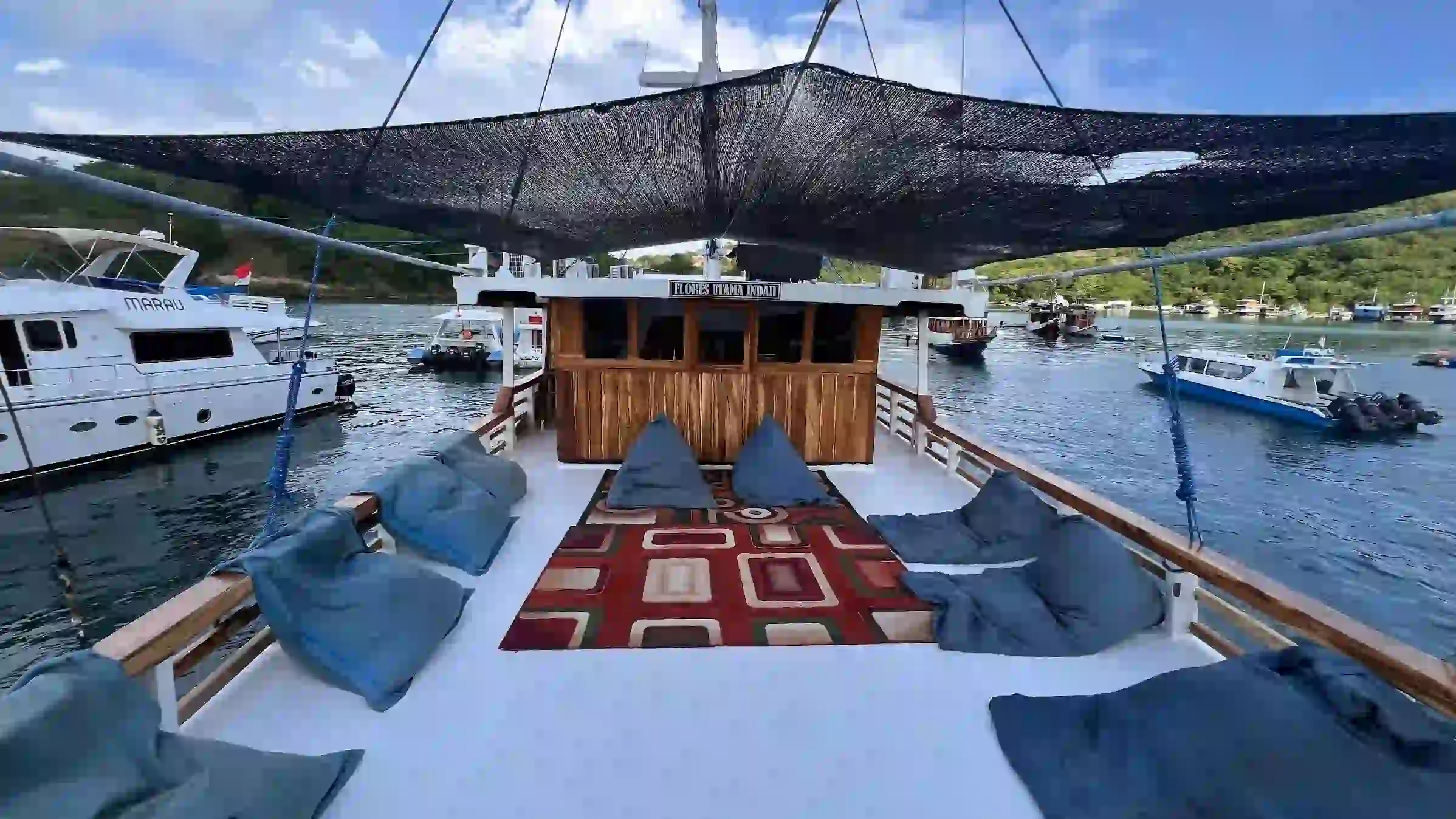
How our trips work: Labuan Bajo Diving is the dive-specialist team of our operating partner Komodo Luxury. Prices shown are typical ranges and are confirmed with a fixed quote before you book; conditions, levels and routes are always weather- and season-dependent.
Yes, you can do a Komodo liveaboard even if you are prone to seasickness — the trick is choosing the right season, boat, and cabin, and taking your medication before the anchor comes up, not after you feel ill. This guide covers when the crossings around Komodo National Park get bumpy, how to stack every comfort factor in your favour, and what to book instead if you would still rather sleep on land.
Seasickness is the objection almost nobody says out loud. Guests ask about currents, mantas, and park fees, but the real hesitation behind “maybe we’ll just do day trips” is often the fear of three queasy nights in a rolling bunk. It is a fair concern — and a very manageable one.
When Komodo Crossings Are Calmest — and When They Are Not
The dry season from April to November is the prime window for diving out of Labuan Bajo, and also when the sea is most forgiving. April to June and September to November offer the best mix of calm seas and visibility — if seasickness is your number-one worry, aim your booking at these shoulder months.
December to March is the wet season, often windier in the north of the park — exactly where marquee sites like Castle Rock and Crystal Rock sit — so northern crossings in this period carry more chop. Central sites remain divable and the park is pleasantly quiet, but a sensitive stomach will notice the difference. There is also a southern factor: from roughly July to September, Indian Ocean upwelling cools southern sites like Manta Alley to 22–25°C, and conditions on that exposed side are generally more variable than in the sheltered central zone.
Which Legs of the Trip Actually Feel Rough
A Komodo liveaboard is not one long open-ocean passage. Most of the itinerary threads between islands in relatively protected water, and the boat anchors in a calm bay overnight. The legs that test your stomach are the longer repositioning runs — up to the northern pinnacles or down to the far south — and these are exactly the legs a good cruise director times around the weather.
That reframes the fear: on a well-planned multi-day Komodo dive safari, you are not “at sea” for days on end but moving in short hops between anchorages. Central-route itineraries built around Manta Point, Siaba Besar, and Tatawa spend almost all their time in sheltered water — a smart request if you know you are sensitive.
Cabin Choice: Lower Deck, Midship, Every Time
Where you sleep matters more than most guests realise. A boat pivots around its centre of gravity, so the motion you feel grows the further you are from the middle of the vessel.
- Lower deck beats upper deck. Cabins high above the waterline swing through a wider arc with every roll — the romantic upper-deck suite is wonderful in flat water and the worst place to be in chop.
- Midship beats bow and stern. The bow rises and slams with every swell; the stern picks up engine vibration and pitching. The middle of the boat is the pivot point where movement is smallest.
- Book early to get it. Midship lower-deck cabins are limited and experienced divers ask for them first. Tell your booking agent motion comfort is a priority.
If one boat only has upper-deck cabins left, that alone is a genuine reason to switch vessels or dates.
Medication Timing: Before You Board, Not After You Feel Sick
This is the single most common mistake we see. Anti-motion-sickness tablets work by preventing the inner-ear confusion that triggers nausea — they are poor at reversing it once it has started. By the time you feel queasy, you are already behind.
The veteran approach: take your first dose the evening before departure or at least an hour before the boat leaves harbour, then keep to the schedule on the packaging for the first day or two, even if you feel fine. Feeling fine usually means the medication is working, not that you no longer need it. Talk to your doctor or pharmacist before travelling — some formulations cause drowsiness, which matters when you are diving, and they can match the right remedy to you.
Bring more than you think you need. Pharmacies in Labuan Bajo are limited, and there is no pharmacy at Castle Rock.
Why a Big Phinisi Rides So Much Smoother Than a Small Boat
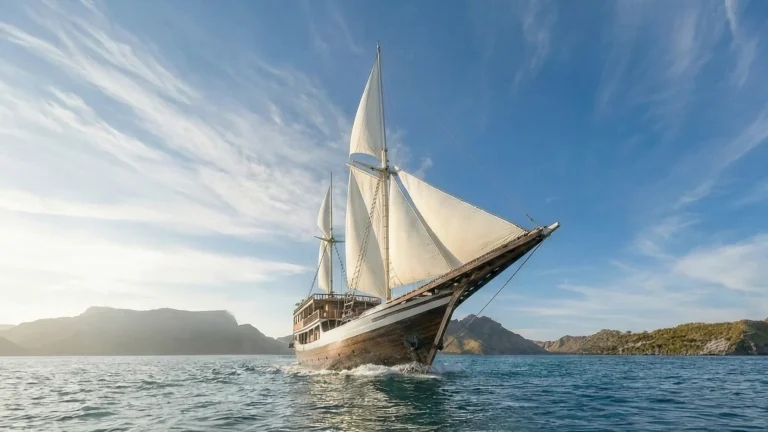
Hull size is the comfort factor you cannot fix with tablets. A large traditional phinisi — long waterline, deep keel, heavy timber construction — responds slowly and gently to swell, while a budget liveaboard of half the length reacts to every wave individually. The same sea state that has a compact boat corkscrewing leaves a big phinisi in a slow, easy sway.
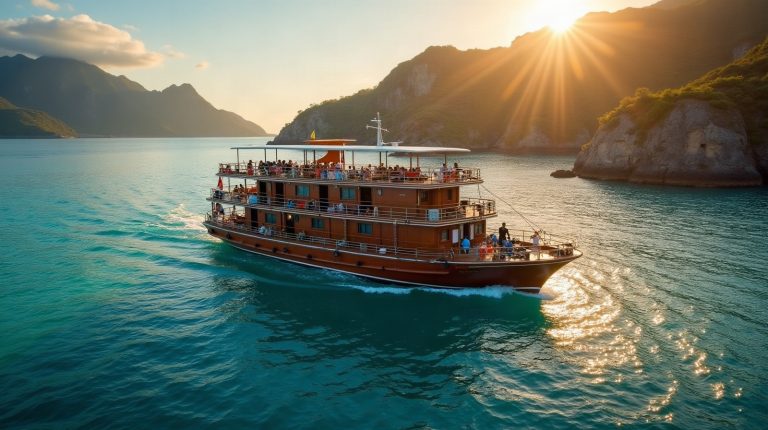
This is why VIP and VVIP-class vessels are consistently the most comfortable way for motion-sensitive guests to see the park: sheer size and displacement, spacious lower-deck cabins, and crews experienced at routing around weather rather than through it. Browse the luxury Komodo dive liveaboard options we recommend for sensitive travellers, or go straight to the VVIP-class phinisi fleet at Komodo Luxury, the charter operator we work with, where vessels like Alila Purnama and Celestia are among the steadiest platforms in these waters. On a private charter you also control the itinerary, so the whole trip can stay in the calm central zone if that is what your stomach prefers.
Veteran Tricks That Actually Work Underway
- Watch the horizon. Fixing your eyes on a stable distant point lets your brain reconcile what it sees with what your inner ear feels. Stay on deck in fresh air rather than in a closed cabin.
- Put the phone away during crossings. Reading a screen is the fastest way to trigger nausea — your eyes lock onto a fixed close object while your body moves. Edit photos at the anchorage instead.
- Ginger helps many people. Ginger tea, candies, or capsules are a gentle, non-drowsy option, and most crews can brew ginger tea on request.
- Eat light, skip the alcohol. A heavy meal or a hangover amplifies everything; small plain snacks and steady hydration keep your system settled.
- Position yourself midship on deck during longer legs — same physics as the cabin choice, same benefit.
- Give it a day. Most people adapt within 24–48 hours as the brain recalibrates, so do not let the first crossing convince you the whole trip will feel that way.
Still Unsure? Dive Komodo and Sleep on Land
If you still feel the risk is not worth it, you do not have to give up Komodo’s dive sites — just change where you sleep. A dive-and-stay itinerary pairs a hotel in Labuan Bajo with fast morning boats out to the park, so you dive the same central sites and return to a bed that does not move. Our Komodo dive-and-stay packages are built exactly for this: manta cleaning stations and turtle reefs by day, solid ground and restaurant dinners by night.
Many first-timers start with dive-and-stay, discover the sea is friendlier than they feared, and book the liveaboard for their return trip. Either way, you are diving Komodo.
Frequently Asked Questions
What is the best month for a Komodo liveaboard if I get seasick easily?
Target April to June or September to November. These dry-season shoulder months combine the calmest seas with excellent visibility. Avoid December to March if possible, when the north of the park is often windier.
Which cabin should I request on a liveaboard?
A lower-deck cabin as close to midship as possible — the point of least movement on any vessel. Request it explicitly at booking time; these cabins are limited and go first.
When should I take seasickness medication?
Before symptoms start — ideally the evening before departure or at least an hour before leaving harbour, then on schedule for the first day or two. A tablet taken after you already feel sick rarely rescues the situation. Confirm the right product with your doctor or pharmacist, since some options cause drowsiness unsuitable for diving days.
Are bigger boats really better for seasickness?
Yes, noticeably. A long, heavy phinisi with a deep keel moves gently through swell that would toss a small boat around. VIP and VVIP-class vessels are the steadiest option in the Komodo fleet, and a private charter lets you keep the route in sheltered central waters.
Can I dive Komodo without sleeping on a boat at all?
Absolutely. Day-trip boats reach central sites like Manta Point and Siaba Besar from Labuan Bajo, so a dive-and-stay package gives you the same signature diving with hotel nights on land.
Ready to plan a Komodo trip that suits your stomach as well as your logbook? Tell us your dates and how motion-sensitive you are, and we will match you to the right season, vessel, and cabin — or a land-based alternative. Message us on WhatsApp at +62 811-3823-875 or email bd@juaraholding.com for a tailored recommendation.