Best Time To Visit
When to dive, month by month.
Explore
This page answers the 100 questions divers most often ask before booking a Komodo National Park trip from Labuan Bajo — season timing, current strength, park tickets, liveaboard versus day-boat choices, courses, gear and logistics. It is written for certified divers, newly qualified divers, and travellers still deciding whether Komodo suits them at all. Answers were compiled by the Labuan Bajo Diving team from official park and training-agency sources plus field experience on local boats, and reviewed for 2027.
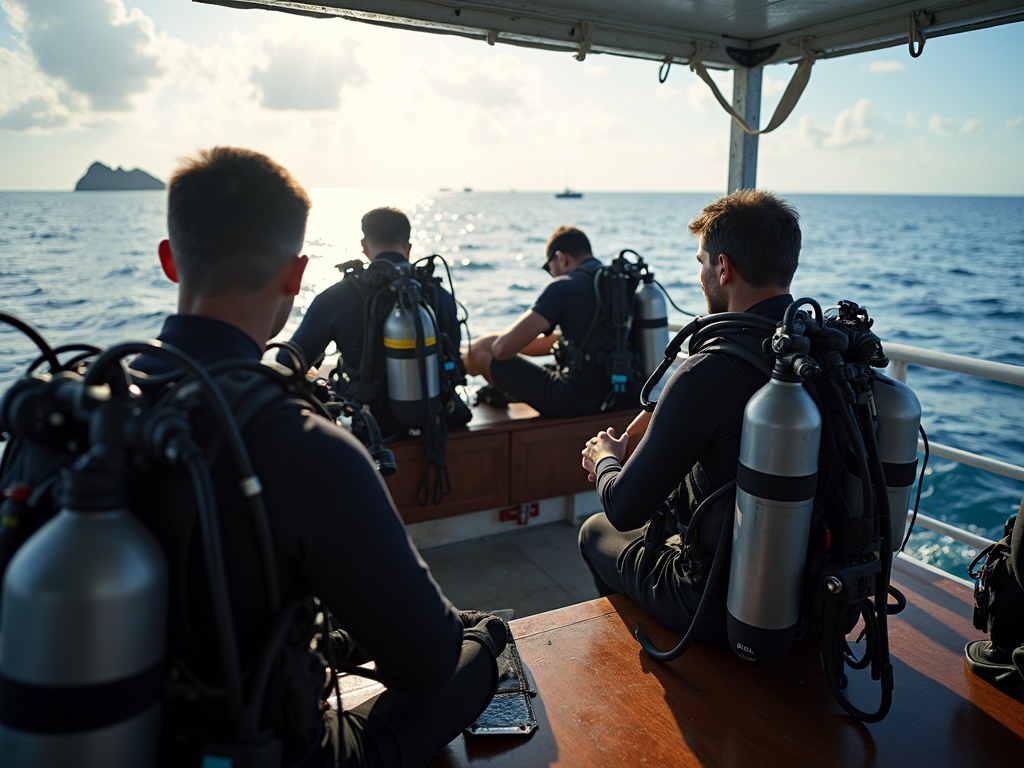
April to November is the prime diving window from Labuan Bajo, and June through October is most often cited for the calmest seas and 20–30 m visibility. Northern and central sites such as Castle Rock and Batu Bolong perform best across this dry-season stretch, crossings are more predictable, and day boats keep to schedule more reliably. Conditions still shift daily with tide and moon phase, so the final site order is set the evening before.
Manta encounters peak roughly November to April at Karang Makassar (Manta Point) and Mawan, with December to March described by most operators as the absolute high point. Plankton-rich, slightly greener water draws reef mantas to cleaning stations and feeding lines. Sightings still happen outside those months because these mantas are largely resident rather than migratory, but density drops noticeably between June and September.
January sits in the wet season with choppier seas and more rain, yet diving operates normally and the month falls inside peak manta season. Boats favour sheltered central and southern sites and adjust departure times around tide and wind. Expect an occasional cancelled crossing to the far northern pinnacles rather than a lost trip. Motion-sensitive travellers should choose larger vessels and carry preventive medication.
August falls in the dry season and is prime for central and northern sites including Batu Bolong and Castle Rock. Visibility in the north commonly reaches 20–30 m and surface conditions are usually settled. The trade-off is crowding: July and August are the busiest months in Komodo National Park, so popular pinnacles can hold several boats at once. Book dive days several weeks ahead for these months.
Transitional months — roughly March to April and September to November — give the best balance of manta activity and clear water. Plankton levels drop enough to lift visibility while mantas still visit cleaning stations regularly. November in particular is promoted by local operators for warm water, 30 m-plus visibility in the north, and moderate crowd levels compared with the July–August rush.
Northern and central Komodo sites typically sit at 27–29°C through most of the year, while southern sites such as Manta Alley and Cannibal Rock can drop toward 22–25°C. The southern chill is strongest around July to September, when Indian Ocean upwelling pushes cold water into Horseshoe Bay. A 3 mm wetsuit suits the north and centre; 5 mm or a hooded vest is sensible for southern legs.
Dry-season visibility reaches 20–30 m at many northern sites, while rainy-season and southern dives more often run 10–20 m. Central sites such as Karang Makassar typically sit at 15–25 m and can drop further when plankton blooms arrive. Greener water is a trade rather than a fault: the same plankton that reduces clarity is what concentrates filter feeders like reef mantas.
Currents run strongest around full and new moon, when tidal exchange between the Flores Sea and Indian Ocean sides of the park is largest. Guides often schedule the most demanding pinnacles for days roughly halfway between lunar extremes and time entries near slack. Spring tides can rule out channel sites such as The Cauldron on certain phases, so site order is decided on the day.
October is widely recommended as a sweet spot: good visibility, warm water in the north and central park, and noticeably fewer visitors than July and August. Sea conditions still belong to the dry season while peak-season pressure on boat space eases. Manta numbers also begin rising again toward the end of the month as the wet season approaches from the south.
Diving runs year-round in Komodo National Park; what changes is which part of the park works best. April to November favours the north and centre, while December to March shifts focus toward central and southern manta grounds. Mid-wet-season weeks around January and February bring the roughest surface conditions, and itineraries are adjusted rather than cancelled outright. No month is a complete write-off.
A three-day highlight route from Labuan Bajo usually covers Batu Bolong, Castle Rock, Crystal Rock, Karang Makassar (Manta Point), Siaba Besar and — tide permitting — The Cauldron/Shotgun. That mix gives you a current-swept pinnacle, a manta cleaning station, a calm turtle reef and a channel drift. The exact order depends on tide tables, weather and the certification level of everyone aboard.
Batu Bolong is a compact pinnacle running roughly 5–35 m with medium to strong swirling current and occasional down-currents on its edges. Operators generally require Advanced Open Water, prior drift experience and reliable buoyancy before booking it. Fish density is among the highest in Indonesia — anthias, fusiliers, surgeonfish, reef sharks and turtles over intact hard coral. Some operators prohibit snorkelling here entirely for safety reasons.
Beginner day trips focus on sheltered reefs such as Siaba Besar, Pengah and the easy sections of Karang Makassar. Siaba Besar runs about 5–18 m, is usually calm, holds a high turtle density and serves as the standard check-dive site for newly certified divers. Sebayur and similar coral gardens are substituted when the tide makes the central channels lively.
Castle Rock and Crystal Rock are current-swept seamounts at roughly 15–40 m and 5–35 m, dived with negative entries and sometimes reef hooks. Most operators ask for Advanced Open Water plus 20–50 logged dives with genuine current experience. With exactly 20 dives you may be accepted on a slack-tide, settled day, or redirected to gentler reefs — the guide makes that call after watching a check dive.
Karang Makassar (Manta Point), Mawan and Manta Alley are the three classic manta stations in Komodo National Park. Karang Makassar is a shallow rubble-and-sand reef at roughly 8–18 m with gentle to moderate drift, making it the most accessible to Open Water divers and snorkellers. Mawan sits in the central park; Manta Alley lies far south and carries more surge and colder water.
Central Komodo dive sites sit roughly 1.5–2.5 hours from Labuan Bajo harbour by speedboat, while far northern and southern sites can take three hours or more each way. That travel time is why day trips concentrate on the central park and why liveaboards are the practical route to Gili Lawa, Gili Banta and Horseshoe Bay. Day boats typically leave the jetty shortly after dawn.
Komodo National Park has no famous large wreck comparable to Bali's Tulamben, and local wreck options are limited and operator-specific. The park's draw is topography and biomass: pinnacles, channels, coral gardens, muck sites and manta stations. Divers who want wreck penetration usually add a separate Bali leg to the itinerary. Ask your operator directly rather than assuming a wreck appears on the schedule.
Batu Bolong, Castle Rock, Crystal Rock and the current-swept channels around Gili Lawa are the standard choices for schooling fish and pelagic action. Expect trevallies, rainbow runners, fusiliers, sweetlips, and white-tip or grey reef sharks. These are also the strongest-current sites in the park, so a compact rig and confident one-handed camera control matter far more than ambitious lens choices.
Many Labuan Bajo day trips combine diving with snorkelling stops at Pink Beach, Siaba Besar and the shallow sections near Karang Makassar, which suits mixed groups where not everyone dives. Batu Bolong is a common exception, since several operators ban snorkelling there because of current. Confirm the snorkel plan when booking so non-diving companions are not left sitting on the boat.
A typical four to seven-night Komodo liveaboard aims to cover central sites, the northern pinnacles around Gili Lawa, and at least some southern manta or macro grounds, weather permitting. Southern legs such as Horseshoe Bay and Manta Alley are the first to be dropped when wind builds. Boats generally schedule three to four dives per day, including night dives when conditions allow.
Currents at marquee Komodo sites can reach strong drift conditions, with reports of up to 5–7 knots at pinnacles such as Castle Rock, Crystal Rock, The Cauldron and Batu Bolong, plus down-currents and up-currents. Operators expect comfort with negative entries, immediate descent and reef-hook use. An Advanced Open Water diver with genuine drift experience copes well; a nervous diver should request gentler sites without apology.
Many Komodo operators ask for 30–50 or more logged dives plus proven current experience before taking guests to Castle Rock, Crystal Rock, The Cauldron/Shotgun or Batu Bolong. Advanced Open Water certification alone is rarely treated as sufficient. Divers below that threshold are routed to Karang Makassar, Siaba Besar, Mawan and Tatawa, which still deliver mantas, turtles, reef sharks and healthy hard coral.
A newly certified diver should start on sheltered Komodo sites such as Siaba Besar, which runs about 5–18 m in generally calm water and is used as the standard check dive. Komodo as a destination is known for demanding currents rather than gentle training conditions, so a first-ever ocean dive is better placed on a protected reef with a small guide ratio and an unhurried briefing.
Briefings in Komodo cover staying close to the reef, following the guide's line, and using controlled ascents or descents if vertical water movement is encountered. At sites like Batu Bolong, guides keep groups on the sheltered face and avoid the corners where down-currents form. Reef hooks are used selectively on the up-current side of northern pinnacles such as Castle Rock.
Reputable Labuan Bajo operators carry emergency oxygen and a basic first-aid kit on every trip, and asking about it before booking is entirely normal. Also confirm radio or satellite communication, a written evacuation plan, life jackets for the full guest and crew count, and whether crew hold current first-aid and oxygen-provider training. Hesitation on these answers tells you something useful about the operator.
A hyperbaric facility exists on Flores, but availability, staffing and access arrangements vary and should be verified close to your travel dates rather than assumed. Serious cases may still require evacuation to a larger centre. This is the main reason dive-specific travel insurance with emergency evacuation cover is strongly recommended for Komodo, and why conservative profiles matter on repetitive dive days.
Night dives in Komodo are run at sheltered sites with careful tide timing rather than at the current-swept pinnacles, with Wainilu and similar muck sites among the common choices. Operators typically require Advanced Open Water, though some accept well-briefed Open Water divers at calm, shallow locations. A primary torch plus a backup and tight buddy discipline remain essential after dark.
Manta Alley in southern Komodo carries more surge and stronger current than Karang Makassar in the central park, and is generally treated as the more advanced of the two manta sites. Southern water is also colder, often 22–25°C, with more variable visibility around 10–20 m. Karang Makassar's 8–18 m drift remains the accessible option for Open Water divers and mixed-experience groups.
Skippers and guides in Komodo assess conditions on arrival and can change site or cancel a dive when current, wind or tidal exchange looks unsafe. Spring tides in particular can rule out channel sites such as The Cauldron on specific phases. A swapped site is evidence of a working safety culture, not a failed trip — the tide table decides the plan, not the brochure.
Most Komodo operators manage depth limits and surface intervals across a three to four-dive daily schedule, but aggressive profiles raise decompression risk on any multi-day trip. Conservative practice matters here: dive your own computer, extend safety stops, hydrate, and use nitrox where offered and certified. Because chamber access on Flores is limited, staying well inside limits is the practical safeguard.
Komodo National Park fees change periodically and vary by nationality, day of week and activity, so the current amount must be checked close to your travel dates rather than copied from an older article. Your dive operator collects the applicable figure and remits it to the park authority. Ask for the fee to be itemised in writing before you pay any deposit.
The park fee charged by Labuan Bajo dive shops generally bundles the national park conservation fee, the diving or snorkelling activity ticket, ranger and trekking fees where a land visit applies, and sometimes camera charges. Because these are government-set and revisable, operators list them separately from their own boat, fuel and guiding costs. Request the breakdown line by line before confirming.
Foreign visitors pay higher conservation and entry fees than Indonesian citizens under Komodo National Park regulations, and the two tariffs are published separately. Bring your passport, since nationality determines the rate applied at registration. Mixed groups of domestic and international guests are charged accordingly, which is why operators ask for passport and identity details when a booking is confirmed rather than on the jetty.
Weekend and national-holiday surcharges have applied to Komodo National Park tickets in the past, but the fee structure has been revised several times and must be verified for your specific dates. If your itinerary is flexible, ask your operator whether a weekday departure lowers the ticket component. The diving price itself is normally unaffected by the day of the week.
Almost all Labuan Bajo dive shops collect park and conservation fees from guests and pay the authorities on your behalf, so you rarely queue at a ranger office yourself. You should still receive proof that a ticket was issued in your name for your date. Keep the receipt until the trip ends, since rangers can check registration at landing points.
Camera and drone charges exist inside Komodo National Park, and drone flights often require specific prior permission — amounts and conditions change, so both must be confirmed before travel. Filming near wildlife is the most tightly controlled activity. Declare professional camera gear when your operator registers the group rather than at the ranger post, where it can delay a departure.
Trekking and ranger fees are added on top of the diving ticket whenever your day includes a land visit to Rinca, Komodo Island or Padar. Guided treks require staying with a ranger and observing distance rules around Komodo dragons. Combined dive-and-trek days are common from Labuan Bajo, so ask for the land component to be priced as a separate line.
Payment method depends on the operator and the offices involved: many Labuan Bajo dive centres accept card for the combined package, while some fee components and onboard extras remain cash-only. Carry Indonesian rupiah for tips, small purchases and ranger-post items. ATMs and money changers operate in Labuan Bajo town, though queues and network outages do happen in peak season.
Operators separate the Komodo National Park fee from trip prices because the government sets and revises that conservation charge independently of boat, fuel and guiding costs. Bundling them would force constant price rewrites and disguise what is in fact a conservation levy. A transparent quote shows the dive package, the park ticket, equipment extras and any fuel or seasonal surcharge as distinct, checkable lines.
Multi-day ticket structures have existed for Komodo National Park, but availability and conditions vary and must be verified for your exact dates and activity mix. If you plan three or more dive days, ask your operator whether a multi-day ticket applies before each day is booked individually. Any saving is administrative rather than a discount on the diving itself.
Important: park fees, tickets, permits, drone rules and visitor regulations are set by Indonesian government and park authorities and change without notice. Nothing on this page is legal, immigration, medical or financial advice. Verify current fees, permit requirements and entry rules with the Komodo National Park authority, official Indonesian government sources, your licensed dive operator, your insurer, or a qualified professional before you travel or pay.
Day-trip dive package prices from Labuan Bajo vary by boat type, group size and inclusions, so any figure is indicative only and must be confirmed for your dates. Packages usually cover two or three dives, lunch, drinking water, tanks and weights, with park fees quoted separately. Fast boats able to reach northern sites cost more than standard wooden day boats. Always request a written quote.
Budget and mid-range Komodo liveaboards typically run from the low to mid-hundreds of US dollars per night per guest, with luxury vessels priced considerably higher; all figures are indicative and move with season and cabin category. A three-night trip usually includes nine to twelve dives, meals and your cabin. Park fees, nitrox, gear rental and crew tips normally sit outside the package.
Walk-in bookings in Labuan Bajo can occasionally undercut online rates, but the saving is unreliable and vanishes in July, August and holiday periods when boats fill weeks ahead. Pre-booking also secures the guide ratio, cabin type and nitrox supply you want. On a short trip, certainty is usually worth more than the possibility of a modest discount.
Most Labuan Bajo day-trip packages include lunch, drinking water, tanks and weights, plus basic rental gear on many boats. Dive computers, nitrox fills, torches and underwater camera hire are commonly charged extra, and park fees sit outside the package almost everywhere. Ask for a written inclusions-and-exclusions list before paying, and confirm whether any fuel or seasonal surcharge applies.
Per-dive rates in Labuan Bajo are lower when you bring your own BCD, regulator and computer, though the exact reduction differs widely between operators and is quoted on request. Bringing personal kit also removes rental sizing problems and improves familiarity in current. Tanks, weights, boat, guide and park fees are still charged regardless of how much equipment you carry from home.
Nitrox is available on many Komodo liveaboards and some day boats, usually as a daily surcharge quoted on request rather than a fixed published rate. It is genuinely useful on a three-to-four-dive daily schedule, extending no-decompression limits and easing surface intervals. You must hold a nitrox certification and analyse your own cylinder before every dive regardless of who filled it.
Komodo liveaboard packages commonly include airport-to-boat transfers in Labuan Bajo but rarely include hotel nights before or after the trip. Most itineraries assume you arrive the previous day, since flights from Denpasar can be delayed. Budget one or two town nights on either side, and plan a no-fly interval of at least 18–24 hours after your final dive.
Boat safety in Komodo depends on maintenance, crew training and management rather than price alone, though very cheap options warrant closer scrutiny. Ask about life rafts, life jackets for the full guest and crew count, emergency oxygen, radio or satellite communication, and the vessel's most recent inspection. Read recent guest reports rather than relying on brochure photography and rendered cabin images.
Komodo generally offers higher fish biomass, more reliable reef manta encounters and healthier hard coral than most Bali or Nusa Penida sites, which is why many divers accept the higher total cost. Nusa Penida's manta dives are quicker and cheaper to reach from Bali, but Komodo adds reef sharks, current-swept pinnacles and remote topography. It is a different trip, not simply a pricier one.
Multi-day packages with the same Labuan Bajo dive centre commonly attract a lower per-day rate, especially outside July and August; amounts are quoted on request. Tipping guides and crew is customary but never mandatory, with typical practice being a modest per-day amount or a small percentage of the trip price, handed over at the end of the trip.
A liveaboard reaches northern and southern Komodo sites that day boats cannot practically service, and delivers three to four dives per day instead of two or three. Day trips from Labuan Bajo suit shorter budgets, tighter schedules and divers who prefer a hotel bed. If Gili Banta, Horseshoe Bay or Manta Alley are on your wish list, a liveaboard is the only realistic route.
Matching the 12–16 dives of a four-night Komodo liveaboard takes roughly four to five full day-trip dive days from Labuan Bajo. The dive count can be equalled; the site list cannot, because day boats stay within about 1.5–2.5 hours of the harbour. Day trips also add daily transfers and repeated crossings that a liveaboard removes entirely from your schedule.
Wet-season liveaboards between December and March face rougher seas, so motion-sensitive divers often prefer day trips or a larger, more stable vessel. Preventive medication taken before departure works far better than treatment afterwards. Staying on deck with a view of the horizon, avoiding heavy meals before crossings, and requesting a mid-ship lower cabin all reduce symptoms measurably.
Some Komodo liveaboards run PADI courses, but many focus exclusively on certified fun divers, so training availability is operator-specific and must be confirmed before booking. Advanced Open Water adventure dives are the most commonly offered option onboard. Open Water certification is better completed in Labuan Bajo or elsewhere first, since confined-water skill sessions are awkward to run at sea.
Komodo day boats can carry 10–20 or more divers, while small liveaboards often cap guest numbers below 12. Group size drives guide ratio, entry sequencing and how long you wait between dives. Many shops work to roughly four to five divers per guide, though exact ratios vary by operator and site. Ask for the maximum guest count rather than the average.
Day trips from Labuan Bajo reach Karang Makassar and Mawan, the central park's main manta stations, along with Batu Bolong, Tatawa and Siaba under good conditions. A liveaboard is not required to see reef mantas. What day trips cannot reliably deliver is Manta Alley in the far south or the full northern pinnacle circuit within a single outing.
Some Komodo liveaboards accept snorkellers and non-diving partners, while many are scuba-only, so this must be confirmed vessel by vessel before booking. Boats that welcome snorkellers usually schedule stops at the Karang Makassar shallows, Pink Beach and Siaba Besar. Note that several operators ban snorkelling at Batu Bolong entirely because of the current there.
Short two and three-night Komodo liveaboards exist and can work within a three-day window, but embarkation and disembarkation consume part of the first and last day. Travellers on a tight schedule often gain more dives from flexible day trips plus a hotel base in Labuan Bajo. A three-night boat makes better sense when your flights allow an extra arrival day.
Budget phinisi vessels in Komodo may offer shared cabins or dorm-style bunks with fan ventilation and shared bathrooms, while mid-range boats provide private cabins and higher-end vessels add ensuite bathrooms and air-conditioning. Cabin category is the single biggest price driver on any given boat. Ask for photographs of the exact cabin you are booking, not the vessel's best one.
Combining a three or four-night liveaboard with extra day dives before or after is a common way to fill a Komodo week from Labuan Bajo. The boat covers remote northern and southern sites; the day trips add central favourites and flexibility around weather. Leave at least 18–24 hours between your final dive and any onward flight.
Open Water training is offered in Labuan Bajo on sheltered sites such as Siaba Besar, but many instructors suggest certifying somewhere calmer first because Komodo's signature sites demand current skills. If you do learn here, expect confined-water sessions near town and open-water dives on protected reefs at roughly 5–18 m, with an 18 m depth limit applying afterwards.
Advanced Open Water adventure dives are commonly run on Komodo liveaboards and day boats at central sites, subject to conditions on the day. Deep, drift and navigation dives suit the destination naturally. Availability depends on an instructor being aboard, so confirm before booking rather than assuming. Completing AOW here also unlocks more of the site list later in the same trip.
Most operators require Advanced Open Water or equivalent plus documented current experience for Batu Bolong, Castle Rock, Crystal Rock and The Cauldron, and many additionally ask for 30–50 logged dives. Certification alone rarely settles the question — guides also watch your buoyancy, trim and air consumption on an earlier check dive before agreeing to the harder pinnacles.
Night dives in Komodo generally require Advanced Open Water or higher, though some operators accept well-briefed Open Water divers at calm, shallow sites. Depth limits still apply: 18 m for Open Water and 30 m for Advanced are typically respected, especially on day trips. Bring or rent a primary torch plus a backup, and confirm the site's current profile in the briefing.
Several Labuan Bajo dive centres run Rescue Diver training alongside regular fun-dive days, usually across two to three days with an emergency first-response component. The destination suits the course, since current, drift retrieval and surface signalling are live scenarios here rather than classroom theory. Confirm instructor availability well ahead, particularly in the July–August peak.
Most Labuan Bajo operators accept certifications from major agencies including PADI, SSI, NAUI and CMAS, provided you present your card or verifiable digital proof. Bring your logbook as well, since logged dive count often matters more than the agency logo when qualifying for current-swept sites. Digital certification apps are widely accepted where the local connection allows verification.
A refresher is strongly recommended, and frequently required, if you have not dived for about two years before attempting Komodo's more advanced sites. Shops typically run a shallow skills session at a calm site such as Siaba Besar covering mask clearing, buoyancy, air sharing and SMB deployment. It also gives the guide a chance to assess you before the pinnacles.
Drift and current handling are a natural part of training in Komodo and can be emphasised within an Advanced Open Water course or a dedicated Drift Diver specialty. Some centres also offer Deep Diver, which pairs well with local topography. The skills that matter most here are negative entries, reef-hook use, and controlled ascents in moving water.
Discover Scuba Diving is available in Labuan Bajo for uncertified guests, but it is limited to shallow, controlled sites and never the park's strong-current locations. Expect a maximum depth of around 12 m under direct instructor supervision. Minimum age follows agency rules, commonly 10–12 years for junior programmes, with operator discretion applied on top of that.
Completing dive-theory e-learning at home and finishing the confined and open-water dives in Labuan Bajo is supported by many local centres and saves classroom time on holiday. Send your e-learning completion record ahead so the shop can schedule instructor and boat time. Dive computers are usually available to rent, though bringing your own is encouraged for familiarity.
Well-maintained rental BCDs and regulators are available in Labuan Bajo, so bringing your own is a preference rather than a requirement. Experienced divers usually travel with their own regulator, computer and mask because familiarity matters in current. If you rent, inspect hoses, check the pressure gauge and test the inflator before leaving the jetty rather than at the dive site.
A 3 mm wetsuit is adequate for northern and central Komodo sites at 27–29°C, but southern dives around Manta Alley and Horseshoe Bay can fall to 22–25°C, especially July to September. Divers doing three or four dives daily in the south are far more comfortable in 5 mm, or 3 mm with a hooded vest. Check how much southern content your itinerary includes.
Gloves are often discouraged in Komodo to reduce reef contact, while reef hooks are used selectively at current-swept northern pinnacles such as Castle Rock. Practice varies by operator, so ask before packing either item. If hooks are permitted, place them on bare rock or dead substrate only, and stow the line carefully to avoid entanglement during the ascent.
Dive computers can be rented at many Labuan Bajo shops but not all, so pre-booking is wise, particularly in peak season. On a three-to-four-dive daily schedule your computer is the primary safety tool, and familiarity with its alarms genuinely matters. If you bring your own, pack a spare battery or the manufacturer's replacement kit, since local servicing options are limited.
Carrying a personal surface marker buoy is strongly recommended in Komodo because drift dives frequently end away from the boat. A 1.5 m or taller SMB with a finger spool of at least 30 m is the practical standard here. Practise deployment before the trip: inflating a buoy mid-water in a moving current is not the moment to learn the technique.
Most cylinders in Komodo use yoke valves, with DIN adapters commonly available on request rather than guaranteed. If you dive DIN, bring your own adapter and mention it when booking. Verify the fitting during your gear check on the first morning, because the boat's spares are limited once you have left Labuan Bajo harbour for a full day.
Underwater camera and action-camera rental exists at some Labuan Bajo dive shops but is not universal, so availability must be confirmed before you arrive. Bring your own housing seals, silicone grease and spare batteries. Camera fees inside Komodo National Park may also apply and drone use requires separate permission and payment — both rules change and need checking before travel.
Booties with open-heel fins are preferred by most divers in Komodo because of boat entries, dinghy transfers and occasional landings on uneven ground. Full-foot fins work but offer less protection and less thrust in strong current. Add a rash guard and reef-safe sunscreen as well: tropical sun on an open boat deck between dives is intense all year.
Labuan Bajo has several dive shops and small gear outlets stocking basics such as SMBs, spools, clips, torches, mask straps and O-rings. Specialised regulator or computer parts are much harder to find, so travel with critical spares. Most dive centres also offer secure gear storage between dive days, which saves carrying wet equipment back to your hotel each evening.
A personal, well-fitting mask is the item many divers say they always bring to Komodo, because a leaking rental mask ruins current dives where both hands are occupied. Rental stock exists in Labuan Bajo but sizing is inconsistent. Treat a new mask before travel to stop it fogging, and pack a spare strap. Prescription lenses are effectively impossible to source locally.
The standard route is a direct domestic flight from Denpasar (DPS) to Labuan Bajo (LBJ), taking roughly one hour, with several carriers operating daily. Morning departures are the most reliable and leave room for a delay without losing a dive day. Ferry and overland routes exist through Lombok and Sumbawa but consume days rather than hours.
Most visitors allow four to six days in Labuan Bajo to fit three or four dive days plus at least a half day of Komodo dragon trekking on Rinca or Komodo Island. Add a buffer day before any onward flight to respect the 18–24 hour no-fly interval after your last dive. Tight schedules are the most common reason people lose dives to weather.
Labuan Bajo town offers the widest choice of guesthouses, hotels, restaurants and dive centres, while island resorts trade that choice for quiet and shorter boat rides to certain sites. Divers who want flexibility across multiple operators usually base in town. Resort guests should confirm which specific sites their location actually shortens, since the central park is reached from both.
Komodo Airport sits only a short drive from Labuan Bajo's main jetty, typically under 15–20 minutes by car. That proximity is why liveaboard packages usually include an airport transfer and why same-day embarkation is feasible for morning arrivals. Traffic through the town centre thickens in the late afternoon, so allow extra time for an evening transfer.
Some Labuan Bajo shops allow an afternoon dive on arrival day if your flight lands in the morning and the health screening is clear, but many recommend resting first and starting fresh the next morning. Day boats leave the jetty shortly after dawn, so a mid-morning arrival misses the main departure regardless of how energetic you feel.
Peak months — particularly July, August and major holiday periods — book out weeks to months ahead for both liveaboards and popular day boats in Labuan Bajo. Shoulder months such as October and March are far more flexible. Liveaboard cabins sell earlier than day-trip seats, so secure the boat first and arrange day dives around that fixed date.
Labuan Bajo offers guesthouses, hostels and mid-range hotels suited to dive travellers, alongside higher-end properties on the ridge above the harbour. Choose somewhere near the jetty if you have early departures every morning. Confirm reliable water and power, and ask whether the property can store luggage during a multi-night liveaboard leg — most are used to the request.
Comprehensive travel insurance that explicitly covers recreational scuba diving to your planned depth, plus emergency medical evacuation, is strongly recommended for Komodo. Standard policies often exclude diving altogether or cap cover at 18 or 30 m. Because chamber access on Flores is limited and evacuation may be required, read the policy wording rather than the marketing summary before you travel.
Diving inside Komodo National Park requires a park ticket and conservation fee rather than a personal diving permit, and your licensed operator handles the registration paperwork. Visitors dive with licensed operators in practice; independent unguided diving from private boats is rare and discouraged. Carry your certification card and passport, since both are used when the group is registered.
Touching, chasing or feeding manta rays is prohibited by park rules and dive best practice at Karang Makassar, Mawan and Manta Alley. Stay low, remain still beside cleaning stations and never block an animal's path. Indonesia declared its entire exclusive economic zone a manta ray sanctuary in 2014, which makes these animals legally protected rather than merely a photo opportunity.
Removing coral, shells or any marine life from Komodo National Park is prohibited under conservation regulations, and the rule applies to beaches inside park boundaries as well. Good operators brief no-touch policy, buoyancy control and no-chase rules before the first dive. Single-use plastics are discouraged by many boats and local initiatives, so bring a refillable bottle.
Drone use inside Komodo National Park is regulated and commonly requires prior permission plus payment of a fee, with the tightest restrictions near wildlife and ranger stations. Requirements change, so confirm the current rule with your operator and the park authority before packing a drone. Flying without clearance risks confiscation and disturbs both animals and other visitors.
Minimum diving age in Komodo follows training-agency rules — commonly 10 years for junior certifications and 12 for some programmes — with additional operator discretion based on site conditions. Junior divers face reduced depth limits and direct supervision requirements. Family day trips typically pair junior divers with calm sites such as Siaba Besar and snorkelling for younger siblings.
Moderate alcohol is normally permitted only after the day's diving has finished, never before or between dives, on both Labuan Bajo day boats and Komodo liveaboards. Smoking policies vary and are usually restricted to a designated open deck area, well away from cylinders and enclosed spaces. Ask about both policies at booking if they matter to your group's comfort.
Many Labuan Bajo operators work to roughly four to five divers per guide, though exact ratios vary by shop, site and the certification mix aboard. Small ratios matter most at current-swept pinnacles where the group must stay tight. Ask for the maximum ratio in writing, and whether an extra guide is added when newly certified divers join the group.
Komodo's reefs remain among the healthiest in Indonesia, with dense hard coral at sites such as Batu Bolong, Tatawa Besar and Crystal Rock, though some areas show visible impact from past fishing and heavy visitation. Strong tidal flushing helps the park resist bleaching better than many regions. Good buoyancy, no gloves and zero contact are how visitors keep it that way.
White-tip and grey reef sharks are regular sightings at Castle Rock, Crystal Rock and The Cauldron, and local divers treat them as a highlight rather than a hazard. Recreational divers are not a prey target and shark incidents are not a recognised risk in the park. Keep normal distance, never chase or corner an animal, and remember that current is the real hazard here.
Komodo ranks among Indonesia's strongest dive destinations for reef manta encounters, shark sightings, fish biomass and dramatic current-swept topography, and it is far easier to reach — about one hour by air from Denpasar. Raja Ampat wins on species diversity and remoteness but costs more in travel time and money. Many divers eventually do both; they are complementary, not competing.
Quality varies between Labuan Bajo operators as in any busy tourist hub, so recent guest reports, written inclusions and clear safety answers matter more than the headline price. Confirm emergency oxygen, life jackets for full capacity and a stated evacuation plan in writing. The most common grievances are crowded peak-season boats, currents beyond a diver's stated comfort, and park fees never itemised at booking.
Newly certified divers with around 15 logged dives get strong value from Komodo, provided they stay on gentler sites such as Siaba Besar, Karang Makassar, Mawan and Tatawa, which still deliver mantas, turtles, reef sharks and healthy coral. The strong-current pinnacles will probably be declined this trip, and that is the correct call. Build experience, then return for Castle Rock.
Important: park regulations, wildlife protection rules, drone permissions, age limits and diving-medical requirements are set by Indonesian authorities and training agencies and are revised from time to time. This page is general information, not legal, medical or financial advice. Confirm current rules with the Komodo National Park authority and official government sources, and discuss fitness to dive with a licensed physician or dive medical professional.
Tell us your dates, certification level and logged dive count, and the Labuan Bajo Diving team will map a realistic Komodo itinerary — day trips, a liveaboard, or a private charter through Komodo Luxury — with park fees itemised and site choices matched to tide, season and your actual comfort in current. Message us on WhatsApp at https://wa.me/628113823875 or email bd@juaraholding.com for a written quote and an honest answer about which sites you should and should not dive.