Dive Insurance & Emergency Care in Komodo 2027: What Divers Must Know
Dive insurance is not a formality in Komodo: for the current-swept advanced sites that make this park famous, a policy covering hyperbaric treatment and emergency evacuation — DAN or an equivalent dive-specific insurer — is the one document experienced divers and serious operators treat as non-negotiable. This guide explains why cover matters more here than in most destinations, what emergency care really looks like from Labuan Bajo, what operators check before strong-current sites, and which documents to prepare for a 2027 trip.
None of this is meant to frighten anyone — Komodo is dived safely by thousands of people every season. But honest information about emergencies is rare in this destination, so here it is.
Why Dive Insurance Is Practically Mandatory in Komodo
Komodo National Park is one of Indonesia’s most rewarding dive destinations and one of its most technically demanding. The marquee sites — Castle Rock, Crystal Rock, Batu Bolong, and the Cauldron/Shotgun channel — regularly run strong to very strong currents, up to 5–7 knots in some conditions, with down-currents and up-currents on pinnacle edges; dives often involve negative entries, reef hooks, and careful timing around tidal phases.
That profile changes the risk math: in a Komodo washing machine, a small buoyancy error or rushed ascent can compress into something that needs oxygen, monitoring, or — rarely — recompression treatment. A dive-specific policy exists exactly for this gap, because standard travel insurance frequently excludes scuba entirely, caps it at shallow depths, or excludes the evacuation costs that matter most in a remote marine park. If you are planning advanced diving trips in Komodo, treat the insurance certificate as part of your kit, alongside your certification card and logbook.
What “Remote” Really Means: Evacuation From South Komodo
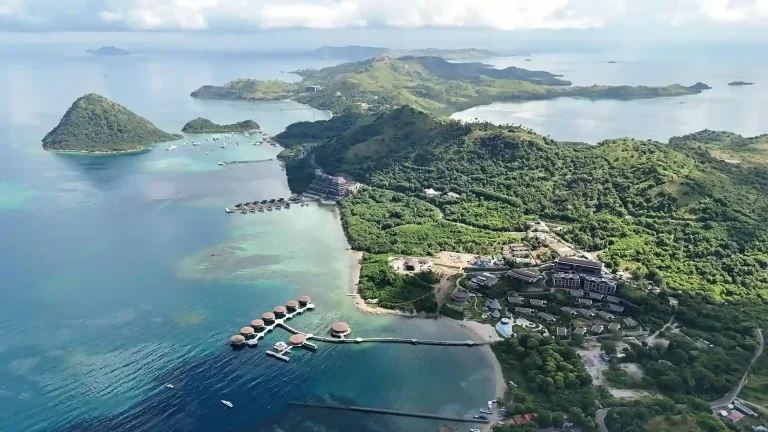
The park’s geography is the part most pre-trip articles gloss over. Central sites such as Manta Point (Karang Makassar) and Siaba Besar sit within reasonable reach of Labuan Bajo; the southern icons do not. Cannibal Rock in Horseshoe Bay and Manta Alley on Komodo’s far southern coast are hours from town by boat, which is why they are usually dived on multi-day itineraries rather than day trips.
The south has its own conditions too: Indian Ocean upwelling can drop the water to 22–25°C between July and September, versus the 27–29°C typical of the central and northern park — cooler water, more exposure protection, and more fatigue over a multi-dive day.
Put plainly: if something goes wrong at Horseshoe Bay, there is no shortcut back — first response happens on the boat, and definitive care is a long transfer away. That is why a well-run Komodo dive safari is briefed around an emergency action plan, not just a dive plan, and why evacuation cover is worth more than any other line item in your policy.
Medical Facilities and Chamber Referral: An Honest Picture
Labuan Bajo is the gateway town and the point of initial shore-based care. For a suspected decompression incident, however, assume that recompression treatment will involve transfer beyond Labuan Bajo. Chamber availability and referral routes in Indonesia change over time, so the responsible 2027 approach is simple: ask your operator two direct questions before the trip — where is the current chamber referral, and what is the evacuation route from my itinerary’s sites? A serious operator answers both without hesitation.
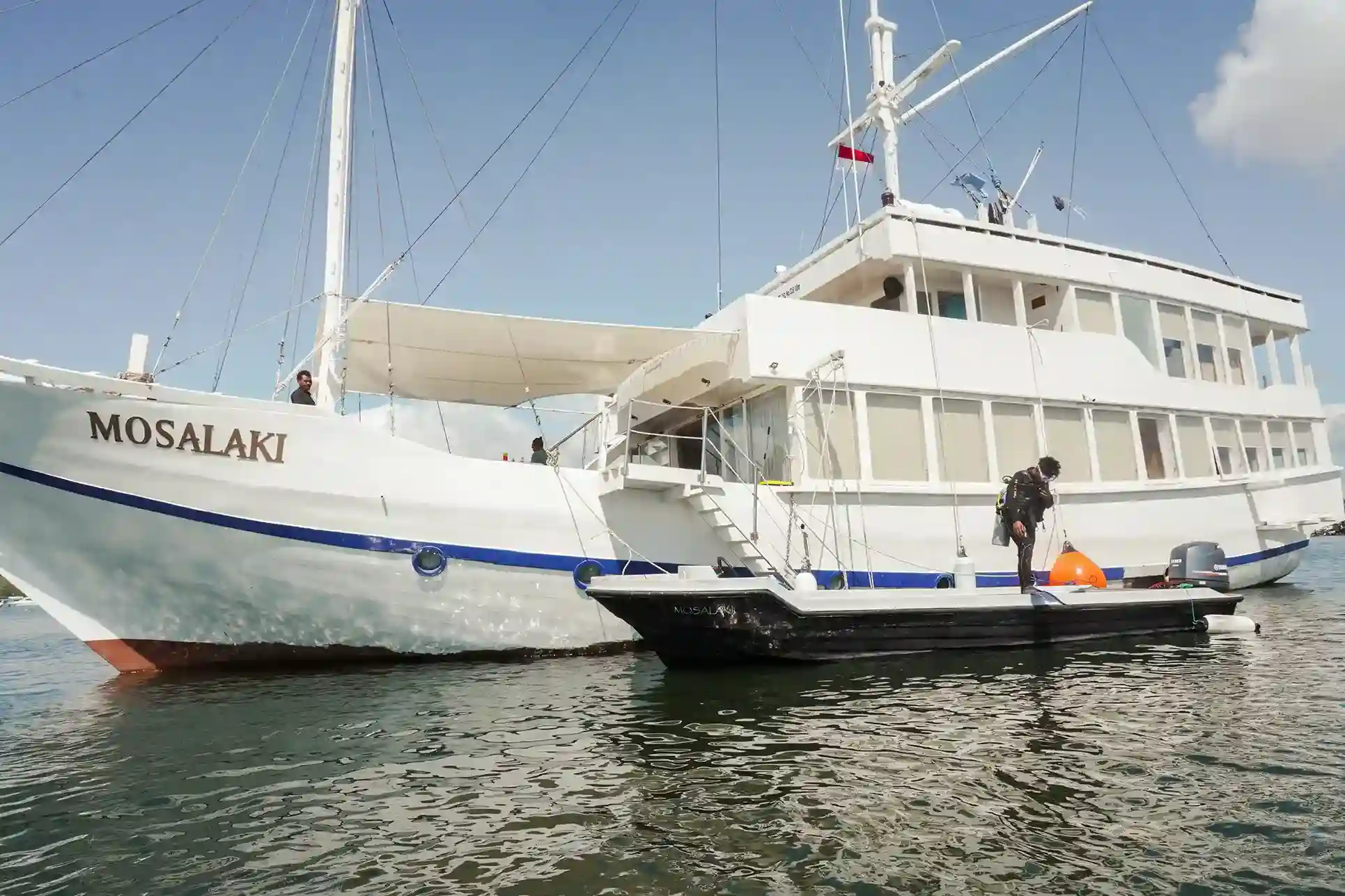
On the water, the first line of care is the boat itself. Confirm before booking that it carries emergency oxygen, a first-aid kit, reliable communications, and crew briefed on an emergency action plan — serious operators volunteer this, and a vague answer is useful data.
What a Good Dive Policy Should Cover
Whether you choose DAN or an equivalent dive-specific insurer, check the policy against the realities above rather than a generic checklist. The essentials for Komodo:
- Hyperbaric (chamber) treatment — the most expensive line item in a diving incident, and the most commonly excluded from ordinary travel policies.
- Emergency evacuation and transport — including boat-to-shore and onward medical transfer, which matters enormously for southern and multi-day itineraries.
- Depth and activity limits that match your diving — some policies cap covered depth; make sure the cap sits at or beyond your actual profiles.
- Liveaboard coverage — confirm cover applies while living and diving aboard a vessel, not only on shore-based day trips.
- A 24-hour emergency hotline — carry the number physically and digitally, and share it with your operator.
Disclaimer: this article is general information for trip planning, not medical, legal, or financial advice. Insurance products, exclusions, and Indonesian regulations change and vary by policyholder — verify the terms of any policy directly with a licensed insurance provider, and consult a physician regarding fitness to dive.
What Serious Operators Check Before Advanced Sites
The best safety mechanism in Komodo is not paperwork — it is honest matching of divers to sites. Established operators typically require Advanced Open Water plus roughly 20–50 logged dives for strong-current northern sites like Castle Rock and Crystal Rock, and around 30–50 dives with solid drift experience for the Cauldron/Shotgun channel; Batu Bolong is usually reserved for divers with drift experience and good buoyancy.
Expect a check dive at a calm site such as Siaba Besar before the demanding ones — standard practice, not a judgment. An operator who asks about your logged dives and recency before confirming an advanced itinerary is precisely the operator you want; one who promises Castle Rock to anyone with a credit card is not. And if your experience sits below these thresholds, no problem: Komodo diving packages can be built around central sites like Manta Point and Siaba Besar, where Open Water divers meet mantas and turtles in far gentler conditions.
Pre-Trip Document Checklist for 2027
Have these ready before departure day:
- Certification card (physical or verified digital) matching the level your itinerary requires.
- Logbook — digital logs are fine; what matters is evidence of total dives and recent activity.
- Dive insurance certificate plus the insurer’s 24-hour emergency hotline number.
- Medical statement — if anything is flagged on a standard dive medical questionnaire, bring a physician’s clearance.
- Passport copy and emergency contact details shared with your operator before boarding.
- Park entry documentation — typically arranged by your operator; confirm it is included.
Safety Standards Are a Quality Signal, Not a Hurdle
Everything above doubles as a filter for choosing who to dive with: operators who verify experience, brief evacuation plans, and insist on insurance are showing you how they run everything else you cannot see. Trips arranged through Komodo Luxury, the operator behind our recommended itineraries, are built on that standard — divers matched honestly to sites, and safety questions answered before payment.
Frequently Asked Questions
Is dive insurance mandatory for diving in Komodo?
There is no single universal rule, but serious operators require or strongly expect dive-specific insurance for advanced itineraries and often ask for proof. Given the park’s remoteness — especially the southern sites — diving Komodo without evacuation and hyperbaric cover is a risk no experienced diver recommends.
Does regular travel insurance cover scuba diving in Komodo?
Often not adequately. Many travel policies exclude scuba entirely, cap it at shallow depths, or exclude the emergency evacuation and chamber treatment costs that matter most here. Read the exclusions carefully; if in doubt, add a dive-specific policy such as DAN or an equivalent.
How many logged dives do I need for Komodo’s advanced sites?
Operators typically ask for Advanced Open Water plus roughly 20–50 logged dives for sites like Castle Rock and Crystal Rock, and around 30–50 dives with genuine drift experience for the Shotgun channel. Central sites like Manta Point and Siaba Besar are accessible to Open Water divers.
Where is the nearest recompression chamber to Labuan Bajo?
Plan on the assumption that chamber treatment involves transfer beyond Labuan Bajo, and verify the current referral route with your operator and insurer before travelling — availability changes over time. This is a standard question, and good operators answer it readily.
What happens in an emergency during a liveaboard in South Komodo?
First response happens on board — oxygen, first aid, and contact with your insurer’s hotline — followed by transfer toward definitive care. Because Horseshoe Bay and Manta Alley are hours from town, the boat’s emergency plan and your evacuation cover carry far more weight than on a day trip.
When is the safest season to dive Komodo?
The dry season from April to November offers the best overall mix of calm seas and visibility, with April–June and September–November the sweet spots. December–March is wetter and often windier in the north, though central sites can still be dived and crowds thin out.
Plan a Safe, Well-Matched Komodo Dive Trip
The right itinerary starts with an honest conversation about your certification, logged dives, and comfort in current. Tell us your experience level and travel dates, and we will match you to the sites, season, and boat that fit. Message us on WhatsApp at wa.me/628113823875 or email bd@juaraholding.com — and bring your insurance certificate; we will ask for it.