What a Proper Komodo Dive Briefing Covers (And Red Flags If It Doesn’t)
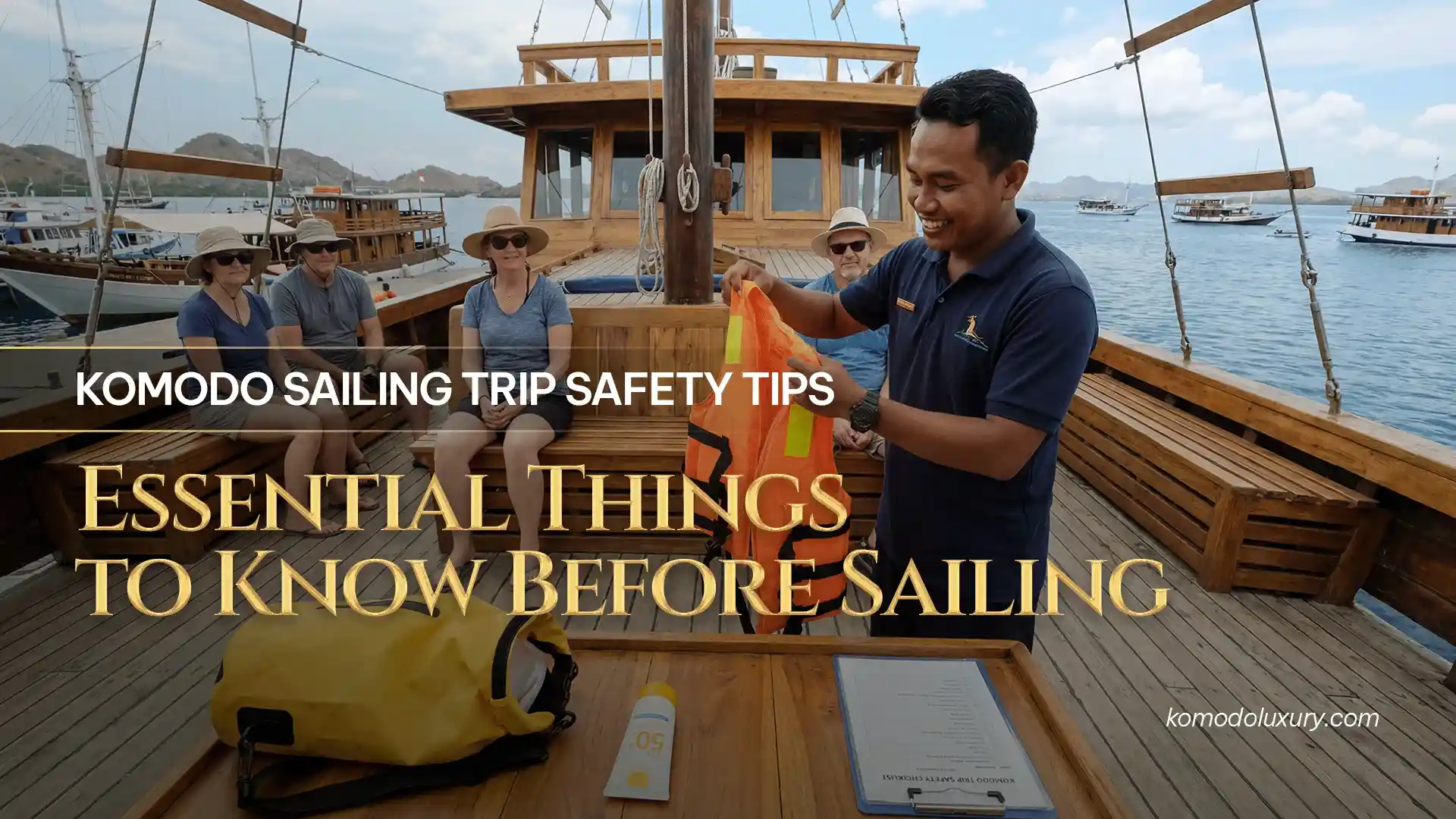
A proper Komodo dive briefing is not a formality — it is the clearest signal separating a serious operator from one that is simply running boats. Because sites like Castle Rock, Crystal Rock, Shotgun and Batu Bolong can run currents of up to 5–7 knots with unpredictable down-currents, the briefing you receive before entering the water is, in practical terms, your most important piece of safety equipment.
This guide covers what a complete briefing includes — tidal windows, entry technique, lost-diver procedure, SMB and reef hook plans — then the red flags. If you are comparing operators for advanced Komodo diving trips, use it as your checklist.
Why the Briefing Matters More in Komodo
Tidal exchange between the Pacific and Indian Oceans drives the currents that make Komodo famous. The same water that concentrates sharks, trevallies and mantas also creates washing-machine conditions on exposed pinnacles. Sites range from calm turtle reefs like Siaba Besar — often used as a check dive — to seamounts where operators require Advanced Open Water certification and 20–50 logged dives.
On an easy reef, a thin briefing costs you little. On a pinnacle at the wrong tidal phase, it can cost you the dive — or worse. The specificity of the briefing tells you how an operator treats komodo dive briefing safety: as a system, or as a script.
The Tidal Window: Why Shotgun Only Runs at Certain Phases
Shotgun — the channel dive between the Gili Lawa islands, also called The Cauldron — is the clearest example of tide-dependent site selection. The dive drops into a sandy bowl, then fires you through a shallow gap on a jet that can also carry vertical components. It is only dived on specific tidal phases, and most operators ask for 30–50 logged dives plus real drift experience.
A proper briefing here should explain, in plain language:
- Which tidal phase you are diving and why. When slack was, which way the water is moving, how strong the exchange should be — not just “there will be some current.”
- The abort plan. If the current is stronger than predicted at the in-water check, a serious operator names the fallback site.
- Group positioning. Where the guide sits relative to the group in the jet, and the maximum spread before the dive is called.
If your Shotgun briefing never mentions tide, the operator is guessing or running a fixed schedule regardless of conditions. Both are red flags.
Negative Entries: What the Briefing Should Actually Explain
On strong-current seamounts like Castle Rock, entries are often negative: no air in the BCD, descending immediately on the guide’s signal so the current does not scatter the group across the surface. A good briefing walks through the sequence:
- Buddy and weight check completed on the boat, not in the water.
- Regulator in, mask on, BCD empty before the entry signal.
- Everyone descends together, equalising early, regrouping at an agreed depth on the up-current side.
- If you cannot equalise or lose the group on descent — surface and signal the boat rather than chasing the group down-current.
A crew that announces a negative entry thirty seconds before the giant stride, with no walk-through, is assuming everyone aboard has done it before. Eventually, that assumption fails.
Lost-Diver Procedure and SMB Deployment
In drift conditions, separation is a scenario you plan for, not a rare failure. The briefing should state the lost-diver protocol explicitly: search for one minute, ascend at a safe rate, complete your safety stop where possible, and deploy your surface marker buoy (SMB) so the boat can find you.
Listen for these specifics:
- Who carries SMBs. On advanced sites, every diver or at minimum every buddy pair — not just the guide.
- When to deploy. From the safety stop, not after surfacing — a head in strong-current chop is nearly invisible from a boat.
- Boat cover. How the tender tracks the group’s bubbles, and the pickup procedure in current.
This applies on every drift dive in the park, from the gentle glide past Karang Makassar’s manta cleaning stations to the powerful northern drifts.
The Reef Hook Plan at Castle Rock
Castle Rock is a submerged seamount, roughly 15–40 m, where the standard plan in running current is a negative entry, a descent on the sheltered side, then hooking in on the up-current edge to watch white-tips, grey reef sharks and hunting trevallies work the blue. The reef hook lets you hold position at depth without gripping coral or burning gas.
A complete briefing covers where to hook (bare rock, never live coral), setting and releasing the hook under load, buoyancy while hooked — you fly upward like a kite and must manage BCD air — and the order in which the group unhooks and drifts off. If reef hooks are mentioned only as “we have them if you want,” rather than as part of a positioning plan, the dive has not really been planned.
Red Flags: When the Briefing Tells You to Walk Away
These deck-side patterns predict problems underwater:
- A two-minute briefing before a 5–7 knot site. If Castle Rock or Shotgun gets the same speech as a sandy bay, currents are being treated as marketing instead of a hazard.
- No certification or logged-dive check. Serious operators verify cards and recent dives before assigning advanced sites — many require AOW plus 20–50 logged dives for the northern pinnacles.
- No mention of tide, slack, or current direction. Silence on tide means the schedule, not the ocean, is running the day.
- No named abort or fallback plan. “We will see when we get there” is not a plan.
- Oversized groups per guide. Eight divers behind one guide in strong current is unmanageable.
- Pressure to join a dive above your level. A good operator moves you to a suitable site instead of talking you into an unsuitable one.
One soft spot can be fixed by asking questions. Several together are how incidents happen.
Your Right to Ask — and to Sit a Dive Out
You are never obligated to enter the water. Asking the guide to repeat the current plan or explain why a site fits your experience is exactly what professional crews expect. If the answers do not add up, sitting out a dive costs you one tank; the alternative can cost far more.
Trip format matters too. On a group dive charter in Komodo, the briefing can be tailored to your team’s actual experience rather than a shared boat’s lowest common denominator. Divers booking through our Komodo diving packages are asked about certification and logged dives before the itinerary is set, so the site list is matched to the group — not the other way around.
Frequently Asked Questions
Is Komodo diving safe for certified divers?
Yes — with the right operator and the right site for your level. The park spans calm reefs for newly certified divers, such as Siaba Besar, through to advanced sites like Castle Rock and Shotgun that demand AOW certification, drift experience and typically 20–50 logged dives. Safety comes down to honest site matching and thorough briefings.
How long should a Komodo dive briefing take?
Roughly ten to fifteen minutes for an advanced current site: site map, tidal state, entry technique, positioning, depth limits, lost-diver procedure and pickup plan. A calm reef briefing can be shorter, but a strong-current site briefed in two minutes is a warning sign, not efficiency.
What should I do if the briefing never mentions currents?
Ask directly: what is the tidal state, which way is the water moving, and what is the abort plan? A competent guide answers easily and specifically. If the answers stay vague on a strong-current site, request a different site or sit the dive out.
Can I refuse a dive after the briefing?
Always. Declining a dive that exceeds your comfort or experience is accepted practice everywhere in diving, and no reputable Komodo crew will penalise you for it. An operator that pressures you into the water after you voice concerns has failed the most basic test of professionalism.
Do beginners get different briefings than advanced divers?
They should get different sites, and therefore different briefings. Beginners typically dive gentle central-park reefs and manta sites like Karang Makassar at 8–18 m, while advanced pinnacles are reserved for divers with proven current experience. If one mixed group is briefed for everything at once, site matching is not happening.
Dive With Crews Who Brief Like It Matters
Every trip we plan out of Labuan Bajo is built around these standards: tide-based site selection, full current briefings, SMBs in every buddy pair and honest experience checks before the itinerary is locked. Boats and crews are arranged through the Komodo Luxury charter office, whose fleet covers day boats through multi-day liveaboards.
Tell us your certification and logged dives and we will match you to the right sites — message us on WhatsApp at +62 811-3823-875 or email bd@juaraholding.com to plan a Komodo dive trip with a briefing you can trust.