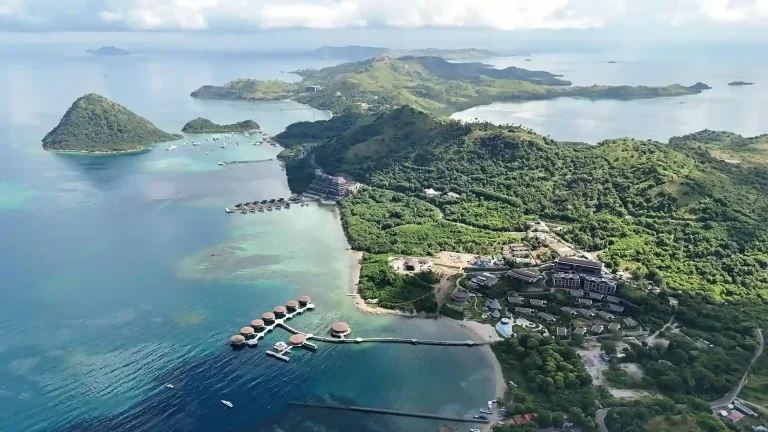
Tipping Etiquette for Dive Guides in Labuan Bajo
Tipping etiquette for dive guides and boat crew in Labuan Bajo generally comes down to a simple range: budget on request for the dive guide, plus a similar pooled amount for the boat crew, with liveaboard trips scaling up for multi-day service. There is no government-mandated rate and tipping is never compulsory, but as of 2026 it has become a well-established part of local dive culture in Komodo National Park, where guides are reading strong currents at sites like Castle Rock and spotting mantas at Manta Point for a living. This guide breaks down how much to give, when to hand it over, which currency to use, and how it differs across day trips, liveaboards, and courses.
Why Does Tipping Etiquette Matter for Dive Guides and Boat Crew Here?
Diving in Komodo National Park is physically demanding work for the people running the boat. A dive guide is watching currents, checking air, counting divers, and often free-diving down to redirect a group away from a drop-off — all while a boat crew is anchoring, tracking surface conditions, and preparing gear between dives. Base wages in the local dive industry are modest, and tips make up a meaningful share of take-home income, especially outside the busiest months. Tipping is not owed for basic service, but it is the customary way divers say thank you for a guide who read a tricky current at Batu Bolong correctly or a crew that handled a rough crossing with a smile.
None of this is regulated, and no dive operator can ethically promise you a guide’s exact daily earnings or a fixed industry-wide standard — what follows is a practical range drawn from common practice in Labuan Bajo, offered as guidance rather than a rule.
How Much Is Fair? Tipping Etiquette for Dive Guides and Boat Crew in Labuan Bajo
These figures are indicative only, meant as a starting reference — adjust them to your budget, group size, and how the trip went. They are not a fixed price list and not a regulatory requirement.
| Trip type | Dive guide | Boat crew (pooled) |
|---|---|---|
| Day trip (2–3 dives) | On request | on request, shared |
| Liveaboard (per day) | On request | on request, shared among captain, deckhands and chef |
| Open Water / Advanced course | Roughly 5–10% of the course fee to the instructor | Small discretionary amount to the boat crew if a boat was used |
On a multi-day liveaboard, most guests total the daily amount and hand it over as one envelope at the end of the charter rather than tipping every single day — it is tidier for everyone and avoids repeated small transactions. If one guide or crew member went well beyond the norm — say, a dive guide who spent extra time coaching a nervous diver through a checkout dive, or a deckhand who fixed your mask strap mid-crossing — a small individual top-up on top of the pooled tip is a normal and appreciated gesture.
What Currency Should You Use When Tipping in Labuan Bajo?
Indonesian Rupiah (IDR) is by far the easiest and most practical currency for tipping dive guides and boat crew — it spends locally without anyone needing to find an exchange counter. US dollars are sometimes accepted informally, but exchange rates on a boat are inconsistent and crew may have no easy way to convert small bills. Bring a stack of smaller IDR notes (10,000, 20,000, and 50,000 denominations) rather than one large bill, since a single big note is awkward to split fairly among several crew members. ATMs in Labuan Bajo town are limited and occasionally run dry during peak season, so withdraw cash before heading out to the harbor, ideally a day or two ahead of your trip.
Does Tipping Etiquette Change Between a Day Trip, a Liveaboard, and a Course?
Yes, and the differences are mostly about duration and relationship, not different rules. A day trip is a single, short interaction — one or two dive guides and a small crew for a few hours, so the tip is a one-time thank-you at the end of the day. A liveaboard spans several days and often multiple dive sites across both the northern reefs (Castle Rock, Crystal Rock) and the central area (Batu Bolong, Manta Point), so guests get to know the crew personally, which is why the pooled amount scales per day rather than staying flat. A course — Open Water, Advanced, or a specialty certification — is a longer one-on-one relationship with an instructor, so the etiquette leans closer to a percentage of the course fee rather than a flat daily figure, since the instructor is investing hours in briefings, skills sessions, and paperwork on top of the actual dives.
When and How Should You Hand Over the Tip?
The end of the trip is the standard moment — after the last dive, gear is rinsed, and everyone is relaxed on the sundeck or back at the pier. Handing an envelope or cash directly to the cruise director, lead dive guide, or captain to distribute is the most common approach, since it avoids the awkwardness of guests trying to divide cash themselves. If you want to recognize one specific person — the dive guide who nailed the manta encounter, or the chef who fed a boat full of hungry divers for three days — it is perfectly acceptable to hand that portion directly to them with a word of thanks, separate from the pooled envelope.
Is the Komodo National Park Entrance Fee the Same as a Tip?
No — this is one of the most common points of confusion for first-time visitors, and worth clearing up. The park entrance fee and ranger fee for Komodo National Park are compulsory charges collected on behalf of park authorities, not a gratuity for your dive guide or boat crew. A ranger typically needs to be present or accounted for when a boat operates inside the park, and this fee is separate from — and unrelated to — anything you choose to tip the people running your dive. Some operators bundle the park fee into the trip price and some collect it on the day; either way, it has nothing to do with tipping etiquette and should never be treated as a substitute for one.
Quick Etiquette Do’s and Don’ts
- Do tip in cash, in Rupiah where possible, rather than relying on a transfer or card.
- Do tip at the end of the trip or charter, not before — it should reflect how the trip actually went.
- Do ask your operator quietly if you are unsure whether tips are pooled or given individually; guides and crew will never bring it up first.
- Don’t feel obligated to a fixed amount — tipping etiquette for dive guides and boat crew in Labuan Bajo is a guideline, not an invoice.
- Don’t confuse the compulsory park or ranger fee with a tip.
- Don’t hand out large foreign banknotes expecting exact change on the water.
Seasonal context matters too. During manta season (December to February), boats and dive sites around Manta Point get busier, and crews are often working longer days managing bigger groups — a little extra recognition tends to go further then. Through the dry season (April to November), when visibility is generally at its best across the park, trips run more predictably, and tipping settles back into the standard ranges above. Either way, currents around sites like Castle Rock can be strong enough that they are considered advanced diving, and a calm, competent guide in that kind of water is exactly the service tipping etiquette exists to recognize.
Plan a Dive Trip With Clear Etiquette Built In
Knowing how tipping works before you board is one less thing to think about once you are in the water. If you are still deciding between a speedboat day trip, a multi-day liveaboard, or working toward a certification, our how it works page walks through how a Komodo dive trip with us is planned and confirmed, including where park fees and logistics fit in.
Part of Juara Holding Group — operating from Bali across Indonesia since 2015 — our team can help you build a day trip, liveaboard, or course itinerary around Batu Bolong, Manta Point, Castle Rock, and the rest of Komodo National Park, with straightforward guidance on etiquette, budgeting, and what to bring. Reach out any time via our contact page, or message us directly on WhatsApp at +62 811-3823-875 or by email at sales@komodoluxury.com to start planning your dive trip.