Flying After Diving in Komodo: No-Fly Times & How to Schedule Your Last Dive
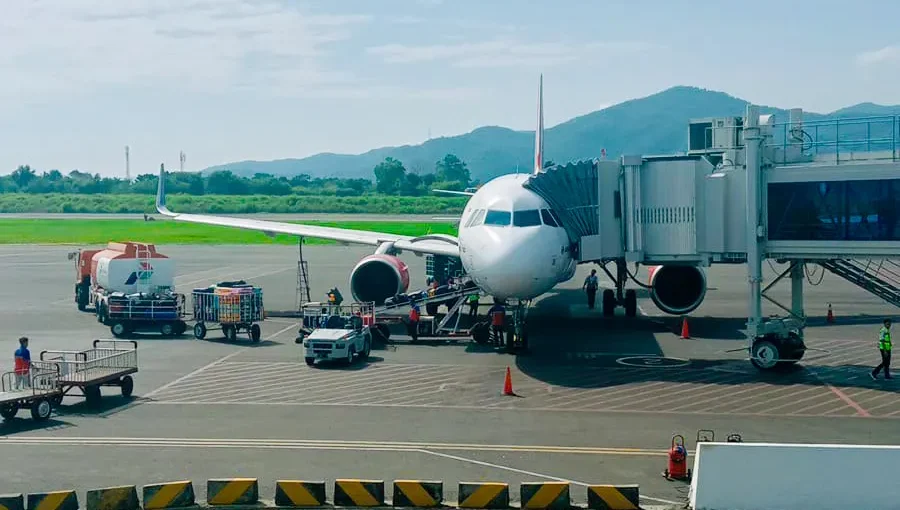
Plan to wait at least 18 hours after your last dive before flying out of Labuan Bajo — and a full 24 hours if you have logged repetitive dives or multiple days of diving, which describes almost every Komodo trip. The short Labuan Bajo–Bali hop does not exempt you: cabin pressure drops the moment the aircraft climbs, and decompression rules apply to a one-hour flight just as they do to a long-haul sector.
This is the planning detail most Komodo itineraries quietly ignore. This guide explains the surface-interval rules, gives you itinerary templates that are safe by design, and shows how to schedule your final dive so the flight home is never a gamble.
The No-Fly Rule: How Long to Wait Before Flying
Flying too soon after diving raises the risk of decompression sickness (DCS). During a dive your body absorbs nitrogen; at altitude, reduced cabin pressure encourages that dissolved nitrogen to form bubbles — and commercial cabins are pressurised to the equivalent of roughly 1,800–2,400 metres. The widely used Divers Alert Network (DAN) guidelines are the industry baseline:
- Single no-decompression dive: wait a minimum of 12 hours before flying.
- Repetitive dives or multiple days of diving: wait at least 18 hours.
- Dives requiring decompression stops: wait substantially longer than 18 hours.
In practice, most Komodo operators — ours included — apply a conservative 24-hour rule for anyone diving several times a day across multiple days, the normal rhythm on Komodo day trips and liveaboards. Your dive computer also shows its own no-fly countdown; treat whichever number is longer as your minimum. One note: this article is trip-planning guidance, not medical advice — confirm your personal fitness to dive and fly with a dive medicine professional.
Single vs Repetitive Dives: What Your Komodo Schedule Really Looks Like
The 12-hour single-dive allowance almost never applies in Komodo. A standard day trip runs two to three dives; a liveaboard runs three to four per day for consecutive days. By the end of any normal Komodo itinerary you are firmly in “repetitive, multi-day” territory, so 18 hours is your floor and 24 hours is the sensible planning number. The profiles here reinforce that: signature sites such as Castle Rock, Crystal Rock and Batu Bolong involve strong currents and depths in the 15–30 metre range — exactly the nitrogen loading that deserves a conservative surface interval, not a sprint to the airport.
Why the Short Labuan Bajo–Bali Flight Still Counts
Divers often assume a quick domestic hop is harmless. It is not. The Labuan Bajo–Bali sector takes only around an hour in the air, but the cabin still depressurises to the same altitude-equivalent as an international flight — DCS risk is driven by the pressure change, not the flight duration.
The schedule pattern makes the trap worse. Flights between Labuan Bajo and Bali are concentrated in the morning and early afternoon, so “dive the last day, fly the next morning” frequently leaves you short of a full 24 hours: a last dive ending at 3 PM followed by a 10 AM departure is only 19 hours after multi-day repetitive diving, with no margin at all. An afternoon departure — or better, a full non-diving buffer day — removes the problem entirely. For routes and schedules, see our guide on how to get to Labuan Bajo.
Safe Itinerary Templates: Schedule the Last Dive, Then the Flight
The simple rule that makes every template below work: your last dive should finish by late morning on the day before you fly. That single decision gives you 20–28 hours of surface interval regardless of flight time.
Template 1 — 4-Day Day-Trip Itinerary
- Day 1: Arrive Labuan Bajo, gear check, early night.
- Day 2: Full day trip — three dives in central or north Komodo.
- Day 3: Two morning dives only, back on land by early afternoon. This is your last dive day.
- Day 4: Non-diving buffer day — then fly out any time. Even a 7 AM departure clears 18+ hours; an afternoon flight clears 24+.
The buffer day is not wasted time. It is the perfect slot for Komodo dragon trekking on Komodo or Rinca island, or a Padar viewpoint and Pink Beach island-hopping run — all surface activities that leave your no-fly clock untouched.
Template 2 — 5-Day Dive-and-Stay Itinerary
- Days 1–3: Arrive, then two full dive days.
- Day 4: Morning dives finish by around 11 AM, afternoon free in town.
- Day 5: Trekking or island hopping in the morning if your flight is late, then depart with a comfortable 24+ hour interval.
Our dive and stay packages are built on exactly this skeleton — the final night in Labuan Bajo is part of the package, so the surface interval is baked in rather than left to chance.
Template 3 — Bali Round-Trip Itinerary
Basing yourself in Bali? Only the return sector matters for no-fly planning — flying before diving is fine, and you can dive the same afternoon you land. The Bali to Komodo diving package is sequenced this way deliberately: front-load the diving, keep the last full day dive-free before the return flight.
The Liveaboard Scenario: Disembarking on Departure Morning
Liveaboards need the most care, because many guests disembark at 8–9 AM and instinctively book a same-day flight home. Whether that is safe depends entirely on when the boat schedules its final dive:
- Well-planned boats run their last dive around midday on the final full day at sea, then cruise back overnight. Disembark at 8 AM, fly at 2 PM, and you have roughly 26 hours of surface interval.
- The trap: some short itineraries offer an optional dive on the disembarkation morning. If you take it, you cannot fly that day — skip the dive or add a night in Labuan Bajo and fly the following afternoon.
When comparing boats, ask one question before booking: “What time is the last dive relative to disembarkation?” A good operator answers instantly. Our overview of Komodo liveaboard diving covers routes from three to nine days, and the day trip vs liveaboard comparison helps if you are still choosing a format.
Flight Booking Checklist for Komodo Divers
- Book the diving first, flights second. Lock the dive schedule, then count 24 hours forward from your final surfacing time.
- Prefer afternoon departures out of Labuan Bajo — hours of extra margin at zero cost.
- Never book a morning flight for the day after a full dive day.
- Watch international connections — a tight Bali layover leaves no room if anything slips, and the altitude exposure continues on the long-haul leg.
- Keep final dives conservative — shallower profiles, no pushing no-deco limits.
- Check your dive computer’s no-fly timer before heading to the airport, and carry dive insurance that covers DCS treatment.
- Plan the buffer day as a feature: dragons, Padar, Pink Beach — the topside highlights deserve a day anyway.
Packages With the No-Fly Rule Already Built In
The easiest way to get this right is to book an itinerary designed around the rule rather than retro-fitting one. Our Komodo diving packages sequence dive days so the final dive lands the morning before departure, with the last day reserved for land-based highlights — and every itinerary is checked against your actual flight times before we confirm the schedule.
Frequently Asked Questions
How long after diving can I fly from Labuan Bajo?
After a typical Komodo itinerary of repetitive, multi-day diving, wait at least 18 hours and ideally 24 hours after your final dive. After a single no-decompression dive, the DAN minimum is 12 hours — but single-dive trips are rare in Komodo.
Does the rule apply to the short flight from Labuan Bajo to Bali?
Yes. The flight is only around an hour, but the cabin depressurises like any commercial flight. DCS risk comes from the pressure change, not the flight length, so the full no-fly interval applies.
Can I dive on the morning of my flight if I depart in the evening?
No. Even a 7 AM dive before a 7 PM flight gives only about 12 hours — below the 18-hour guideline for a multi-day trip. Keep your departure day completely dive-free.
Does snorkeling count against my no-fly time?
Surface snorkeling does not create a meaningful nitrogen load and is generally considered safe before a flight. Repeated deep freediving is a grey area — on your buffer day, stay near the surface.
What should I do on my no-fly day in Labuan Bajo?
Komodo dragon trekking, the Padar viewpoint climb, Pink Beach and village or waterfall tours are all altitude-safe surface activities. Most divers say the dragons alone justify the buffer day.
Get an Itinerary Where the Timing Is Already Solved
Tell us your flight dates and certification level, and we will build a Komodo dive schedule where the last dive, the buffer day and the flight home fit together correctly from the start. Message us on WhatsApp at wa.me/628113823875 or email bd@juaraholding.com — we respond quickly and plan around your actual bookings, not a generic template.