Diving the Full Komodo Park North to South in One Week: Route & Logistics
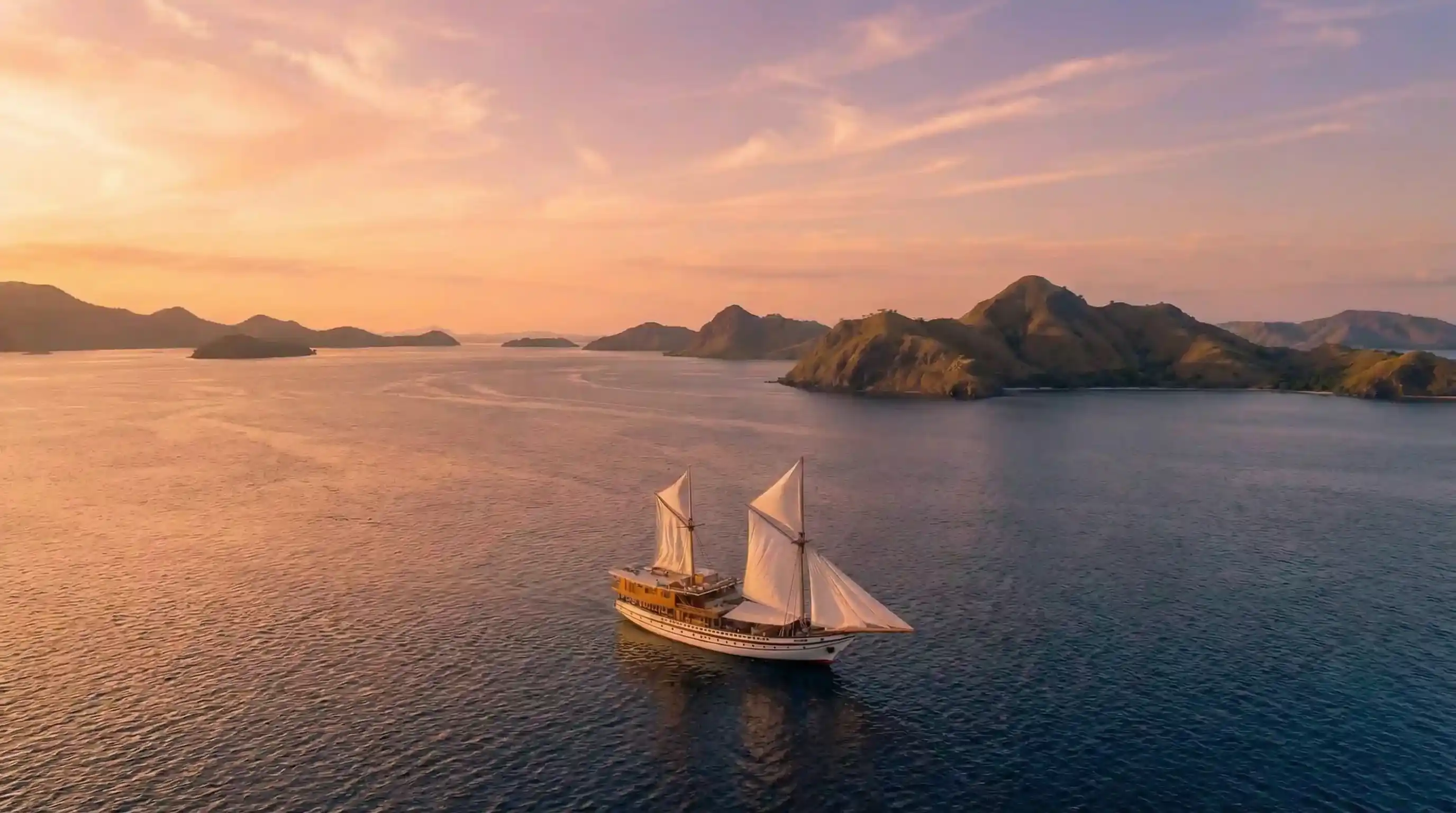
Diving the full Komodo National Park from north to south in one week is achievable, but only by liveaboard — the southern sites sit far beyond the working radius of any Labuan Bajo day boat. The route that works runs the northern pinnacles first while dry-season visibility holds at 20–30 m, crosses the central manta corridor mid-trip, then finishes in the cooler, life-dense south at Manta Alley and Cannibal Rock.
This guide is about logistics, not comparison. If you are still deciding which half of the park suits you, start with our north vs south Komodo diving breakdown; this is how a realistic seven-day crossing is sequenced, leg by leg.
Why the Full Route Only Works by Liveaboard
Day boats out of Labuan Bajo earn their keep in the central and northern reaches, where Siaba, Batu Bolong, and Manta Point sit within a sensible morning run. Horseshoe Bay does not. The far south lies at the opposite end of Komodo, and no day operation can steam there, deliver dives, and return guests the same day. That geography is why the crossing is liveaboard territory: the boat repositions while you sleep, so each morning begins on a new reef instead of in transit.
Southern water is colder and greener, and a luxury Komodo dive liveaboard — hot showers between dives, a crew that reads the tide tables for you — turns the cold-water leg from an endurance test into the highlight of the trip.
The Seven-Day Route at a Glance
Run as a dedicated Komodo dive safari, the crossing follows the park’s own logic: north while visibility peaks, central as the hinge, south as the finale.
In outline: Day 1 boards in Labuan Bajo with a calm check dive, Days 2–3 work the northern seamounts, Day 4 rides the central corridor, Days 5–6 anchor in the south, and Day 7 returns via easy central sites.
Days 1–3 — The Northern Leg: Castle Rock and Crystal Rock at Peak Visibility
The north is where you spend your sharpest days: in dry season the northern sites regularly deliver 20–30 m visibility in 27–29°C water, so you dive them fresh. Castle Rock is a submerged seamount running roughly 15–40 m, swept by strong to very strong currents — Komodo’s famous “washing machine” — with white-tip and grey reef sharks, trevallies, and schooling fusiliers riding the flow. Crystal Rock next door adds split currents and eddies over a pinnacle that breaks the surface at low tide, while Shotgun fires you through the Gili Lawa channel on the right tidal phase only.
These are not casual dives. Operators typically require Advanced Open Water certification with 20–50 logged dives and drift experience, and briefings assume negative entries and reef hooks when the tide runs — currents here can reach 5–7 knots. This leg is the core of our advanced Komodo diving trips, and the reason the crossing carries an experience threshold at all.
Day 4 — The Central Transit: Manta Point and Siaba
As the boat repositions south, Day 4 works the central corridor, where Manta Point at Karang Makassar — a long, shallow rubble reef at 8–18 m with gentle-to-moderate drift — is the park’s most reliable central site for reef manta encounters at the cleaning stations. Indonesia declared its waters a manta ray sanctuary in 2014, and this corridor is where that protection shows.
Siaba Besar, the classic calm check-dive site with its dense turtle population, and the fishy pinnacle of Batu Bolong round out the day. Central visibility runs 15–25 m and can drop when plankton blooms — the same plankton that pulls the mantas in, so a greener day here is often a better one. Open Water divers are comfortable on most of this leg.
Days 5–6 — The Southern Leg: Manta Alley and Cannibal Rock
The south is a different ocean. Visibility drops to a moodier 10–20 m, the water turns green with nutrients, and the reefs answer with a density of life the clear north cannot match. Manta Alley works its own manta aggregation at the park’s southern edge, while Cannibal Rock in Horseshoe Bay is the anchorage that justifies the whole crossing — the sheltered bay makes calm multi-dive days and night dives possible even when the open south is lumpy.
Because Horseshoe Bay is liveaboard-only water, Days 5 and 6 are the part of this route no day-trip schedule can replicate: the boat stays put, and you dive the same rich corner at different tides and light — the closest thing Komodo offers to expedition diving.
One Trip, Two Seas: The 27–29°C to 22–25°C Wetsuit Problem
The temperature swing is the detail first-timers underestimate. Northern and central Komodo sit at a tropical 27–29°C most of the year; the south, fed by Indian Ocean upwelling, can drop to 22–25°C — coldest from July to September, exactly when southern life is at its richest. That is a swing you feel hard across repetitive dives.
The practical consequence: the 3 mm shorty that felt generous at Castle Rock becomes inadequate at Cannibal Rock by the third dive. Pack for the coldest leg, not the warmest — a 5 mm full suit, or a 3 mm layered with a hooded vest, is the sensible baseline. Confirm suit availability with your operator or arrange rental in Labuan Bajo — discovering the gap at anchor in Horseshoe Bay is too late.
How Many Dives Is Realistic on Each Leg
Forget the four-dives-a-day maximum some schedules advertise; on this route, tides set the tempo. On the northern leg, plan on two to three dives per day — Castle Rock, Crystal Rock, and Shotgun are only sensibly dived on specific tidal phases, and a good cruise director skips a slot rather than drop you into a 5-knot flood. The central transit day supports a relaxed three. In the south, sheltered Horseshoe Bay gives back what the north withheld: two to three day dives plus a realistic night-dive option.
Across the week, that arithmetic lands most divers at roughly 16–20 dives — an honest total. A crossing that promises more is usually promising dives on the wrong tide.
When the Full Crossing Is Worth It — and When It Is Not
Season first. The prime window runs April to November, with the best mix of sea state and visibility in April–June and September–November. July–September brings the coldest southern water but also its richest upwelling season — a trade worth making if you pack the right suit. In the December–March wet season the north turns windy and the full crossing stops making sense; central itineraries still dive well then, as our Komodo diving seasons guide details.
Level second. The northern pinnacles set the bar: Advanced Open Water with around 25–50 logged dives and real current experience is the honest threshold. Newer divers get a better week — and a better manta count — on a central-focused itinerary, returning for the crossing once the logbook has caught up. For the park above the waterline, Komodo Luxury’s Komodo National Park destination guide covers the rest.
Frequently Asked Questions
Can I dive the full north-to-south route on day trips from Labuan Bajo?
No. Day boats cover the central and northern sites, but Horseshoe Bay and Manta Alley lie at the far southern end of the park, beyond a day boat’s realistic range. The southern leg is only reachable by liveaboard.
What certification and experience do I need for the full route?
Advanced Open Water with roughly 25–50 logged dives and drift experience is the working standard, driven by the northern sites — Castle Rock, Crystal Rock, and Shotgun see strong to very strong currents and often require negative entries and reef hooks.
What wetsuit should I bring for a north-to-south Komodo trip?
Pack for the south. Northern water runs 27–29°C, but southern sites can drop to 22–25°C with upwelling, especially July–September. A 5 mm full suit — or a 3 mm with a hooded vest — keeps the cold leg enjoyable.
What is the best season for the full crossing?
April to November, with April–June and September–November offering the best balance of calm seas and visibility parkwide. July–September is coldest in the south but richest for upwelling life. December–March winds make the northern leg unreliable.
How many dives will I log in a week on this route?
Plan on roughly 16–20 dives: two to three tide-timed dives per day in the north, about three on the central transit day, and two to three plus a possible night dive in sheltered Horseshoe Bay.
Ready to run the full park in one week? Tell us your dates, logged dives, and wetsuit situation, and we will match you to the right boat and tidal window — itineraries and rates are tailored and shared on request. Message our dive travel team on WhatsApp at +62 811-3823-875 or email bd@juaraholding.com.