What Wetsuit for Komodo? Water Temperatures by Zone and Season
For most Komodo dive sites, a 3mm wetsuit is all you need: the northern and central areas of the park hold a steady 27–29°C for most of the year. The exception is the south — at Manta Alley and Cannibal Rock, Indian Ocean upwelling pulls the water down to 22–25°C between July and September, and a 5mm suit with a hood becomes the sensible choice.
That single split — warm north, cold south — is the key to packing correctly for Komodo. This guide breaks down the water temperature by zone and season, matches wetsuit thickness to how easily you get cold, and explains what to do when a single itinerary crosses both temperature regimes.
Komodo Water Temperatures by Zone and Season
Komodo National Park behaves like two different dive destinations stitched together. The table below summarises what to expect in the water, based on the typical ranges reported across the park.
| Zone | Example Sites | April–June | July–September | October–March |
|---|---|---|---|---|
| North Komodo | Castle Rock, Crystal Rock, Shotgun | 27–29°C | 27–29°C | 27–29°C |
| Central Komodo | Batu Bolong, Manta Point, Siaba Besar | 27–29°C | 26–28°C | 27–29°C |
| South Komodo | Manta Alley, Cannibal Rock, Yellow Wall | 24–26°C | 22–25°C | 24–27°C |
Visibility follows a similar pattern: the north often delivers 20–30m in the dry season, the central sites 15–25m, while the south is more variable at 10–20m — greener water, but dense with the nutrients that make it so rich in life.
Why South Komodo Runs Cold: The July–September Upwelling
During the southeast monsoon, roughly July through September, deep, cold, nutrient-loaded water from the Indian Ocean is pushed up against Komodo’s southern coastline. This upwelling is exactly why the south is so productive: the plankton bloom it triggers feeds the reef manta aggregations at Manta Alley and carpets Cannibal Rock in some of the most colourful invertebrate life in Indonesia.
The trade-off is temperature. A thermometer reading of 22°C may not sound dramatic, but over three or four dives a day, day after day, it drains body heat quickly — especially on the slow, stay-and-watch profiles you dive at a manta cleaning station. If your trip includes the south in this window, plan your exposure protection around the coldest dive of the itinerary, not the average.
Wetsuit Thickness by Diver Profile
Cold tolerance varies enormously between divers, so use your own history as the deciding factor. As a working rule:
| Diver Profile | North & Central (27–29°C) | South in Upwelling (22–25°C) |
|---|---|---|
| Runs warm, rarely feels cold | Shorty or 3mm full suit | 3mm + hooded vest, or 5mm |
| Average tolerance | 3mm full suit | 5mm full suit + hood |
| Gets cold easily | 3mm + hooded vest | 5mm + hood + vest layer |
Two practical notes. First, repetitive diving compounds heat loss — what feels fine on dive one can feel miserable by dive three, so err one step warmer than you think you need. Second, a hood is the most efficient upgrade you can make: it adds meaningful warmth for almost no bulk in your luggage, and it is far easier to pack than a second wetsuit.
Exposure Protection for North and Central Komodo
If your diving is limited to the northern and central sites — which covers most day trips out of Labuan Bajo — a 3mm full suit is the standard choice year-round. The full-length cut is worth having even in 29°C water: it protects against stinging hydroids and accidental brushes on negative entries, which matter at current-swept pinnacles like Castle Rock and Batu Bolong.
Central sites such as Manta Point can feel a touch cooler when plankton-rich water moves through during manta season, and long, shallow drifts give the water more time to work on you. A thin hooded vest under the 3mm is cheap insurance for divers who chill quickly.
Gearing Up for Manta Alley and Cannibal Rock
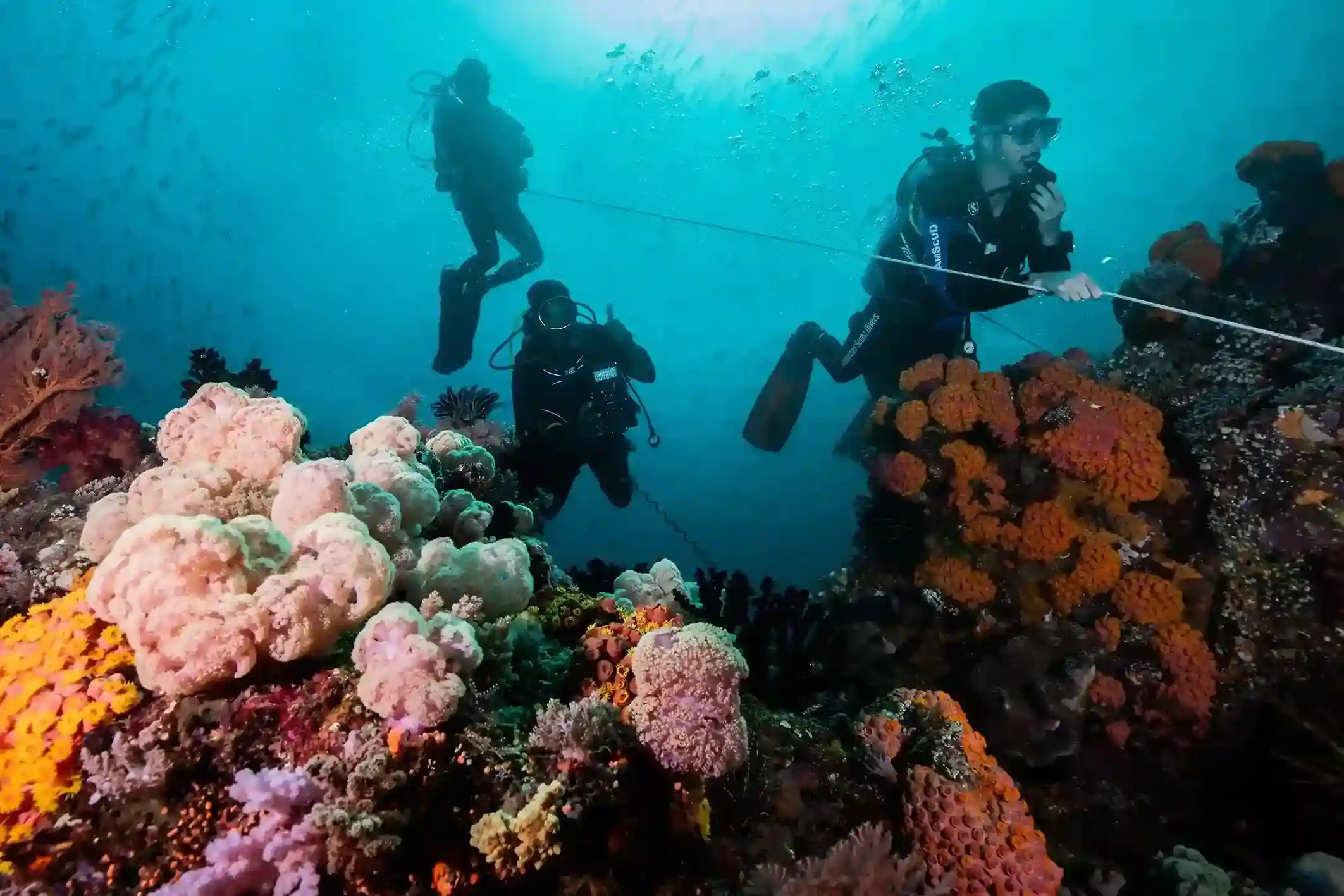
The southern sites are the reason this guide exists. Manta Alley sits on Komodo’s exposed south coast, and Cannibal Rock in Horseshoe Bay is arguably the richest single reef in the park — both at their best precisely when the water is coldest. For July–September diving here, a 5mm full suit with a hood is the recommendation for most divers. Photographers should take this especially seriously: hanging nearly motionless over a cleaning station or working a macro subject generates no body heat at all.
These southern sites also tend to feature on itineraries built for experienced divers, alongside the park’s stronger currents. If that is the diving you are here for, our advanced Komodo diving trips are planned around exactly these conditions, with tides, thermoclines, and exposure protection factored into the daily schedule.
One Safari, Two Temperature Regimes in a Single Trip
Here is the packing problem unique to Komodo: a north-to-south itinerary can put you in 29°C water at Crystal Rock in the morning of one day and 23°C water at Manta Alley two days later. A multi-day Komodo dive safari that crosses the park is the best diving in the region for exactly this reason — but it means you cannot pack for a single temperature.
The layering approach solves it. Bring a 3mm full suit as your base, then add a hooded vest — and, if you get cold easily, a 5mm for the southern days. On liveaboards and private charters, drying space between dives is limited, so two lighter layers you can rotate often beat one heavy suit that never fully dries. Confirm with your operator which zones your route actually visits and in which order; the north versus south split shapes the packing list more than the calendar month does.
Bring Your Own Wetsuit or Rent in Labuan Bajo?
Reputable dive operations in Labuan Bajo keep rental wetsuits on hand, and 3mm suits are widely available. Thicker 5mm suits and hoods are less consistently stocked, and sizing options shrink at the extremes — so if your trip targets the south in upwelling season, either bring your own 5mm and hood or confirm availability and your size with the operator before departure rather than on the morning of the dive.
The pragmatic split most travellers land on: rent the bulky items, bring the personal ones. A well-fitting hood, a hooded vest, and your own mask take little luggage space and make an outsized difference to comfort. Our scuba gear rental guide covers what local shops typically stock, and rental gear is included or arrangeable on most organised Komodo diving packages — tell the team your height, weight, and how easily you get cold when you book, and the right suit can be reserved in advance.
Frequently Asked Questions
Is a 3mm wetsuit enough for Komodo?
For the northern and central sites, yes — water there sits at 27–29°C for most of the year, and a 3mm full suit is the standard choice. It is not enough for the southern sites during the July–September upwelling, when 22–25°C water calls for a 5mm suit, or at minimum a 3mm layered with a hooded vest for divers with high cold tolerance.
How cold does the water get at Manta Alley?
During the southeast monsoon upwelling, roughly July to September, Manta Alley and the other south Komodo sites can drop to 22–25°C. Outside that window the south is milder, though it still runs a few degrees cooler than the north. Thermoclines can make individual dives colder than the surface reading suggests.
Do I need a hood for diving Komodo?
For northern and central day trips, a hood is optional — useful only if you chill easily. For southern itineraries in upwelling season, a hood is strongly recommended: you lose a large share of body heat through your head, and a hood adds real warmth while taking almost no space in your bag.
Can I rent a 5mm wetsuit in Labuan Bajo?
Sometimes, but do not count on it. Most rental fleets are built around 3mm suits for the warm northern sites; 5mm suits and hoods are stocked less consistently and in fewer sizes. If your itinerary includes Manta Alley or Cannibal Rock between July and September, bring your own or confirm availability with your operator when booking.
Does the cold water actually improve the diving?
In the south, yes. The same upwelling that chills the water delivers the nutrients that drive the plankton blooms, which in turn concentrate feeding reef mantas and sustain the dense invertebrate life the southern sites are famous for. Cold water and world-class southern diving arrive together.
Get a Wetsuit Plan Matched to Your Itinerary
The short version: 3mm for the north and central park, 5mm plus a hood for the south in July–September, and a layered kit for safaris that cross both. If you tell us your travel dates and route, we can confirm which temperature regime you will actually dive in and reserve the right rental sizes before you arrive — trips are operated with Komodo Luxury, whose fleet runs both day boats and liveaboards across the park. Message us on WhatsApp at +62 811-3823-875 or email bd@juaraholding.com and we will build the exposure-protection plan into your booking.