Manta Ray Diving Etiquette at Karang Makassar: The In-Water Code of Conduct
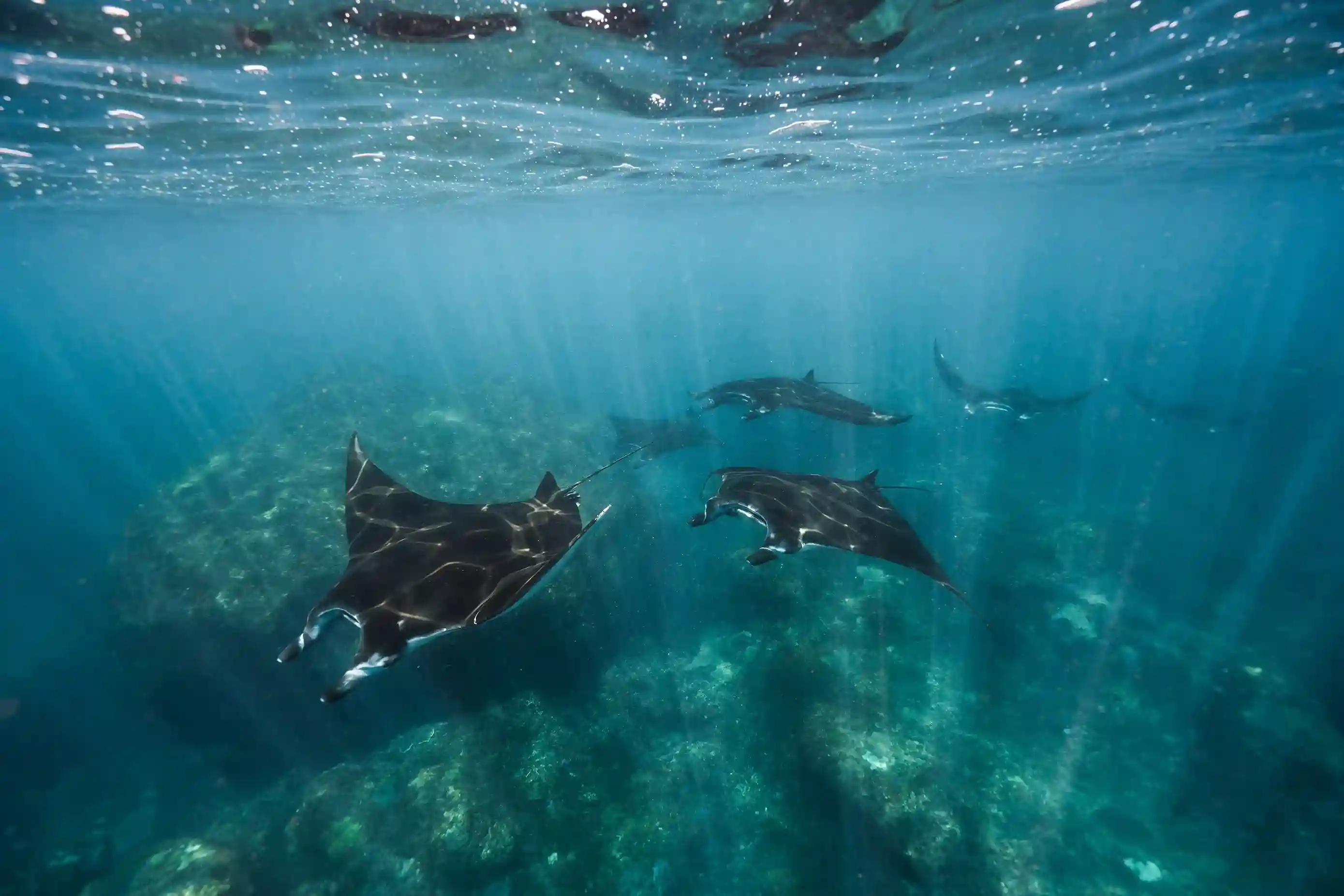
Good manta ray diving etiquette in Komodo comes down to five habits: approach cleaning stations low and slow, hold your distance, keep your body horizontal with fins still, never chase or block a manta’s path, and follow your guide’s briefing to the letter. Practise those at Karang Makassar and reef mantas will often stay with a patient group for most of the dive; break them and the animals simply leave — for everyone in the water, not just for you.
This guide is the in-water companion to our overview of the 2027 manta tourism regulations in Komodo. That article covers park policy; this one covers what you do from back-roll to surface, because rules set the frame but diver behaviour decides the quality of every encounter.
Why Karang Makassar Demands Its Own Code of Conduct
Karang Makassar — better known on dive boats as Manta Point — is a long, shallow rubble-and-sand reef in central Komodo, scattered with coral bommies that function as cleaning stations. Reef mantas (Mobula alfredi) visit these bommies to have parasites picked off by cleaner wrasse, and they also feed here when plankton thickens the water. Cleaning and feeding are the two most sensitive behaviours a manta performs near divers: both require the animal to slow down, settle into a pattern, and tolerate company.
A manta hovering over a cleaning station is choosing to stay; a diver who swims at it removes that choice, and the manta banks away into the blue. Because the reef sits at roughly 8–18 metres with a typically gentle to moderate drift, the diving itself is easy, even Open Water friendly. The challenge here is not conditions — it is self-control.
Approaching a Cleaning Station: Low, Slow, and From the Side
The drift at Karang Makassar usually carries you along the reef past a sequence of bommies. When your guide signals mantas ahead, the correct approach follows a simple pattern:
- Drop low early. Settle near the rubble bottom before you reach the station, a couple of metres off the substrate so your fins never touch coral or stir sand.
- Kill your speed. Let the current carry you or fin gently — no bursts. Fast movement reads as a threat to a manta.
- Approach from the side, never from behind or head-on. Mantas circle a station in a repeating pattern; position yourself off that racetrack line, not on it.
- Stop and hold. Take a viewing position at a respectful distance and stay there. Let the manta close the gap — they often do, and a curious pass overhead is the encounter everyone hopes for.
- Stay off the station itself. The bommie belongs to the mantas and the cleaner fish. Never park on it or hover directly above.
Guides in Komodo often keep the whole group in a loose line along one side of the station, low and still. It looks passive, but it is the most effective technique for long encounters: a predictable, grounded group is something a manta can safely ignore.
Minimum Distance and Body Position
Standard manta codes of conduct used by guides across Indonesia brief a minimum distance of around three metres from the animal — and more from a cleaning station itself. Treat that as a floor, not a target. The distance rule has a partner rule that divers forget more often: never position yourself above a manta. Mantas rise off stations and lift toward the surface when feeding; a diver hovering overhead blocks that path and triggers an abort.
Body position matters as much as distance. Stay horizontal, arms in, fins never kicking toward the animal. Sort your buoyancy before the encounter, not during it, exhale steadily rather than releasing bursts of bubbles under a passing manta, and keep torches and strobes out of its face. If a manta swims directly at you, hold position and stay low — it knows where you are and will glide over you. Touching is never acceptable: it stresses the animal and can damage the protective mucous layer on its skin.
Why Chasing a Manta Destroys the Encounter for the Whole Group
Chasing feels harmless in the moment — one diver kicks after a departing manta hoping for a better frame. The result is almost always the same: the manta leaves the area and does not come back on that tide. One impatient diver has taken the encounter from the whole group, and often from the next boats too, because a pressured manta may abandon a station for hours.
There is a selfish argument for patience too: you cannot outswim a manta, so chasing gains you nothing but an empty blue view and burned air. The divers who get the close passes at Karang Makassar are, reliably, the ones lying still on the rubble. Photographers should internalise this doubly — the best images come from beside a relaxed animal that chose to come close, which is what our Komodo underwater photography dive charter is built around: unhurried sites, small groups, and guides who put you in position instead of letting you chase the shot.
The Bigger Picture: Indonesia’s Manta Sanctuary
Diver etiquette is not just courtesy; it sits inside one of the world’s largest marine protection commitments. In 2014, Indonesia declared its entire Exclusive Economic Zone a manta ray sanctuary. Komodo’s aggregation sites, Karang Makassar chief among them, are flagship beneficiaries of that decision — and the reason the park keeps tightening how manta tourism is managed.
The sanctuary logic is straightforward: a manta is worth vastly more alive, visited respectfully over decades, than harvested once. Every diver who holds distance and stays off the stations casts a small vote for that model; every diver who chases votes against it.
The Guide Briefing: Your Most Important Five Minutes
Every reputable Komodo operator delivers a manta-specific briefing before dropping on Karang Makassar, and it deserves full attention even if you have dived with mantas before. It localises the code to the day’s conditions: which way the drift runs, which bommies are active, where the group settles, what the signals mean, and when to leave a station so the next group rotates in fairly.
A good briefing is also your best pre-dive quality check on the operator. If the crew talks seriously about distance, positioning, and not crowding the stations, you have chosen well. If mantas are pitched purely as a photo opportunity with no behavioural ground rules, treat it as a red flag — standards on the boat usually predict standards underwater.
Choosing a Trip That Takes the Code Seriously
Etiquette is ultimately an operator culture, not a laminated card. Small groups, experienced local guides, and a willingness to skip a crowded site all make ethical encounters easier to deliver. That philosophy runs through our Komodo fun diving trips for certified divers, and through the full range of Komodo diving packages — from day trips out of Labuan Bajo to multi-day liveaboard itineraries — supported by the Komodo Luxury fleet. Timing helps too: if mantas are your priority, plan around the Komodo manta season so patient diving and peak aggregation overlap.
Frequently Asked Questions
How close can I get to a manta at Karang Makassar?
Guides brief a minimum of around three metres from the animal, and further from active cleaning stations. Hold your position at that distance and let the manta decide — relaxed mantas frequently pass within touching range of still divers. The rule restricts your approach, not theirs.
Is Karang Makassar suitable for beginner divers?
Yes. The site is a shallow reef of roughly 8–18 metres with a generally gentle to moderate drift, routinely dived by newly certified Open Water divers and even snorkellers. The etiquette demands discipline rather than advanced skills, which is why the briefing matters for first-timers.
Can I touch a manta if it swims right over me?
No — never. Touching stresses the animal and can damage the protective mucous layer on its skin. If a manta passes close overhead, stay low, stay still, keep your arms in, and enjoy one of diving’s great moments without reaching for it.
What should I do if another diver starts chasing a manta?
Do not join in, and do not chase after them — that doubles the pressure on the animal. Signal your guide, who is trained to manage the group, and raise it in the debrief; good operators treat chasing as a serious violation.
Why are mantas specially protected in Indonesia?
In 2014 Indonesia declared its entire Exclusive Economic Zone a manta ray sanctuary, recognising that mantas are worth far more through long-term, well-managed tourism than through fishing. Komodo’s aggregation sites, including Karang Makassar, are central to that policy — hence the seriousness about in-water conduct.
Ready to meet Komodo’s mantas the right way? Message us on WhatsApp at +62 811 3823 875 or email bd@juaraholding.com and we will match you with an ethical, small-group manta trip — day boat or liveaboard — built around encounters that last.